







Pope’s 2026 Lenten retreat, led by Bishop Erik Varden, explores the thought of St. Bernard of Clairvaux through faith, truth, and hope.
Newsroom (20/02/2026 Gaudium Press ) Next Sunday, February 22, the Pope and the Roman Curia will begin their Lenten spiritual exercises in the Pauline Chapel of the Apostolic Palace. The retreat will gather cardinals residing in Rome along with the prefects of the dicasteries, marking a period of contemplation and renewal at the heart of the Catholic Church.
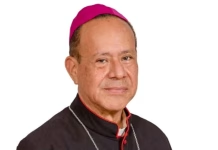
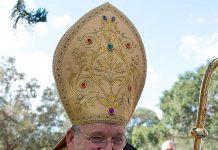
According to a statement issued by the Prefecture of the Papal Household on February 4, the meditations will be led by Bishop Erik Varden of Trondheim, Norway, a member of the Cistercian Order of the Strict Observance, widely known as the Trappists. The retreat’s theme—“Illuminated by a Hidden Glory”—will take its spiritual cue from one of the great masters of Christian mysticism, St. Bernard of Clairvaux.
The Guiding Threads: Freedom, Truth, and Hope
Monsignor Varden’s program proposes a demanding but profound itinerary inspired by the 12th-century abbot of Clairvaux, balancing spiritual idealism with historical realism. His meditations will revolve around three central themes: freedom, understood as a path toward fulfillment; truth, seen as a radiant splendor that transforms; and hope, embraced as a challenge for the modern world.
The Legacy of a Mystic and Reformer
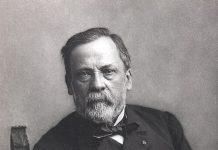
But who was the man whose voice will echo through this retreat? Bernard of Clairvaux (1090–1153) stands among the most compelling figures of medieval Europe—a soldier turned monk, a mystic who guided reform, and a saint whose influence spanned theology, politics, and art. Born in Dijon to a noble Burgundian family, Bernard entered the nascent Cistercian monastery founded by Robert of Molesme, convincing around thirty relatives and friends to join him. That wave of conversion cemented the vitality of the Cistercian reform that endures in the order to which Bishop Varden belongs.
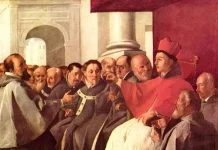
At only twenty-five, Bernard became abbot of Clairvaux during a time of deep ecclesiastical division. His leadership combined doctrinal clarity with a conciliatory spirit. He intervened in controversies such as the schism of Anacletus II, defending Pope Innocent II and tirelessly promoting reconciliation. His engagement in theological debate reached its pinnacle at the Council of Sens, where he met the famed philosopher Peter Abelard in argument—firmly, yet free from personal attack.
The Preacher of a Crusade and the Healer of Souls
In later years, despite failing health, Bernard’s missionary vigor never waned. At the request of Pope Eugene III, he preached the Second Crusade across France, Germany, and Flanders, rallying kings and multitudes alike. While the campaign’s outcome proved tragic, his name became entwined with one of history’s most intense manifestations of collective Christian fervor.
Yet Bernard’s fame rested equally on his compassion. He tended to the poor and sick, earning a reputation for miracles of healing. His life blended contemplation and action seamlessly, unified by an undivided love for Christ and devotion to the Virgin Mary.
The Voice That Endures
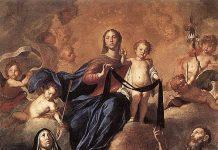
In 1953, marking the eighth centenary of his death, Pope Pius XII dedicated the encyclical Doctor Mellifluus to Bernard’s memory, encapsulating his tender spirituality in the phrase: “Jesus is honey on the lips, melody in the ears, and joy in the heart.” Over the centuries, Marian theology has drawn from Bernard’s insight that “The Lord did not want to give us anything that did not come through the hands of Mary,” a line that continues to resonate in Catholic piety.
His works—Grace and Free Will, The Twelve Degrees of Humility and Pride, and Sermons on the Song of Songs—secure his place among the great teachers of Christian mysticism. Artists like Murillo, Carreño de Miranda, and Goya later sought to express in paint what Bernard’s words revealed in spirit.
A Hidden Glory for Today
Eight hundred years on, Bernard’s ardent and deeply human voice still speaks to the Church’s search for renewal. This February, in the hushed chapel of the Apostolic Palace, that same voice—through the meditations of Bishop Varden—will once again invite Rome’s highest pastors to rediscover freedom, truth, and hope as paths leading toward the light of a hidden glory.
- Raju Hasmukh with files from ACI Prensa
Related Images: