













The 1755 Lisbon earthquake: 60,000 dead, churches crushed on All Saints’ Day. Shattered Leibniz’s optimism, birthed Voltaire’s doubt, and seeded modern secularism.
Newsroom (30/10/2025, Gaudium Press ) On the eve of All Saints’ Day in 1755, Lisbon stood as a radiant emblem of Christendom’s enduring triumph. For over two centuries, the Portuguese had forged an empire that stretched across oceans—from the lush plantations of Brazil to the spice-laden coasts of India. Lisbon, the bustling gateway to this vast dominion, channeled rivers of gold, silver, and exotic treasures into the heart of Europe. Its streets gleamed with prosperity: grand palaces, ornate churches, and thriving markets testified to a city that had transformed maritime daring into metropolitan splendor.
In an age when the Reformation had fractured much of northern Europe, Lisbon remained a steadfast bulwark of Catholic orthodoxy, an indispensable ally to Rome. “Religion was everywhere,” Cardinal Manuel Clemente, Patriarch emeritus of Lisbon and a noted Church historian, reflected in an interview with The Pillar. “There were processions every week. King John V was trying to establish Lisbon as a second Vatican and he had successfully petitioned for the Royal Chaplain to receive the title of Patriarch.”
Yet, on November 1, 1755—All Saints’ Day itself—the city’s pious fervor turned to catastrophe. As dawn broke, throngs of the faithful filled the churches for Mass, their voices rising in hymns of devotion. Then, without warning, the ground convulsed.
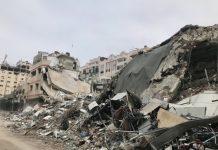
“It lasted six or seven minutes, which seemed like an eternity, and it was incredibly powerful,” Cardinal Clemente recounted. Churches crumbled, entombing worshipers beneath tons of stone and timber. Homes collapsed upon their inhabitants. Fires erupted almost immediately, devouring the wooden structures that had survived the initial shocks and incinerating countless victims alive. Survivors fled in panic toward the Tagus River, only to be engulfed by a massive tsunami that surged inland, sweeping away lives and debris in a relentless wall of water.

The Lisbon earthquake, estimated at a magnitude of 8.5 to 9.0, ranks among the deadliest in recorded history. In the city alone, nearly 60,000 perished; across the Iberian Peninsula and into North Africa, the toll approached 200,000. Lisbon was reduced to rubble—85 percent of its buildings destroyed. But the quake’s ripples extended far beyond physical devastation. It fractured the intellectual and spiritual bedrock of 18th-century Europe, challenging the era’s buoyant optimism and paving the way for secularism, rationalism, and even the ideological seeds of modern democracy.
An Age of Optimism, Shattered
The first half of the 18th century hummed with Enlightenment confidence. European explorers and scientists were mapping the globe with unprecedented precision, cataloging new species of plants, charting distant continents, and encountering diverse peoples. Advances in botany, astronomy, and mechanics fueled a sense of boundless progress. Wars and plagues persisted, as they always had, but they no longer seemed insurmountable barriers to human ingenuity. “There was a very optimistic outlook on life,” Cardinal Clemente observed. “In fact, the very word ‘optimism’ was coined at this time, appearing in the dictionary for the first time in Germany.”
This worldview found philosophical expression in Gottfried Wilhelm Leibniz’s Theodicy (1710), which grappled with the ancient problem of evil: how could a benevolent, omnipotent God permit suffering? Leibniz argued that we inhabit “the best of all possible worlds,” where apparent imperfections—uncertainty, insecurity, even natural disasters—are the necessary trade-offs for existence and human free will. Evil, in this schema, served a greater harmony invisible to finite minds.
Leibniz’s ideas influenced thinkers across Europe, including the young Voltaire. But news of Lisbon’s horrors—relayed through frantic dispatches and eyewitness accounts—shattered any lingering faith in such consolations. Voltaire, appalled by reports of crushed children in church pews and drowned families on the waterfront, penned his satirical masterpiece Candide (1759) as a direct rebuttal. In it, the naive protagonist endures a litany of absurd calamities, including a parody of the Lisbon quake, only to mock the notion that “all is for the best.” Voltaire’s famous quip encapsulated his disillusionment: the disaster did not make him doubt God’s existence, but it profoundly undermined belief in divine goodness. He rejected Christianity and organized religion outright, declaring that natural phenomena demanded explanation divorced from theology.
Jean-Jacques Rousseau offered a subtler critique. In a letter to Voltaire, he conceded the quake’s brutality but attributed much of the carnage to human folly—overcrowded cities, flimsy construction, and poor planning. “If the inhabitants of this great city had been more evenly distributed… the loss of life would have been much less,” he wrote. Rousseau extended this to a broader indictment: most evil stems not from divine caprice but from societal flaws. This pivot toward rational, man-made solutions foreshadowed his Social Contract (1762), which posited that legitimate government arises from human agreement, not divine mandate—laying groundwork for revolutionary politics.
Immanuel Kant, then a young scholar in Königsberg, responded with empirical rigor. He authored three treatises on the earthquake, compiling reports of seismic waves and aftershocks to pioneer the scientific study of earthquakes. Rather than theologize, Kant sought natural causes, marking a decisive shift toward modern seismology.
The Birth of Secular Doubt
In these reactions, the Lisbon earthquake emerged as a pivotal moment in the rise of secularism. “Voltaire marks a break with the traditional view,” Cardinal Clemente noted. “He concludes that there is no point in looking to divinity to try and understand natural phenomena.” This intellectual rupture influenced the French Revolution three decades later, with its emphasis on reason over revelation, and echoed indirectly in the American founding. The United States’ framers, steeped in Enlightenment texts, crafted a constitution grounded in human rights and civic contract, wary of entangling church and state—a caution partly born from Europe’s post-Lisbon skepticism.
The disaster also fueled atheism’s ascent. In 2021, Swiss Cardinal Kurt Koch, then prefect of the Pontifical Council for Promoting Christian Unity, described it as a “radical” challenge to certainties. “The terrible suffering and death of so many people began a much greater questioning of the existence of God than all enlightened philosophical theories,” he said. Suffering became “the rock of atheism,” indelibly tied to Lisbon.

Historians have sometimes framed these philosophical upheavals as responses to widespread claims of divine retribution. Yet, evidence from the ground tells a different story. Sebastião José de Carvalho e Melo, the future Marquis of Pombal and de facto ruler under King Joseph I, orchestrated Lisbon’s reconstruction with pragmatic efficiency. He mandated detailed parish reports from priests across the affected regions—documents preserved to this day as invaluable historical sources. “I have read a good deal of them,” Cardinal Clemente said, “and in none of them did I find any portrayal of the earthquake as divine retribution.”
The lone prominent exception was Father Gabriel Malagrida, an Italian Jesuit missionary with ties to Portugal’s colonies. From pulpits in the ruins, he thundered that the quake was God’s punishment for moral laxity. Influential due to his missionary renown, Malagrida clashed with his own Jesuit order, which operated Portugal’s leading scientific academies and embraced empirical inquiry. By 1755, he was widely regarded as mentally unstable. His provocations antagonized Pombal, who expelled the Jesuits in 1759 and had Malagrida tried for heresy. In 1761, the priest became the Inquisition’s final victim, strangled and burned at the stake.
Echoes Across Centuries
Natural disasters have plagued humanity since antiquity—why, then, did Lisbon’s quake resonate so profoundly? Cardinal Clemente draws a poignant parallel to our own era. “Think of September 11, 2001,” he suggested. For Catholics, the late 20th century brimmed with hope: the approaching Jubilee Year 2000, the charismatic leadership of Saint John Paul II, a renewed examination of faith’s foundations, and papal apologies for historical errors. “A new millennium had opened up before us, and we were enthused.”
Then the towers fell. Live television broadcast the unimaginable: planes slicing into skyscrapers, clouds of dust engulfing Manhattan, survivors emerging coated in ash. Amid the chaos, one escapee’s cry pierced the air: “Where is God? Where is God?”
“We don’t see the world now as we did at the turn of the century,” Cardinal Clemente reflected. “I don’t believe that we have overcome the trauma of 9/11 yet, culturally, as a society. It takes time. That disappointment is comparable to the effects of the Lisbon earthquake of 1755.”
Two hundred seventy years later, the ground beneath Lisbon has long settled, and the city Pombal rebuilt— with wider streets, seismic-resistant architecture, and a secular bureaucracy—stands as a testament to human resilience. Yet the philosophical aftershocks linger. In an age of climate crises, pandemics, and geopolitical upheavals, the Lisbon disaster reminds us that cataclysms do more than destroy buildings; they compel us to interrogate our deepest assumptions about providence, progress, and the human condition. The earth may tremble, but it is in the ruins that new worlds—secular or sacred—are forged.
- Raju Hasmukh with files from The Pillar
Related Images: