





















Pakistan’s Catholic bishops highlight discrimination, blasphemy cases, and hope for equal rights during Vatican ad limina visit.
Newsroom (20/05/2026 Gaudium Press ) Pakistan’s Catholic bishops have brought a message of cautious optimism to the Vatican, balancing deep concern over ongoing challenges faced by Christians with renewed hope for the future of the Church in their country.
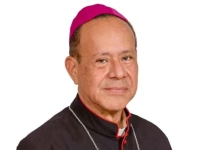
Speaking during their ad limina Apostolorum visit—a periodic pilgrimage to Rome required of Catholic bishops—Bishop Samson Shukardin, President of the Pakistan Catholic Bishops’ Conference and Bishop of Hyderabad, described the experience as both spiritually and institutionally invigorating.
“This ad limina is very important for us because spiritually and physically, this has given us a new insight and new hope in the coming future,” Bishop Shukardin said, reflecting on meetings with Vatican officials and the opportunity to present the realities of the Church in Pakistan.
A Renewed Sense of Direction
The visit, typically held every five years, provides bishops with an opportunity to report on the condition of their dioceses, engage with leaders of the Roman Curia, and pray at the tombs of Saints Peter and Paul. For Pakistan’s bishops, the gathering also served as a platform to articulate both the aspirations and struggles of their communities.
Bishop Shukardin noted that discussions with various Vatican dicasteries had been positive and encouraging. “We have shared our reports in different dicasteries, and we received very positive responses,” he said, signaling a sense of solidarity and support from the broader Catholic Church.
This exchange has helped reinvigorate the bishops’ pastoral vision, offering what the bishop described as “new insight” into how the Church in Pakistan can move forward despite adversity.
Faith Amid Hardship
At the heart of the bishops’ reflection is the resilience of Pakistan’s Catholic faithful. Despite economic hardship and limited access to education, many believers remain deeply committed to their faith.
“Our people are still illiterate but strong in faith,” Bishop Shukardin said. “They are poor but very hard-working people, always working hard.”
This portrait highlights a community that, while materially disadvantaged, continues to sustain a vibrant spiritual life. Evangelisation remains a central challenge for the Church, particularly in reaching marginalized populations and providing both pastoral care and opportunities for education.
Inequality and Social Barriers
Alongside these internal challenges, Pakistan’s bishops emphasized systemic inequalities faced by Christians in broader society. According to Bishop Shukardin, many members of the Christian minority continue to struggle for equal rights.
“Many of our people are not receiving equal rights,” he said, underscoring the sense of exclusion that persists in various aspects of public and social life.
These inequalities often intersect with economic vulnerability, further limiting opportunities for advancement and reinforcing cycles of disadvantage.
Blasphemy Accusations and Forced Conversions
Among the most pressing concerns raised during the visit were issues surrounding blasphemy accusations and forced conversions—both of which have been longstanding and sensitive challenges for religious minorities in Pakistan.
“We have a big problem regarding the blasphemy cases,” Bishop Shukardin said, pointing to the seriousness of accusations that can carry severe consequences. He also confirmed that “forced conversions are there,” referring to instances where individuals, particularly from minority communities, are compelled to change their faith.
Such issues contribute to an environment in which Christians may face social rejection or persecution. “Sometimes our Church is rejected, persecuted because we are not going where they are expecting,” he added, suggesting tensions between minority religious identity and broader societal expectations.
A Hopeful Outlook
Despite these difficulties, the message from Pakistan’s bishops remains one of hope. Bishop Shukardin emphasized that the Church continues to look forward with confidence, even in the face of adversity.
“Our Church is going through difficulties, but we are very hopeful,” he said. “We are hopeful that one day we will get our equal rights in Pakistan.”
This outlook reflects both a deep faith and a determination to advocate for greater justice and inclusion. The bishops’ visit to the Vatican has reinforced their commitment to these goals, while also strengthening their connection to the global Catholic community.
As they return to Pakistan, the bishops carry with them not only the challenges they presented in Rome, but also a renewed sense of mission—one rooted in resilience, faith, and the enduring hope for a more equitable future.
- Raju Hasmukh with files from Vatican News
Related Images: