

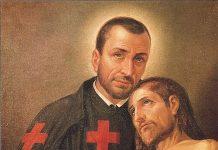








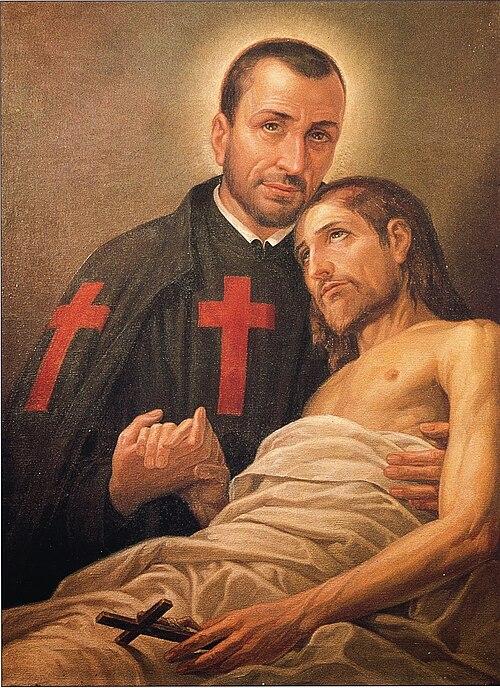
The life of Saint Camillus de Lellis is proof of the power of God’s “pursuit.”
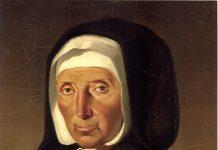
Newsroom (14/07/2026 Gaudium Press ) Saint Camillus de Lellis (or Lelis) was born in Bucchianico, in the Abruzzo region of the former Kingdom of Naples, now Italy, in the year 1550.
He falls into the vice of gambling
His father was a soldier and spent more time in military camps than at home. His mother was already advanced in age when he was born. As a result, it was not easy to educate him or control his temperament, which was lively and even combative. However, his mother taught him the basics of the faith and planted the Christian seed in his soul.
At the same time, the devil was sowing another seed. Through bad companions, the boy learned the secrets of cards, dice, and betting, and from a very young age he had already experienced the excitement of these vices.
His mother died while he was still young.
At first, he followed in his father’s footsteps and enlisted in the Venetian army to fight against the Turks. There he strengthened some virtues while also becoming infected with the vices of military life. His father also died and was buried near Loreto.
One day, however, he developed a wound on his leg—an incurable wound that would become God’s message of salvation for him—and he had to go to the Hospital of Saint James in Rome for treatment. There he began to show charity toward other patients, helping and caring for them. He was eventually accepted as a hospital attendant.
But because of his terrible addiction to gambling, he was expelled from the hospital. Later, in Naples, he lost his entire fortune through gambling. He wagered everything he owned and lost it all—even his shirt. He considered becoming a thief, but remembering his mother’s teachings, he chose instead to beg for alms.
The superior of the Capuchins in Naples invited him to work on the construction of a convent in Manfredonia. Sensing something special in him and guided by the Holy Spirit, the superior spoke to him about a religious vocation.
One day Camillus heard a reflection that a friar delivered to the workers, and it became the spark of a profound conversion. The beggar and former gambler went to confession and surrendered himself to God’s mercy. He was 25 years old.
He joins the Capuchins, but God did not want him to be a Capuchin
Camillus applied to join the Capuchins, the religious community closest to him and the one through which he had experienced his conversion. He began his novitiate, but the wound on his leg returned, forcing him to go back to the Hospital of Saint James. There he once again dedicated himself to caring for the sick, now with renewed zeal and free from the vice that had once enslaved him.
At the age of 30, under the spiritual direction of Saint Philip Neri, he entered the Roman College (today the Gregorian University) to pursue ecclesiastical studies. His younger classmates mocked him because of his age, but this did not prevent him from being ordained a priest on May 26, 1584.
He founds the Camillian Religious Order
He continued caring for the sick—eventually becoming the hospital’s general administrator. One day, while looking at a crucifix as he cared for some patients, he exclaimed:
“Ah! What is needed here are men who are guided not by love of money but by love of Our Lord; men who would be true mothers to these poor sick people rather than mercenaries. But where can such men be found?”
Grace continued shaping and guiding him. Together with his best collaborators, he founded the Order of the Ministers of the Sick, also known as the Camillian Religious Order, on December 8, 1591. He was also motivated by the great need for medical care among the sick who were arriving in Rome.
His charity grew with the years and with his mission. The many sick people he served could only be grateful for the healing angel God had placed in their path.
For 36 years he endured his leg wound, always showing kindness and goodness, never giving way to bad temper.
He died on July 14, 1614, at the age of 64.
He was beatified in 1742 by Pope Benedict XIV and canonized in 1746 by the same pontiff.
In 1886, Pope Leo XIII declared him, together with Saint John of God, protector of all the sick and of hospitals throughout the Catholic world, and the universal patron of the sick, hospitals, and healthcare workers.
Based on information from ACI Prensa and Camilos.es.
Related Images: