























Christian leaders and rights groups urge prison reforms in Sri Lanka after deadly Negombo Prison violence killed 29 and injured over 100.
Newsroom (13/07/2026 Gaudium Press ) Christian churches and human rights organizations in Sri Lanka are intensifying demands for sweeping prison reforms following a deadly outbreak of violence at Negombo Prison that left 29 people dead and more than 100 injured. The incident has once again drawn attention to longstanding concerns over overcrowding, poor prison conditions, and systemic weaknesses in the country’s criminal justice system.
The violence, which occurred on July 5–6, was reportedly triggered by a dispute between rival inmate groups involved in drug trafficking activities. According to reports, 21 prisoners and eight prison officers were killed, making it one of the deadliest prison incidents in Sri Lanka in recent years.
In response, the National Christian Council of Sri Lanka (NCCSL), which represents a broad range of Christian organizations, called on the government to undertake comprehensive reforms aimed at addressing chronic problems within the prison system.
In a statement issued on July 11, the NCCSL said Sri Lanka’s prisons have been plagued by recurring violence for decades, reflecting what it described as deep structural failures in the country’s criminal justice framework. The council argued that the latest tragedy demonstrates the urgent need for “comprehensive, courageous and lasting reform” rather than temporary measures introduced only after major incidents.
The organization urged authorities to improve prison infrastructure and ensure detention conditions meet international human rights standards. It also called for greater access to education, vocational training, mental health support, addiction treatment services, and rehabilitation programs designed to reduce reoffending and improve inmate welfare.
A key concern highlighted by the NCCSL is severe overcrowding. According to the council, facilities originally built to house approximately 10,500 inmates currently contain nearly 40,000 prisoners. The group noted that almost three-quarters of those incarcerated are remand prisoners who have not been convicted of any crime.
The council attributed much of the overcrowding crisis to lengthy delays in judicial proceedings and restrictive bail laws that keep many individuals in custody for extended periods while awaiting trial. It urged the government to review legislation that contributes to prolonged pretrial detention.
The latest bloodshed has renewed scrutiny of a prison system that has experienced repeated episodes of deadly violence over the past four decades. Among the most notable incidents was the 1983 Welikada Prison massacre, during which 53 Tamil inmates were killed amid the anti-Tamil riots known as Black July. More recently, Sri Lanka witnessed the Mahara prison unrest in 2020, another violent outbreak that raised concerns about prison management and inmate welfare.
Human rights advocates argue that these recurring incidents are symptoms of deeper systemic problems. They cite chronic overcrowding, deteriorating living conditions, the widespread presence of drugs and other contraband, and inadequate oversight as factors that continue to fuel instability within prisons.
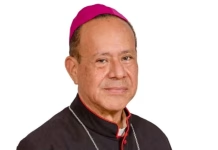
Adding to the calls for change, Bishop Dushantha Rodrigo of Colombo, representing the Protestant Church of Ceylon, urged the government to strengthen both prison infrastructure and management practices.
In a statement released on July 11, Bishop Rodrigo emphasized the need to ensure safe and humane conditions across prison facilities nationwide in accordance with international standards. He also pointed to repeated warnings issued by the Human Rights Commission of Sri Lanka, which has consistently highlighted the dangers present within prisons, particularly for vulnerable inmates.
The human impact of the violence has been felt by families of those caught in the unrest. Agnes Mary, 58, whose son was injured during the Negombo incident, said he remains hospitalized. She also alleged that politically connected individuals are involved in the country’s drug trade, which she believes contributes significantly to violence inside prisons.
Meanwhile, international and domestic legal advocacy groups have demanded greater accountability. Amnesty International and the Bar Association of Sri Lanka have called for an independent investigation into the Negombo violence. Their concerns extend beyond the deaths and injuries, encompassing allegations that some inmates were subjected to torture in the aftermath of the unrest.
As pressure mounts on the government, church leaders, legal organizations, and human rights groups are united in arguing that the Negombo tragedy should serve as a catalyst for meaningful reform. They contend that without addressing overcrowding, improving prison conditions, and tackling broader criminal justice delays, Sri Lanka risks further outbreaks of violence within a prison system already under severe strain.
- Raju Hasmukh with files from UCA News
Related Images: