




















U.S. Supreme Court declines to hear USCCB appeal, allowing donor lawsuit over Peter’s Pence collection to proceed in lower courts.
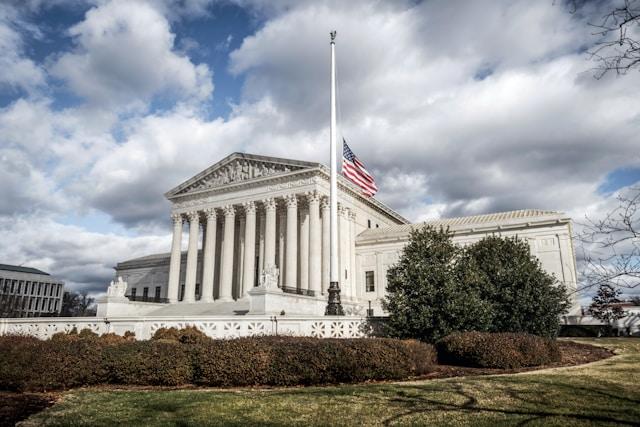
Newsroom (28/05/2026 Gaudium Press ) The U.S. Supreme Court has declined to intervene in a high-profile legal dispute involving the United States Conference of Catholic Bishops (USCCB), leaving intact a lower court ruling that allows a class action lawsuit to move forward. The case centers on allegations that the bishops’ conference misled donors about how contributions to the annual Peter’s Pence collection would be used.
In an order list dated May 26, the nation’s highest court denied a petition for a writ of certiorari in United States Conference of Catholic Bishops v. David O’Connell. The decision effectively sidesteps the controversy at the federal level and returns focus to the lower courts, where proceedings will now continue.
Legal Setback for U.S. Bishops
The Supreme Court’s refusal to hear the case represents a procedural setback for the USCCB, which had sought dismissal of the lawsuit on constitutional grounds. By declining review, the justices left standing a prior ruling that rejected the bishops’ motion to dismiss, allowing plaintiffs to pursue their claims in court.
Daniel Blomberg, senior counsel at Becket and lead attorney representing the USCCB, responded to the development by emphasizing the organization’s ongoing evaluation of its legal options. “While this is disappointing news, the USCCB is evaluating all of its options moving forward,” he said in a statement. He added that the conference remains “committed to protecting the Church from unconstitutional government entanglement.”
Allegations of Misleading Donors
The lawsuit, filed in 2020 by a Dallas law firm and a Rhode Island parishioner, alleges that the USCCB provided misleading information to donors regarding the purpose of the Peter’s Pence collection. Plaintiff David O’Connell claims that the fundraising campaign was promoted as directly supporting the charitable works of the pope.
However, the complaint points to Italian media reports that suggested portions of these funds were instead invested in ventures such as real estate and Hollywood films. The plaintiff argues that such uses contradict the charitable framing presented to donors and constitute a form of misrepresentation.
The Role and Purpose of Peter’s Pence
Peter’s Pence is a longstanding global collection within the Catholic Church, historically intended to support the pope’s mission. According to official descriptions, the funds serve multiple purposes: providing resources for the Vatican’s administrative expenses—including staffing and diplomatic operations—as well as enabling charitable outreach.
The USCCB’s own website describes the initiative as a means “to provide the Holy Father with the financial means to respond with emergency assistance to those who are suffering as a result of war, oppression, natural disaster, and disease.” It also notes that the collection has evolved over centuries, maintaining both administrative and charitable functions.
Constitutional Questions at the Core
At the heart of the USCCB’s legal argument is the First Amendment’s church autonomy doctrine, which U.S. courts have often interpreted as limiting government interference in internal religious matters. Lawyers for the bishops’ conference argue that decisions about religious communications and the allocation of offerings fall squarely within this protected sphere.
In court filings, the USCCB has asserted that “courts have no business second-guessing the Church’s religious communications and decisions about the use of offerings.” This defense frames the lawsuit not merely as a consumer protection issue, but as a broader constitutional question about the boundaries of judicial authority over religious institutions.
Case Moves Forward
With the Supreme Court declining to intervene, the case will proceed in lower courts, where the substantive merits of the allegations are expected to be examined. The outcome could have broader implications not only for the Catholic Church in the United States, but also for other religious organizations that rely on donor contributions for a mix of charitable and operational purposes.
For now, the high court’s silence leaves unresolved the tension between claims of donor transparency and the constitutional protections afforded to religious entities—an issue that is likely to remain closely watched as litigation continues.
- Raju Hasmukh with files from OSV News
Related Images: