










Spanish bishops decry the euthanasia of 25-year-old Noelia Castillo, calling it a moral failure and reflection of deep societal neglect.
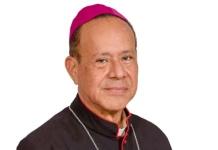
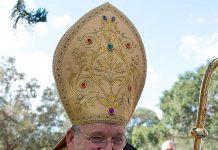
Newsroom (27/03/2026 Gaudium Press ) The euthanasia of Noelia Castillo, a 25-year-old woman from Barcelona who died Thursday evening after a long and highly publicized legal battle, has provoked widespread outrage among Spain’s Catholic leadership. The country’s bishops, led by Archbishop Joan Planellas of Tarragona, denounced her death as a profound tragedy and a reflection of a society unable to care for its most vulnerable.
“This makes me think a lot and shows, in a way, the kind of society we live in,” Planellas told Crux Now. “That there are people who reach a situation like this, in which they refuse to live for whatever reasons, saddens me.” He added that modern societies too often fail to “accompany people,” saying that true compassion lies in presence and accompaniment, not in ending a life.
Planellas lamented that euthanasia has come to be viewed merely as a matter of personal freedom. “Life is something sublime, something much more important than what one might think in a given moment,” he said.
From Tragedy to Legal Battle
Castillo’s story began in 2022 after an alleged sexual assault by multiple perpetrators, which some reports described as a gang rape. Traumatized, she attempted suicide by jumping from a balcony, which left her paraplegic and dependent on a wheelchair. Her physical injuries and ongoing mental health struggles led her to request euthanasia under Spain’s 2021 euthanasia law.
Her father fiercely opposed the decision, arguing that she suffered from treatable psychiatric conditions — borderline personality disorder, obsessive-compulsive disorder, and recurring suicidal ideation — and needed sustained therapy, not assisted death. Represented by the Christian Lawyers Foundation, he launched a series of appeals after the Catalonian Guarantee and Evaluation Commission approved her euthanasia request in July 2024.
The case traveled through Spain’s judicial system and ultimately reached the European Court of Human Rights (ECHR), which declined to intervene but indicated it would later review the legality of Spain’s euthanasia process. Just a day before Castillo’s death, her father sought an emergency order from a Barcelona court to require psychiatric treatment first — but the request was denied.
A Divided Moral Landscape
Among those voicing outrage was Bishop José Mazuelos of the Canary Islands, who heads the Spanish Episcopal Conference’s Subcommittee for the Family and the Defense of Life. He described the euthanasia as “barbaric,” warning that society had chosen to “eliminate” rather than care.
“What Noelia is demanding is truly humane care and psychological support to help her cope with the harshness of illness and human frailty,” Mazuelos said in a video message. The subcommittee’s official statement went further, describing euthanasia and assisted suicide as “not medical acts, but the deliberate severing of the bond of care.” It called Castillo’s death a “social defeat” and reaffirmed that human dignity remains “an intrinsic value that demands to be recognized, protected, and promoted in all circumstances.”
Politics and Protest
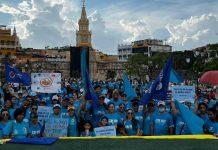
The moral and legal clash quickly reached the halls of power. Ester Muñoz, a leading voice from Spain’s conservative People’s Party (PP), said Castillo’s death should force Spain to “reconsider many things.” Even as Castillo’s euthanasia was being carried out, protesters and journalists gathered outside the hospital, some pleading with her to reconsider.
Vox, Spain’s far-right party, called the case “a failure and an aberration,” warning that it sets a dangerous precedent for extending euthanasia to cases involving psychiatric illness. “It opens a dangerous path,” party spokesperson Pepa Millán declared.
But defenders of Spain’s euthanasia law — particularly from the ruling Spanish Socialist Workers’ Party (PSOE) — rejected those criticisms. PSOE justice spokesperson Francisco Aranda argued that individuals like Castillo have the right to “die with dignity in peace” and that religious or political institutions should not interfere with that personal decision.
A Debate That Divides Spain
Castillo’s case has reignited Spain’s national debate over euthanasia — legalized in 2021 with widespread public support but lingering moral concerns. Advocates view it as a matter of compassion and autonomy; opponents see it as a dangerous erosion of the medical and moral duty to preserve life.
For the Church, the issue is neither legal nor political, but profoundly human. “Euthanasia,” the bishops’ statement concluded, “is not a triumph of freedom, but a crisis of hope.”
As Spain now confronts the emotional aftermath of Castillo’s death, its society faces hard questions — about mental health, social solidarity, and what it truly means to care for those in despair.
- Raju Hasmukh with files from Crux Now
Related Images: