











Four months after Maduro’s capture, Venezuela faces political continuity, stalled amnesty, and growing fear as bishops warn democracy remains unrealized.
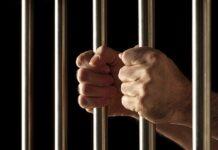
Newsroom (12/05/2026 Gaudium Press )Four months after U.S. special forces captured Nicolás Maduro, Venezuela remains suspended in a precarious no-man’s-land. The authoritarian figurehead is gone, yet the structures that sustained his rule persist. More than 450 political prisoners remain behind bars, according to Foro Penal. The amnesty promised as a cornerstone of national reconciliation has slowed to a near standstill, and fear of arbitrary arrest still shapes daily life.
This grim assessment was recently delivered to the Pope at the Vatican by Venezuela’s Catholic bishops. Their diagnosis, conveyed publicly by Bishop Jesús González de Zárate, president of the Venezuelan Episcopal Conference (CEV), was both candid and unsettling. “There is a change, yes,” he acknowledged, “but democracy has not yet been achieved.”
Political change without political rupture
The bishops’ central concern is the continuity they see at the heart of power. Although Maduro no longer occupies the presidency, Bishop Zárate warned that “there is also a continuity in the actors at the political level,” casting doubt on the depth of the transition. Gestures of openness have been made, including normalized relations with the United States, but decisive institutional reforms have yet to follow.
“More concrete decisions were expected in the political sphere,” Zárate said, “which have not yet materialized.” The official commitment to presidential elections remains vague, and key questions about Venezuela’s immediate future remain unanswered.
For the bishops, democracy cannot be reduced to diplomatic normalization or market signals. It requires rebuilt institutions and genuine participation. Zárate stressed the urgency of restoring public confidence in bodies such as the National Electoral Council and the Supreme Court of Justice to reestablish what he called “a healthy democratic coexistence.”
Amnesty promised, freedom denied
The fate of political prisoners remains the most painful test of the transition. The amnesty law passed in February benefited 8,616 people, but momentum quickly stalled after acting president Delcy Rodríguez declared the process complete. Since then, bishops have continued to receive requests to mediate detainees’ release.
“It’s a difficult issue to discuss,” Zárate said, noting that “the paths are not always open,” whether for the Church, civil organizations, or even foreign governments.
Crucially, the bishops insist on a distinction often blurred by authorities. “We are not just talking about release from prison,” Zárate said. “We are talking about total liberation—the recognition of full freedom.” Without that, detained citizens may leave jail only to remain stripped of civic rights.
As long as Venezuelans remain imprisoned for political ideas, he warned, the country cannot be at peace. His comments came amid renewed outrage over deaths in custody, including that of political prisoner Víctor Hugo Quero, adding to a long list of citizens who have died under state detention during more than 25 years of Chavista rule. Opacity surrounding the whereabouts of other detainees has deepened national anxiety.
From hope to discouragement
Maduro’s departure initially sparked cautious optimism. That feeling has since given way to frustration. While officials point to oil sales, price adjustments, and corporate agreements, everyday life tells a different story.
“Daily life continues to suffer the same shortages,” Zárate said, citing rising prices, depreciating wages, limited access to services, and persistent failures in electricity and water supply. The result, he added, is growing discouragement.
Beyond borders, the human cost is immense. More than eight million Venezuelans live abroad, separating families and reshaping society. Children grow up far from parents; grandparents never meet grandchildren. The Church itself feels the loss, as parishes are left without catechists, ministers, and young people, weakening pastoral life.
Economic impoverishment compounds the strain. Although the Church has responded with food and health programs, dwindling resources limit its capacity to serve communities in need.
Unity, truth, and reconciliation
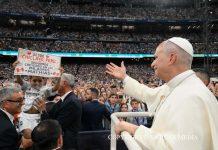
Against this backdrop, the bishops have made internal unity a priority. Preserving cohesion within a plural Church, Zárate said, is essential to bearing credible witness in a fractured society. That message was central to their meeting with Pope Leo XIV, who, according to Zárate, showed close familiarity with Venezuela’s ordeal.
The Pope focused his questions on the Church’s potential role as an agent of reconciliation. Yet reconciliation, Zárate emphasized, cannot mean erasure of responsibility. “There are situations that should never have happened, and there are those responsible,” he said.
The path forward, in the bishops’ view, is neither revenge nor forgetting, but healing through truth. Until dignity is restored, prisoners liberated in full, and institutions reborn with public trust, Venezuela’s transition will remain incomplete—defined by change in leadership, but continuity in fear.
- Raju Hasmukh with files from ACI Prensa
Related Images: