
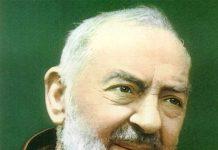













An unsealed arrest warrant outlines alleged embezzlement and money laundering by Chaldean Bishop Emmanuel Shaleta, whose resignation was accepted by Pope Leo XIV.
Newsroom (12/05/2026 Gaudium Press ) An arrest warrant unsealed last month has provided the most detailed public accounting yet of the financial crimes alleged against Chaldean Bishop Emmanuel Shaleta, a former U.S.-based prelate whose resignation from ecclesiastical office was accepted by Pope Leo XIV in early March.
While a related search warrant in the case remains sealed by court order, a judge ordered Shaleta’s redacted arrest warrant unsealed on April 12. The document omits the names of key witnesses but lays out allegations of extensive financial misconduct that prosecutors say unfolded over months within the Chaldean Catholic eparchy Shaleta formerly led.
The warrant confirms earlier reporting by The Pillar, which first disclosed in February that Shaleta was under investigation for embezzlement and personal misconduct. That Vatican inquiry concluded when both Shaleta and former Chaldean Patriarch Cardinal Rafeal Sako saw their resignations accepted on March 10.
Shaleta, who oversaw the Chaldean Catholic eparchy covering the western half of the United States, was arrested March 5 at San Diego International Airport. Authorities took him into custody as he attempted to leave the country with more than $9,000 in cash and a ticket booked for Europe.
According to prosecutors, the bishop is accused of taking hundreds of thousands of dollars in cash from eparchial accounts and attempting to conceal missing funds by writing checks to the cathedral from a charitable account designated for the needy.
Shaleta pleaded not guilty on March 9 to 16 criminal counts of money laundering and embezzlement. One day later, Pope Leo XIV formally accepted his resignation from ecclesiastical office.
Although most records in the criminal case remain sealed, the unsealed arrest warrant outlines the government’s theory in detail. The allegations closely mirror The Pillar’s reporting, tracing the investigation to December 2024, when financial “discrepancies” were detected in both eparchy and cathedral bank accounts. Investigators identified approximately $427,345 missing from the eparchy’s “needy account” over an eight-month period.
Central to the warrant is an alleged rent scam involving an eparchial property. Prosecutors allege that Shaleta instructed a tenant to pay monthly rent directly to him in cash. To mask the resulting shortfall in cathedral accounts, he allegedly wrote checks from the needy account to replace the missing funds.
Between March 1 and October 31, eight such checks were written, according to the arrest warrant—seven for $33,990 and one for $34,000. The affidavit states that none of the cash Shaleta allegedly received was ever deposited back into the needy account to reimburse the funds transferred to the cathedral.
The warrant also describes additional allegations that Shaleta received cash payments for church-related travel, perpetual Mass intentions, and rental hall expenses. When those funds could not be accounted for, prosecutors allege that Shaleta failed to provide documentation or records showing how the cash was spent.
According to the affidavit, Shaleta later claimed that the money was distributed to people in need in Iraq, but he did not provide further details or substantiating evidence to investigators.
After his arrest, Shaleta was released from custody in early March upon posting $125,000 bail. A San Diego judge ordered him to submit to GPS monitoring, citing both the scale of the alleged financial losses and the circumstances of his arrest at the airport with significant cash in his possession and travel plans abroad.
Shaleta is scheduled to appear in court for a readiness hearing in June, with an eventual trial anticipated to begin in August. If convicted on the charges he faces, he could be sentenced to as many as 15 years in prison.
Beyond the criminal proceedings, the case has also reverberated within the Chaldean Catholic Church. The Pillar reported that the Vatican investigation encompassed not only the alleged financial crimes but also claims of personal misconduct. Those allegations include frequent trips by Shaleta to a Tijuana brothel linked to the human trafficking industry and a longstanding close relationship with a woman with whom he reportedly shared a bank account and unrestricted access to one another’s homes.
Reporting by The Pillar also detailed internal Vatican discussions after Shaleta submitted his letter of resignation in late January. Cardinal Sako is said to have advocated among Chaldean bishops and at the Vatican for Shaleta to be reassigned to an administrative role in Baghdad as a senior official of the Chaldean patriarchate.
Sako has acknowledged that he raised the possibility of such a transfer but said it occurred before the Vatican-ordered investigation into Shaleta was fully clear. Sources cited by The Pillar have indicated that a report on the case was received by the relevant Vatican dicastery in late 2025, well before Sako canvassed bishops about a potential reassignment.
Sako’s own resignation was accepted on March 10, the same day as Shaleta’s, a development widely interpreted among Chaldeans as a sign of Vatican displeasure with the patriarch’s involvement in the matter.
For his part, Shaleta has denied wrongdoing, saying he is the target of a media campaign and opposition from members of his diocese who resisted his leadership. As the criminal case proceeds, the unsealed arrest warrant now offers the clearest public window into allegations that have already brought down two of the most senior figures in the Chaldean Catholic hierarchy.
- Raju Hasmukh with files from The Pillar
Related Images: