











A controversial church fresco in Rome sparks debate again as the “angel-Meloni” is repainted, now bearing resemblance to Marina Berlusconi.
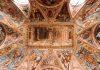
Newsroom (19/05/2026 Gaudium Press ) A small chapel in central Rome has once again become the unlikely epicenter of a national conversation on art, identity, and restoration ethics. The winged victory fresco in the Church of San Lorenzo in Lucina—already known for its brief transformation into the so-called “angel-Meloni”—has resurfaced in public debate after acquiring yet another controversial face. This time, observers claim, the features resemble Marina Berlusconi.
The evolving visage of the angel has turned a relatively obscure decorative element into a symbol of the tensions between artistic preservation, personal intervention, and contemporary cultural references.
A Controversial Makeover Revisited
The story began when Bruno Valentinetti, a sexton at the church, admitted to repainting the face of a winged victory in the Chapel of the Crucifix to resemble Italian Prime Minister Giorgia Meloni. The revelation, which quickly spread across Italian media, ignited debate about the appropriateness of altering religious artworks—particularly within a historic church.
The fresco itself is not ancient in origin. The Chapel of the Crucifix, decorated with motifs celebrating the Savoy dynasty, only came under the stewardship of Italy’s former royal family in 1983, at which time its walls were bare. The frescoes currently visible are believed to date from the 1990s or early 2000s, making them relatively modern additions rather than Renaissance masterpieces.
Nonetheless, the unauthorized modification prompted swift institutional response. The Vicariate of Rome, in coordination with the parish, the Fondo Edifici di Culto, and the Soprintendenza, announced plans to restore the figure to its original appearance, emphasizing the importance of safeguarding the integrity of religious artworks.
A Second Transformation
Now, however, the story has taken another unexpected turn. Art historian Fabrizio Federici—well known for his satirical commentary on cultural heritage through his social media project Mo(n)stre—reported that the angel’s face has once again been altered.
After visiting San Lorenzo in Lucina on a Saturday afternoon, Federici observed the new features and documented them in photographs. According to his interpretation, the freshly repainted face bears a striking resemblance to Marina Berlusconi, daughter of the late media tycoon and former Italian prime minister Silvio Berlusconi.
The claim has reignited public curiosity and online speculation. Yet, as with the previous transformation, certainty remains elusive.
Who Does the Angel Resemble?
The debate surrounding the angel’s new identity is far from settled. While some viewers agree with Federici’s assessment, others suggest entirely different interpretations. Among the names circulating in online discussions are Alessandra Mussolini, singer Elodie, and even Daniela Zuccoli, the widow of beloved television host Mike Bongiorno.
This ambiguity has only fueled the fascination. Social media platforms, particularly those where Federici shares his observations, have become arenas of lively debate, blending art criticism with pop culture speculation.
The phenomenon underscores how even minor visual cues in a work of art can take on outsized cultural significance when linked to recognizable personalities.
Restoration or Reinvention?
At the heart of the controversy lies a fundamental question: what constitutes faithful restoration? The original intervention by Valentinetti was widely seen as inappropriate because it introduced a contemporary political likeness into a sacred context. Yet the current situation suggests that restoring the fresco to its “original” state may not be as straightforward as previously assumed.
If the angel’s present face differs from its earlier version, it raises the possibility that multiple alterations have occurred over time—whether intentional or incidental.
This complicates the narrative of restoration as a simple return to authenticity. Instead, it highlights the layered nature of many artworks, particularly those created or modified in recent decades.
Awaiting Answers
Resolving the mystery would likely require direct clarification from Valentinetti himself, who previously acknowledged his role in the Meloni transformation. Whether he—or another individual—was involved in the latest repainting remains unknown.
For now, institutions appear silent, and no official statement has clarified whether the current appearance is sanctioned or temporary. This lack of clarity leaves the story open-ended, inviting further speculation.
A Symbol of Modern Cultural Tensions
The saga of the “angel-Meloni,” now possibly the “angel-Berlusconi,” reflects broader dynamics in contemporary Italy, where art, politics, and media frequently intersect. It also illustrates how even modest works in lesser-known settings can become flashpoints for national conversation in the digital age.
As visitors continue to file through San Lorenzo in Lucina, many now pause not only for prayer or reflection, but also to examine the enigmatic face of the winged victory. Each viewer brings their own interpretation—and perhaps their own candidate for the angel’s likeness.
Whether the fresco will undergo a third transformation remains to be seen. What is certain, however, is that this small figure has achieved an outsized presence, reminding observers that art—even in its quietest forms—can provoke powerful and unpredictable reactions.
- Raju Hasmukh with files from finestresullarte.info
Related Images: