



















Pope Leo XIV’s Magnifica humanitas, out May 25, examines human dignity and ethical challenges posed by artificial intelligence today.
The encyclical bears the date of May 15, intentionally coinciding with the 135th anniversary of Rerum novarum, the landmark 1891 encyclical by Pope Leo XIII that addressed workers’ rights and social upheaval during the industrial revolution. By invoking this historic parallel, Pope Leo XIV frames artificial intelligence not merely as a technological development but as a transformative force comparable to industrialization—one that demands urgent moral and social discernment.
A Rare Papal Appearance
In a departure from tradition, Pope Leo XIV will personally attend the presentation of his encyclical at the Vatican on the day of its release. The Pope’s presence underscores the importance he places on Magnifica humanitas and highlights his intention to actively shape global discourse on AI ethics.
The event will gather an unusual mix of religious leaders, theologians, and technology experts. Among the speakers are Cardinal Víctor Manuel Fernández, Prefect of the Dicastery for the Doctrine of the Faith, and Cardinal Michael Czerny, Prefect of the Dicastery for Promoting Integral Human Development. They will be joined by academic voices including Professor Anna Rowlands of Durham University and Professor Léocadie Lushombo of Santa Clara University, both prominent scholars of Catholic social thought.
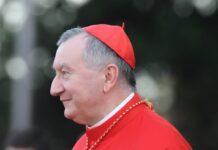
Notably, Christopher Olah—co-founder of Anthropic and head of research on AI interpretability—will participate, reflecting the Vatican’s effort to engage directly with leading figures in the technology sector. Cardinal Secretary of State Pietro Parolin is scheduled to deliver concluding remarks, followed by a papal address and blessing.
Technology Meets Theology
The inclusion of Olah signals a deliberate move by the Vatican to bridge theology and cutting-edge technological development. Anthropic, the AI company he co-founded, has drawn attention for its stance on limiting the use of artificial intelligence in high-risk domains such as autonomous weapons and mass surveillance. Its refusal to relax safeguards in these areas has placed it at odds with some government interests, underscoring the broader tensions between innovation, security, and ethics.
By bringing such voices into dialogue with Church leaders, the Vatican is seeking to situate Magnifica humanitas within real-world debates about AI governance and responsibility. The initiative reinforces the encyclical’s central concern: that technological progress must not outpace ethical reflection or undermine the dignity of the human person.
A Broader Vatican Strategy
The encyclical arrives amid a broader Vatican effort to address artificial intelligence systematically. Just days before the announcement of Magnifica humanitas, the Holy See established a cross-dicastery study group dedicated to AI. The group is tasked with coordinating internal projects and developing policies on the use of artificial intelligence within Vatican institutions.
This institutional investment reflects Pope Leo XIV’s conviction that AI represents one of the defining moral tests of the modern era. By comparing the current technological moment to the industrial revolution, he suggests that society stands at a similar crossroads, where decisions made today will shape human life for generations.
A Defining Document
As the first encyclical of Leo XIV’s pontificate, Magnifica humanitas carries significant weight. Encyclicals are among the highest forms of papal teaching, traditionally addressing major social, moral, or theological issues. In choosing artificial intelligence as his inaugural subject, Leo signals that questions of technology, ethics, and human dignity will be central to his vision of the Church’s mission.
With its release, the Vatican is expected to contribute a distinct moral framework to global discussions on AI—one rooted in Catholic social teaching but aimed at a universal audience. The encyclical’s emphasis on safeguarding the human person suggests a focus not only on risks but also on the responsibilities that accompany innovation.
As the world grapples with the implications of artificial intelligence, Magnifica humanitas positions the Church as an engaged participant in shaping the ethical contours of the digital age.
- Raju Hasmukh with files from Vatican News and NC Reporter
Related Images: