




















Cardinal Müller argues the West cannot endure without Christianity, warning of cultural decay, moral crisis, and threats to global stability.
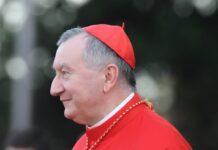
Newsroom (19/05/2026 Gaudium Press ) Cardinal Gerhard Ludwig Müller, Prefect Emeritus of the Dicastery for the Doctrine of the Faith, has issued a forceful and comprehensive critique of modern Western society, asserting that its survival is inseparable from its Christian roots. Writing in a detailed article published on the German Catholic platform Kath.net, Müller presents a sweeping analysis of cultural, political, and philosophical developments, concluding unequivocally: the West cannot endure without Christianity.
“This question can be answered with a single word: No,” he declares at the outset, framing his reflection as both a diagnosis of crisis and a call to reconsider the foundations of Western civilization. His argument explores the interplay of faith and reason, the philosophical identity of Europe, and the challenges posed by secularism, relativism, and global instability.
Europe’s Identity and Its Christian Soul
According to Müller, Europe is not merely a geographic entity but a cultural reality rooted in the legacy of the Western Roman Empire. He defines it as a civilization unified by faith in Christ and shaped by the synthesis of Greek metaphysical thought and Roman legal principles, particularly the concept of suum cuique—to each his own.
Stripping away this foundation, he warns, leads to the dissolution of Europe’s identity. Without Christianity, Europe loses its “formative soul,” becoming vulnerable and directionless, “a dead body” exposed to external forces. For Müller, this cultural disintegration is not theoretical but already underway.
A Global Crisis with Deep Spiritual Roots
The cardinal situates Europe’s challenges within a broader global crisis that he describes in stark terms. Drawing on repeated warnings by Pope Francis of a “third world war in stages,” Müller outlines a convergence of destabilizing factors: civil conflicts, erosion of legal systems, international terrorism, and the weakening of democratic institutions.
He also highlights mass migration, which he claims contributes to the formation of “parallel Islamic societies” in Europe. At the same time, he criticizes what he views as the ambitions of “globalist elites” seeking expansive social and political control.
Culturally, Müller identifies what he sees as signs of profound rupture: the breakdown of marriage and family structures, the rise of gender identity theories, and the spread of posthumanist and transhumanist ideologies that challenge traditional notions of human dignity and purpose. These developments, he argues, collectively signal a civilization losing its moral and spiritual bearings.
Secularism and the ‘Arrogance’ of the West
Müller levels significant criticism at Western secularism, which he describes as both self-assured and coercive. In his view, Western institutions increasingly attempt to export their ethical frameworks globally by linking development aid to the adoption of policies such as abortion, same-sex unions, euthanasia, and assisted suicide.
He contends that these efforts are frequently justified under the guise of managing demographic pressures tied to climate change and limited resources. For Müller, this reflects a deeper ideological project that prioritizes material and technocratic solutions over moral truth.
Faith, Reason, and the Legacy of Benedict XVI
At the intellectual center of Müller’s argument lies the relationship between faith and reason, a theme he develops through the lens of Pope Benedict XVI’s 2006 Regensburg lecture. He endorses Benedict’s critique of a narrow rationality confined to empirical verification, arguing that such a limitation undermines meaningful dialogue.
Rather than rejecting modern science, Müller advocates for an expanded understanding of reason—one that remains open to the divine and acknowledges the moral and metaphysical dimensions of human existence. He emphasizes that ethics cannot be reduced to empirical data, as moral principles derive from conscience and the inherent dignity of the human person.
He connects this perspective to the philosophical work attributed to Jürgen Habermas, suggesting that European identity itself has long been shaped by the dynamic relationship between truth and freedom, faith and rational inquiry.
Dialogue with Islam and Rejection of Violence
Müller also addresses interreligious relations, particularly between Christianity and Islam. He references the 2007 “Joint Document between Us and You,” which emphasized the shared responsibility of Muslims and Christians—together comprising over half of the global population—for fostering peace and justice.
Firmly rejecting the notion of “religious violence,” Müller characterizes terrorism carried out in the name of Islam as “pseudo-religious.” He insists that crimes against humanity cannot be justified by faith and invokes the Quran’s opening invocation of God as “the Most Gracious, the Most Merciful” as a corrective interpretive key.
At the same time, he reaffirms the Second Vatican Council’s declaration Nostra aetate, which recognized the presence of truth and holiness in other religions and called for mutual understanding. Müller underscores the enduring importance of collaboration between faith communities in defending justice, peace, and human dignity.
The Perils of Relativism
Central to Müller’s warning is the threat posed by ethical relativism. Contrary to the belief that relativism promotes tolerance, he argues that it ultimately leads to a “dictatorship of opinion,” where truth is replaced by shifting ideological consensus.
He draws a historical parallel to the French Revolution, citing the Jacobin terror as an example of how claims to rationality and popular will can justify violence when detached from objective moral standards. In such contexts, the absence of a shared commitment to truth opens the door to totalitarianism.
A Call to Reaffirm Human Dignity
The article concludes with a renewed appeal to ground social coexistence in natural law and universal human rights, anchored in the inherent dignity of every person. For Müller, the unity of faith and reason—and the integration of love of God with love of neighbor—remains essential for navigating the complexities of pluralistic societies.
He presents this synthesis as the enduring legacy of Benedict XVI’s thought and as a necessary foundation for authentic dialogue and lasting peace. Without it, he warns, the West risks not only cultural decline but the loss of its very identity.
- Raju Hasmukh with files from Infocatholica
Related Images: