














Inside the Vatican-Iran relationship: a story of quiet diplomacy, UN alignment, and the controversy over honoring Tehran’s envoy.
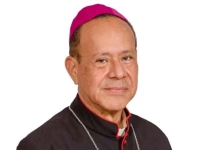
Newsroom (19/05/2026 Gaudium Press ) The recent controversy surrounding the Vatican’s decision to confer a prestigious diplomatic honor on Iran’s ambassador to the Holy See, Mohammad Hossein Mokhtari, is best understood not as an isolated gesture but as part of a decades-long relationship marked by quiet cooperation, shared interests, and carefully cultivated lines of communication.
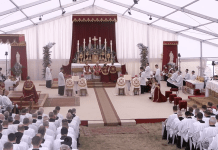
While critics interpreted the award as a symbolic endorsement of Tehran’s policies, officials at the Vatican and the U.S. Embassy to the Holy See emphasized its routine nature. The Grand Cross of the Pontifical Order of Pius IX, they noted, is traditionally granted to ambassadors who have served more than two years, with 13 diplomats receiving the distinction at the same ceremony on May 12. Yet diplomacy rarely unfolds without meaning, and even standard gestures can carry broader geopolitical implications.
A Relationship Forged in Quiet Moments
The enduring ties between Iran and the Holy See date back formally to 1966, but their practical significance has often emerged during moments of crisis. One such instance occurred in late March 2007, when the government of then-President Mahmoud Ahmadinejad broadcast images of captured British Royal Navy personnel, raising fears of a serious escalation between Iran and Western powers.
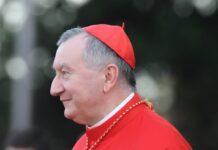
Behind the scenes, however, discreet diplomatic efforts were underway to resolve the standoff. A key role was played by Vatican officials, including Msgr. Pietro Parolin, then undersecretary for relations with states. Working with British and Iranian channels, Parolin facilitated a confidential appeal from Pope Benedict XVI to Iran’s Supreme Leader, Ayatollah Ali Khamenei. The message urged the release of the sailors as a goodwill gesture ahead of Easter.
The strategy proved effective. On April 4, during Holy Week, Iran released the detained personnel, with Ahmadinejad describing the move as an “Easter gift” to the British people. The episode highlighted the Vatican’s ability to serve as a quiet intermediary in situations where conventional diplomacy struggles.
Strategic Alignment Beyond Theology
The Vatican-Iran relationship extends beyond crisis mediation into multilateral diplomacy, particularly at the United Nations. Despite profound theological differences, the two actors have found common ground on several issues, including the sanctity of life, protection of the family, and opposition to expansive interpretations of reproductive rights that include abortion.
These areas of convergence have enabled Iranian diplomats and Vatican representatives to coordinate positions on certain global debates, demonstrating a pragmatic alignment rooted not in ideology alone but in shared policy priorities.
At the same time, the Vatican has not refrained entirely from criticism. In January, Cardinal Parolin offered a measured rebuke of Tehran over its treatment of its own citizens. Such moments underscore the delicate balance the Holy See seeks to maintain—preserving dialogue while signaling moral concern.
Channels of Dialogue and Religious Exchange
Beyond formal diplomacy, sustained engagement between Catholic and Shiite leaders has deepened the relationship over time. Delegations of Iranian clerics frequently travel to Rome for discussions hosted by the Dicastery for Interreligious Dialogue. These encounters have fostered familiarity and, in some cases, genuine warmth, while also providing opportunities to advocate for religious freedom for Christians in Iran.
The relationship has included notable symbolic gestures. In 2010, Iranian Ayatollah Mostafa Mohaghegh Damad participated in the Vatican’s Synod for the Middle East, reflecting a level of trust and mutual respect rarely seen in relations between Western religious institutions and the Islamic Republic.
A Diplomatic Channel Still in Use
Recent developments indicate that the Vatican-Iran channel remains active and relevant. Iranian President Masoud Pezeshkian recently conveyed appreciation to Pope Leo XIV for what he described as a “moral and logical stance” regarding tensions between the United States and Iran. The message, reported by Iranian state media, suggests that Tehran continues to view the Holy See as a useful interlocutor during periods of heightened geopolitical strain.
Iran has also sought Vatican support in other contexts. Last July, Ambassador Mokhtari appealed to the Pope to publicly condemn perceived threats and insults directed at Ayatollah Khamenei, illustrating Tehran’s willingness to engage the Holy See as a potential moral advocate on the international stage.
Controversy and Calculation
Against this backdrop, the Vatican’s decision to honor Mokhtari appears less anomalous. Still, the timing raised questions. Even routine gestures can carry unintended symbolic weight, particularly when relations between Iran and Western nations are strained.
A brief delay might have avoided criticism without undermining the broader relationship. Yet the Vatican’s choice suggests a broader strategic calculation: that maintaining longstanding diplomatic channels outweighs short-term reputational concerns.
A Long-Term Vision
Ultimately, the Vatican’s engagement with Iran reflects a long-term approach shaped by decades of interaction. By keeping dialogue open, even with controversial regimes, the Holy See preserves the possibility—however limited—of acting as a mediator in moments of crisis.
In a region where trust is scarce and tensions remain high, such relationships can prove invaluable. The honor bestowed on Iran’s ambassador, while contentious, fits within this broader pattern. It is a continuation of a policy that prioritizes sustained engagement over isolation—a reminder that in diplomacy, as in faith, patience often defines the strategy.
- Raju Hasmukh with files from NC Register
Related Images: