














Sir James MacMillan’s new sacred oratorio Angels Unawares receives its world premiere in the Sistine Chapel, exploring faith, angels, and compassion.
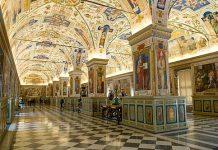
Newsroom (30/03/2026 Gaudium Press ) In the hallowed heart of Vatican City, beneath Michelangelo’s frescoed vaults, a rare musical event unfolded. On March 22, 2026, Scottish Catholic composer Sir James MacMillan unveiled Angels Unawares, a new oratorio that challenges listeners to rediscover the sacred woven into ordinary life and to contemplate the mysterious presence of angels. The performance—given by The Sixteen and Britten Sinfonia—marked the first world premiere ever held in the Sistine Chapel.
For both ensembles, the setting was déjà vu: eight years earlier, they had made history with MacMillan’s Stabat Mater, the first-ever live-streamed concert from the same sacred site. Returning to those storied walls, they found once again the intersection between art, faith, and transcendence.
A Sacred Inquiry in Twelve Movements
Divided into twelve parts—six echoing the Old Testament and six the New—Angels Unawares travels through scriptural encounters with divine messengers who appear when least expected. Among them, The Song of Tobias, a setting of Robert Willis’s poetry, anchors the listener in a story both ancient and immediate. The young Tobias journeys beside the archangel Raphael, unaware of his companion’s true nature until the story’s end. The recurring question—“How could I not have known?”—resonates through the chapel, inviting each listener to ponder unseen grace in daily life.
“I think we should talk more about them,” MacMillan reflected. “Ask questions about what they are and what we think they are. Do they exist? Are they metaphors or real messengers from heaven? I know what I think—they are real.”
The oratorio’s title draws its inspiration from Hebrews 13:2: “Do not neglect to show hospitality to strangers, for thereby some have entertained angels unawares.” For MacMillan, it is a moral and spiritual admonition—an invitation to treat all individuals with dignity and compassion, aware that any human encounter might carry a hidden divinity.
Making the Impossible Possible
The concert drew an audience that included Cardinal Vincent Nichols and Cardinal Pietro Parolin, along with the work’s commissioner, the Genesis Foundation. Its founder, philanthropist John Studzinski, secured the Vatican’s rare permission to stage the event in the Sistine Chapel—a privilege granted by Pope Leo himself.
“Yes, Pope Leo allowed us to do this,” Studzinski confirmed. “The Sistine Chapel is not normally used for concerts—it is a functioning museum—and so we are deeply grateful. We hope it may happen again.”
The Genesis Foundation, now celebrating 25 years, has become the United Kingdom’s foremost commissioner of sacred music. Through partnerships with artists like Harry Christophers and MacMillan, it has championed contemporary compositions that bridge faith and art. “Because of my faith,” Studzinski explained, “music and composition occupy a special place in our mission. We nurture young artists, yes, but sacred music allows us to engage the largest questions of meaning and spirit.”
Evangelizing Through Art
Angels Unawares, the eighth Genesis Foundation commission, emerged from long-running conversations between Studzinski and MacMillan about the fascination modern audiences hold for angels. “There has never been an international piece of music of this scale dedicated to the holy angels in Scripture,” Studzinski noted. For him, the appeal is universal: “Many people, even those without formal religion, sometimes invoke angels as a way of accessing some kind of spiritual framework.”
That universality lies at the heart of MacMillan’s vocation. Earlier this month, the Pontifical Institute of Sacred Music in Rome awarded him an honorary doctorate for his contribution to sacred art. “Most of the music I write is sacred music,” MacMillan said, “but it’s mostly for the concert world. Sacred music isn’t limited to liturgy—it can reach listeners who may not share my faith but who find in music a spiritual art form.”
In this intersection between belief and beauty, MacMillan sees evangelization through sound. His St. John Passion, Christmas Oratorio, and now Angels Unawares are written not only for the devout but for “people who love music—religious or not—who know instinctively that music is a spiritual force.”
A Composer’s Vocation
For MacMillan, composing sacred music is more than aesthetic—it is service. “Writing for liturgy,” he explained, “means carrying the prayers and devotions of the assembly to the altar of God.” His lifelong passion for music began early, when, at age ten, he penned his first composition after discovering the piano. Growing up in a small Catholic parish in western Scotland, he was steeped in both the classical canon—Mozart, Haydn, Beethoven—and the hymns of the Church. Those experiences intertwined, teaching him that music, whether symphonic or sacred, opens a “door or window into the divine.”
“Composers through the ages have been midwives to prayer,” he reflected. “Music transforms people’s spiritual lives. It is, in itself, numinous.”
Once again, surrounded by the painted prophets and sibyls of Michelangelo, MacMillan’s music found its fitting home. In Angels Unawares, faith and art converge—not as nostalgia, but as a living conversation about grace, humanity, and the mysterious companionship of angels who walk beside us, unseen.
- Raju Hasmukh with files from NC Register
Related Images: