








Hawaii opens a Jubilee Year marking 200 years of Catholic missionary history, honoring Father Alexis Bachelot’s enduring legacy.
Newsroom (14/07/2026 Gaudium Press )The Catholic Church in Hawaii has officially launched a year-long Jubilee Year marking the bicentenary of the arrival of the first Catholic missionaries to the islands, inviting the faithful to reflect on two centuries of evangelization, cultural encounter, and missionary witness.
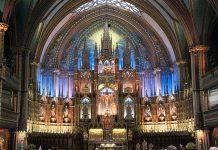
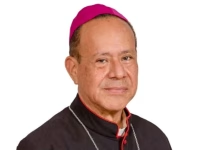
The Jubilee Year was inaugurated on July 9, 2026, with a Eucharistic celebration at the Cathedral of Our Lady of Peace in Honolulu, presided over by Bishop Clarence Richard “Larry” Silva. The commemoration will culminate in July 2027, marking 200 years since the arrival of Father Alexis Jean-Augustin Bachelot, the French missionary who established the foundations of Catholicism in the Hawaiian archipelago.
In his opening homily, Bishop Silva emphasized that the story of Christianity in Hawaii began long before missionaries set foot on its shores.
“The arrival of the first missionaries in Hawaii in 1827 was not the beginning of the journey,” he said. “God in his own way had also prepared the hearts of the people to receive the gospel of Jesus Christ.”
According to the Bishop, Hawaiians were already a deeply religious people whose traditions, stories, and communal values created fertile ground for the Gospel message.
“They were a people who valued community and whose hearts were hospitable to the Holy Spirit,” he explained. “God had already prepared the ground for the planting of that great seed of the word of the true and living God.”
A Kingdom in Transformation
The arrival of Catholic missionaries came during a period of dramatic change in the Kingdom of Hawaii.
At the beginning of the nineteenth century, Hawaiian society was undergoing profound political, social, and religious transformation. In 1819, the ruling authorities abolished the ancient kapu system, a complex network of religious and social taboos that had structured Hawaiian life for generations. While the population remained deeply spiritual, the removal of this traditional framework created a period of transition and reflection.
The following year, American Protestant missionaries arrived on Oʻahu and began establishing schools, translating Scripture, training catechists, and supporting the gradual conversion of members of the monarchy and governing elite. Their efforts were complemented by Polynesian Christians from elsewhere in the Pacific.
Scholars note that the spread of Christianity in Hawaii was not solely the work of American missionaries. Tahitian Christian couples also played a significant role, helping introduce a Hawaiian queen to the Christian faith—a development that would leave a lasting mark on the islands’ religious history.
Father Alexis Bachelot and the Beginning of Catholic Hawaii
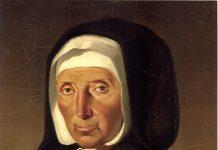
Against this backdrop, a new chapter opened in 1827 with the arrival of Father Alexis Jean-Augustin Bachelot.
Entrusted by Pope Leo XII with the mission of evangelizing the Hawaiian Islands, Bachelot arrived in Honolulu determined to establish a permanent Catholic presence. A member of the Congregation of the Sacred Hearts of Jesus and Mary, he brought with him a strong missionary vision and a deep commitment to serving local communities.
Together with fellow missionaries, Bachelot celebrated the first Catholic Masses in Hawaii and began forming a Christian community through catechesis, sacramental life, and prayer.
His missionary approach also reflected a profound respect for Hawaiian culture and language. He produced several works in Hawaiian, including a grammar, catechisms, and a prayer book, helping make the Catholic faith accessible to local people.
Although political and religious tensions forced him to leave the islands in 1831, his impact endured. The foundations he established would eventually lead to the development of the Sacred Hearts mission and later the Apostolic Vicariate, shaping the future of the Catholic Church in Hawaii.
The Seed That Took Root
One of the most striking symbols associated with Bachelot’s legacy is the introduction of Prosopis seeds to Hawaii.
The missionary brought seeds of the evergreen tree from Paris’s Jardin du Roi—today known as the Jardin des Plantes—drawing on the global botanical exchange networks of the nineteenth century. He planted them in Honolulu, and over time the species spread throughout the islands.
For Bishop Silva, the tree serves as a powerful image of Catholic missionary history.
Developing the metaphor during the Jubilee celebration, he noted that Father Bachelot planted the seeds hoping that, just as the trees would take root and spread across Hawaii, so too would the Catholic faith grow and flourish among its people.
Today, that vision is visible throughout the Diocese of Honolulu, which comprises 66 parishes and 23 churches serving Catholic communities across the six inhabited islands of the archipelago.
Looking Toward the Future
While the bicentenary invites reflection on the past, Church leaders have also framed it as a call to renewed missionary commitment.
Bishop Silva linked the anniversary to the wider mission of the universal Church, which is preparing for the 2033 commemoration of the 2,000th anniversary of the death and resurrection of Jesus Christ. He emphasized that God’s work throughout history has always involved preparing hearts to receive the Gospel, just as He prepared the people of Israel through prophets and sacred history.
For that reason, the Bishop said, authentic missionary activity must be rooted in prayer and discernment rather than relying solely on programs or institutions.
Addressing the Catholic community, he challenged believers to consider how the faith can continue to thrive in future generations.
“How is the way we live our faith today going to assure that it will continue to flourish and grow throughout these islands and throughout the world?” he asked.
He urged Catholics to follow the example of the missionaries who came before them by becoming the “fertile soil” in which the Gospel can continue to take root and bear fruit.
A Leadership Transition
The Jubilee Year also coincides with a significant transition in Church leadership in Hawaii.
After leading the Diocese of Honolulu for two decades, Bishop Larry Silva’s resignation was accepted by Pope Leo XIV on May 6. The Pope appointed Jesuit Father Michael T. Castori as the new Bishop of Honolulu.
Castori’s episcopal ordination and installation as the sixth Bishop of Honolulu is scheduled for July 28 at the Co-Cathedral of St. Theresa of the Child Jesus.
As Hawaii’s Catholic community embarks on its bicentennial observance, Church leaders hope the anniversary will serve not only as a remembrance of missionary pioneers such as Father Alexis Bachelot, but also as an opportunity to renew the Church’s mission for the generations to come.
- Raju Hasmukh with files from Fides News
Related Images: