

















Vatican Observatory convenes global experts to tackle quantum gravity, uniting faith and science in pursuit of the universe’s deepest laws.
Newsroom (28/06/2026 Gaudium Press ) The Vatican Observatory, one of the world’s oldest astronomical institutions, is reaffirming its historic role at the intersection of faith and science by engaging directly with one of modern physics’ most formidable challenges: quantum gravity.
Founded in the 16th century at the urging of Pope Gregory, the Observatory has long symbolized the Catholic Church’s commitment to the study of the cosmos. Its mission was revitalized in the late 19th century under Pope Leo XIII, who reestablished it as a center of scientific excellence, securing its position as an international reference point in astronomical research.
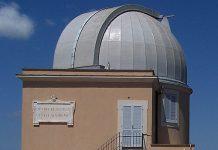
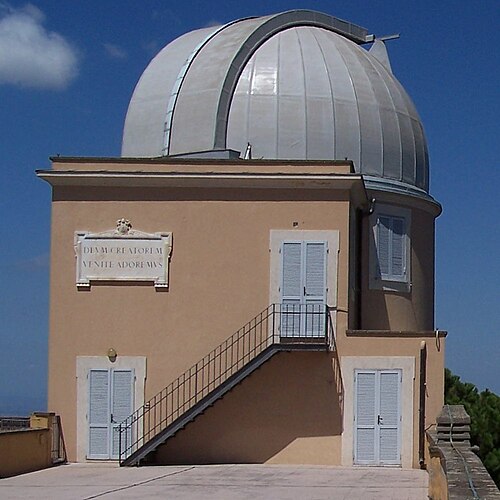
Continuing this tradition of intellectual openness, the Observatory recently hosted a new edition of its prestigious “Lessons from the Vatican Observatory” at its headquarters in Castel Gandolfo. This year’s focus—quantum gravity—brought together internationally recognized scholars alongside a select group of doctoral students and emerging researchers. Over several days, participants explored one of the most complex unresolved problems in physics: the unification of quantum mechanics and general relativity.
At the core of this challenge lies a fundamental incompatibility. Quantum mechanics provides an extraordinarily precise framework for understanding the behavior of elementary particles, while Albert Einstein’s general relativity describes gravity as the curvature of space-time on a cosmic scale. However, attempts to apply both theories simultaneously reveal deep mathematical contradictions.
Unlike classical physics, relativity treats space and time as dynamic entities that evolve and deform. When these concepts are subjected to quantum principles, inconsistencies arise—most notably the issue of “perturbative non-renormalizability.” In practical terms, renormalization is a method used to manage infinite corrections in quantum calculations to produce meaningful physical predictions. While this approach succeeds with other fundamental forces, it breaks down in the case of gravity, where corrections proliferate uncontrollably, rendering the theory impractical.
The Castel Gandolfo sessions, coordinated by Jesuit priest Gabriele Gionti and Father Matteo Galaverni, approached these problems from multiple theoretical angles. According to the organizers, the event fostered both technical rigor and interdisciplinary dialogue.
Professor Claus Kiefer of the University of Cologne presented work on the canonical quantization of gravity, focusing on the so-called “problem of time.” If time itself is subject to quantum fluctuations, defining the evolution of physical systems becomes profoundly complex. Kiefer extended this discussion to black holes, examining the nature of singularities where gravitational forces reach their most extreme limits.
Professor Roberto Percacci from SISSA in Trieste introduced a covariant framework in which gravitons—hypothetical particles that mediate gravity—are treated as spin-2 quantum fields. He highlighted the asymptotic safety program, which proposes that gravity may remain consistent at quantum scales without requiring additional exotic constructs, due to specific high-energy behavior in its fundamental constants.
From a more conceptual standpoint, Professor Sergio Cacciatori of the University of Insubria addressed the philosophical and technical implications of quantizing space-time itself. His work raised foundational questions: What does it mean to measure time when it fluctuates? How is observation defined when the observer is inseparable from the system being studied?
Meanwhile, Professor Pierpaolo Mastrolia of the University of Padua presented research on scattering amplitudes, a powerful tool for calculating particle interactions. His findings reveal notable parallels between established theories of fundamental forces—such as electromagnetism and nuclear interactions—and emerging formulations of quantum gravity, including supergravity and string theory. These connections suggest promising pathways toward theoretical unification.
Beyond its scientific contributions, the event underscored the unique role of the Vatican Observatory as a meeting ground for disciplines, cultures, and generations. Within a setting steeped in centuries of history, young researchers engaged in open dialogue with leading experts, exploring questions that lie at the very foundation of human knowledge.
As scientific inquiry continues to probe both the subatomic realm and the vastness of the cosmos, the Vatican’s commitment to research and critical thought remains steadfast. The pursuit of quantum gravity—marked by unresolved questions and profound implications—stands as a reminder that the search for understanding is both a collective endeavor and an enduring human aspiration.
- Raju Hasmukh with files from ACI Prensa
Related Images: