










Irish Bishop Denis Nulty urges Catholic schools to remain unapologetically Catholic as survey data shows strong parental support.
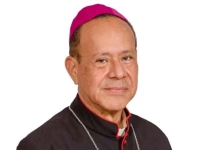
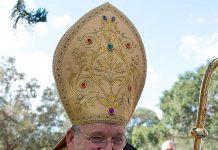
Newsroom (07/07/2026 Gaudium Press ) Bishop Denis Nulty of the Diocese of Kildare and Leighlin has urged Catholic schools in Ireland to remain “unapologetically Catholic” as the country continues a slow-moving process of transferring school patronage from the Catholic Church to multi-faith and secular bodies.
The bishop’s remarks come at a time when Ireland’s education system is undergoing significant debate over its future identity. Although successive governments have promoted greater diversity in school patronage to reflect societal changes and increasing secularization, recent survey data suggests that a majority of families continue to support Catholic-managed schools.
Speaking during a homily on June 28 in Loughcrew, County Meath, commemorating the birth of St. Oliver Plunkett, Bishop Nulty connected the Irish saint’s legacy to the contemporary significance of Catholic education.
“Catholic education was a critical priority for him,” the bishop said of St. Oliver Plunkett, describing the 17th-century archbishop, educator, and martyr as an ideal patron for educational institutions. Among the 162 primary schools under Bishop Nulty’s patronage in Kildare and Leighlin, only one—located in Killina, in the Parish of Carbury—bears the saint’s name.
Catholic Education Remains “Critical”
Bishop Nulty emphasized that Catholic education continues to have an essential role in Irish society despite changing cultural trends.
“At a time when the transfer of ownership is being considered, the schools that remain must be unapologetically Catholic,” he declared.
His comments address the ongoing debate surrounding the Irish government’s divestment program, launched in 2011. The initiative encourages Catholic dioceses to transfer ownership and patronage of some publicly funded schools to multi-faith or secular organizations.
Historically, the Catholic Church has overseen nearly 90 percent of Ireland’s primary schools, reflecting the religious composition of the country throughout much of the twentieth century. However, government officials have argued that Ireland’s increasingly diverse and secular population requires a broader range of educational options.
Despite these ambitions, progress has been limited. Since the launch of the divestment initiative, only 32 schools have completed a transfer of patronage from Catholic management. This remains a small fraction of the more than 2,700 Catholic-run primary schools operating across the country. The previous government had set a target of establishing 400 multi-faith schools by 2030.
Survey Findings Reinforce Support for Catholic Schools
Recent official data appears to support the bishop’s position.
A national survey published by Ireland’s Department of Education in April 2026 found that approximately 60 percent of parents with children attending religious schools wanted to maintain existing Catholic patronage arrangements.
When measured against all eligible households, only 16 percent expressed a desire to see school ownership transferred to alternative patrons.
While 40 percent of parents with children in religious schools indicated a preference for a multi-faith model, advocates of maintaining Catholic patronage note that this figure does not represent a majority view.
The results have been cited by supporters of Catholic education as evidence that trust in Church-managed schools remains strong despite broader patterns of secularization within Irish society.
Families Continue Choosing Catholic Schools
In comments to The Irish Catholic newspaper, Bishop Nulty said enrollment patterns across his diocese demonstrate continued demand for Catholic education.
“People choose to come to our schools. They want to come, and they want to come in large numbers,” he said.
The bishop noted that some families enroll their children in schools under different patrons not because of preference, but because local Catholic schools have reached capacity.
According to Nulty, this demand suggests that many parents remain satisfied with the educational and spiritual environment offered by Catholic institutions.
Limited Appetite for Change
While acknowledging that local communities may evaluate their positions once consultation results are fully analyzed, Bishop Nulty does not anticipate widespread calls for major changes in school patronage.
“Some people may consider whether they want to maintain our patronage once the results are released and analyzed and evaluated,” he said.
Nevertheless, he expressed confidence in the current system.
“I don’t see a great demand for change. I think people are quite satisfied.”
His assessment aligns with the broader position of the Irish Bishops’ Conference and the Catholic Education Partnership (CEP), which have stated their willingness to cooperate with the government’s divestment framework while emphasizing that decisions about patronage should ultimately be determined by parents and local school communities rather than Church authorities.
Following the publication of the survey, CEP Chief Executive Alan Hynes-Cendrzak said the findings demonstrated “a high and sustained level of trust in Catholic schools,” while acknowledging that calls for different patronage arrangements may emerge in particular regions.
Beyond the Label: A Call for Authentic Catholic Identity
For Bishop Nulty, maintaining Catholic patronage is not simply an administrative question. He argues that schools carrying a Catholic identity must genuinely live out that identity rather than merely retain a historical label.
“The important thing is to ensure that our schools are Catholic and live the faith, and that they are not just labels,” he said.
He stressed that daily prayer should remain part of school life and that teachers and staff should feel encouraged and supported in their faith.
The bishop’s message reflects a broader conviction that the future of Catholic education in Ireland depends not only on retaining school ownership but also on fostering a lived and visible Catholic ethos within educational communities.
As debates over patronage continue, the slow pace of divestment and recent survey findings suggest that Catholic schools remain deeply rooted in many Irish communities. For Bishop Nulty, the challenge ahead is not merely preserving Catholic education in name, but ensuring it continues to embody the faith and values that have historically defined it.
- Raju Hasmukh with files from Infocatholica
Related Images: