







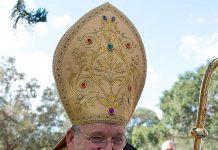


Amid war and hardship, Cardinal Charles Bo calls for steadfast, faith-rooted hope and nonviolent resilience in Myanmar’s struggle for peace.
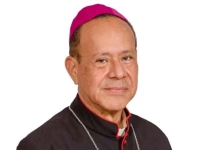
Newsroom (12/02/2026 Gaudium Press ) Five years after Myanmar’s military coup, with the nation still torn by conflict, poverty, and a deep sense of international abandonment, Cardinal Charles Maung Bo, Archbishop of Yangon, has issued a message that cuts through the despair with a profound call to faith. Speaking to the Vatican news agency Fides, the cardinal describes what he calls a “crucified hope”—a faith tested by suffering yet unbroken in spirit.
“In the collective drama marked by insecurity and uncertainty about the future,” Cardinal Bo writes, “it is still possible to maintain hope in Myanmar.” But this, he explains, is not a naive or passive optimism. “It is a Christian hope born from the Cross and the Resurrection. Hope in Myanmar today is a crucified hope, and yet it is not dead.”
The Archbishop grounds this hope, first and foremost, in divine presence rather than in shifting political or social circumstances. “Our hope is placed in God, not in circumstances,” he states. “The people of Myanmar have lost many securities—peace, livelihoods, stability, and even international attention—but they have not lost the presence of God.” Citing the Psalms, he reminds the faithful, “The Lord is close to the brokenhearted.”
Even in displaced villages and camps for the internally displaced, in the tears of grieving mothers and the quiet endurance of volunteers and catechists, he insists, God is still walking with His people.
The Poor as Signs of Hope
Cardinal Bo finds in the resilience of the poor a living expression of faith and hope. “In Myanmar, the poor continue to share what little they have; families continue to pray together; young people still volunteer, serve, and dream of a better future,” he writes. The Church, he emphasizes, remains close to those who suffer, offering education, healthcare, humanitarian aid, and discreet mediation. These efforts, though modest, are “Gospel signs,” he says—like the mustard seed that grows silently yet steadfastly.
Hope as Moral Duty
For the Archbishop, Christian hope is not only a consolation but a moral imperative. “To lose hope would be to surrender the future to violence and despair,” he warns. True hope empowers people to resist injustice without resorting to violence, to protect life under threat, to educate displaced children, and to prepare the soil of reconciliation well before peace accords are signed.
“Hope in Myanmar,” he declares, “is a moral duty. Myanmar hopes—not because the situation is easy, but because God is faithful.”
Faithfulness as Witness
Cardinal Bo also describes the Church’s perseverance as a beacon amid darkness. “When the Church refuses hatred, rejects violence, and continues to speak the language of reconciliation and human dignity,” he writes, “she becomes a sacrament of hope. Even when the world seems indifferent, the Church in Myanmar continues to believe that violence will not have the last word.”
He acknowledges that the silence of the global community can feel like neglect, but he insists it is not divine abandonment. “Myanmar may feel overlooked,” he says, “but it is not forgotten in God’s plan. The blood of the innocent, the prayers of the suffering, and the resilience of the faithful are not wasted.”
Building Bridges Through Faith
Despite widespread violence and forced displacement, communities across Myanmar continue to show resilience through acts of solidarity and compassion. Religious leaders—Christians, Buddhists, and Muslims alike—raise their voices together in calls for peace and reconciliation.
The Christian communities, both Catholic and Protestant, remain deeply engaged in peacebuilding and interfaith collaboration. Supported by ecumenical partners, they initiate prayer services, promote forgiveness, and foster coexistence. Across the country, interreligious gatherings continue to nurture what Cardinal Bo describes as “a framework for coexistence,” sustaining Myanmar’s battered spirit through unity and prayer.
- Raju Hasmukh with files from Fides News
Related Images: