












Caritas Jerusalem secures permission to resume work in Gaza, continuing critical aid amid trauma, destruction, and enduring faith after the war.
Newsroom (12/02/2026 Gaudium Press ) When Israel released in December 2025 a list of 37 NGOs slated for suspension in Gaza, the inclusion of Caritas Jerusalem came as a shock to the organization’s leadership. For Secretary General Anton Asfar, the ruling represented more than bureaucratic uncertainty—it jeopardized nearly six decades of service to one of the world’s most beleaguered populations.
Now, just two months later, that cloud has lifted. Speaking at a public meeting hosted by Caritas Ambrosiana in Milan titled “They Will Rebuild on the Ruins” on February 11, Asfar confirmed that the Israeli inter-ministerial committee had reversed the decision, nullifying the re-registration demand. “Everything has been canceled,” he said, announcing that Caritas could “continue its activities in Gaza as it has done since 1967.” The relief was palpable for an organization rooted in humanitarian outreach and guided by faith.
Life-Saving Services Amid the Rubble
Caritas Jerusalem’s presence in Gaza today is no less essential than it was before the war. The organization runs eight medical units, one of them permanent in Gaza City, along with two psychosocial support centers, employing 127 staff in the Strip and 28 in the West Bank. Its interventions provide primary healthcare, maternal services, and emergency support—lifelines for thousands displaced by conflict.
Even as staff faced personal danger and displacement, Asfar says operations “never stopped.” Since October 7, 2023, when hostilities re-ignited, doctors and aid workers—many themselves refugees—have continued delivering medicines, water, and food to shattered communities. Appeals totaling €7.5 million in 2024–25 and another €8 million for 2026 reflect the vast scale of need, while Caritas Ambrosiana’s bilateral projects have added another €1 million in targeted support.
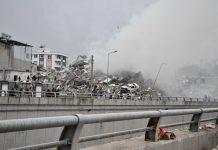
But in Gaza, survival is precarious. After moving its tents from Rafah following the May 2024 invasion, Caritas settled in Khan Yunis, Deir El Balah, and Nuseirat, only to evacuate again during fresh assaults. Even post-ceasefire, Gaza City remains desolate, with infrastructure in ruins and despair thick in the air.
Personal Loss and Collective Faith
The human toll weighs heavily on Asfar. Two Caritas employees were killed in bombings—among them Viola, a laboratory technician, who perished with her husband, infant daughter, and extended family while seeking refuge. Another pharmacist died with his relatives when their shelter was struck; only his three-year-old daughter survived. “All of this was heartbreaking and deeply traumatic,” Asfar recalled.
In those moments of devastation, the team turned inward for faith. “We prayed to find inner strength,” Asfar said, describing how global solidarity—from prayers to Masses offered worldwide—became a quiet but powerful source of endurance. “It means a lot to us,” he added.
A Local Perspective: Fatena Mohanna’s Testimony
Among the faces of this endurance is Fatena Mohanna, a computer engineer from Gaza City and Caritas worker now in Siena, Italy. Studying Italian before a master’s program, she carries the emotional weight of displacement. “Being in Italy is like a dream,” she says quietly. “But every meal, every walk in peace brings guilt because my family is still in Gaza. For two years we survived bombings—here, I drank clean water for the first time.”
Mohanna’s photographs and reports have earned international attention and journalism awards, yet she insists images “can’t capture the feelings.” The world may see children queuing for food, she says, “but it doesn’t show that two years ago those same children were in school.”
Her words echo a wider sense of exhaustion: “Our people are strong. They love art, music, life. They long for normality.” For Mohanna, the humanitarian effort is both professional and personal—a “shared suffering” through which faith and resilience intertwine.
Hope in the Rubble
Water scarcity remains one of Gaza’s crippled city’s most pressing problems—output has plunged to 6,000 cubic meters from 14,000, Asfar notes. Yet even amid shortages and blocked aid entries, there are sparks of relief. “We were terrified of famine,” he says. “On October 12, we managed to distribute 10,000 cans of baby formula across Gaza.”
New mobile clinics, assembled but awaiting authorization to enter, stand ready to expand services. They embody Caritas’s determination to stay, rebuild, and restore dignity to shattered lives.
Bearing the Cross of the Holy Land
For Asfar, the meaning of Caritas’s mission goes beyond logistics. It is spiritual and communal, aligned with what he calls “the DNA of Caritas”—a duty to serve, reconcile, and hope. Alongside emergency care, new initiatives, including a maternal and child health center, aim to rebuild the foundations of daily life for mothers and children left alone by war.
The secretary general sees this persistence as a kind of faithful resistance to despair. “Societies are torn apart by extremism,” he reflects, “but there are people swimming against the current, working for equality, justice, and peace.”
His words return, as they often do, to the role of the Church in the Holy Land: “Dialogue doesn’t solve the conflict, but it plants seeds of hope. My love for Jerusalem made me stay—it’s not easy, but it’s our mission. For us Christians, this is our little cross to bear.”
- Raju Hasmukh with files from Asianews.it
Related Images: