






Holy Week 2026 in Nicaragua was marked by full churches, police surveillance, and the faithful defying strict regime prohibitions.
Newsroom (07/04/2026 Gaudium Press) Despite heavy restrictions imposed by the government of Daniel Ortega and Rosario Murillo, Holy Week 2026 in Nicaragua was marked by an extraordinary show of faith. “The churches were full of the faithful,” said Father Edwing Román, a Nicaraguan priest now in exile in Miami. Yet his gratitude came laced with sorrow: “It was celebrated in an atypical way, far removed from expressing religious freedom.”
For the fourth consecutive year, processions, Stations of the Cross, and other public displays of devotion were banned. The dictatorship’s prohibitions confined Holy Week celebrations to the interiors of temples, courtyards, or atriums—each watched closely by police officers or government informants. “It’s a new year in which the regime prohibits processions in streets and public thoroughfares,” Father Román lamented, describing how the faithful were forced to adapt their rites under surveillance.
Across the country, thousands of traditional Lenten activities were canceled: pilgrimages, mayordomías—the community-led preparations for carrying flowers and holy images to churches—and the dramatic Judea representations of Christ’s Passion. These staples of public religiosity disappeared under the shadow of state control. Even so, faith endured. “People attended church in great numbers,” Father Román said, “despite the regime’s propaganda urging them to go to beaches and tourist resorts owned by pro-government Sandinistas.”
Ironically, the same pro-government media that defend the official narrative of “normalcy” invaded sacred spaces to stage photos for political propaganda. “They even climbed onto a main altar in the middle of a celebration,” Father Román denounced. “They pretend everything is fine while the persecution continues.”
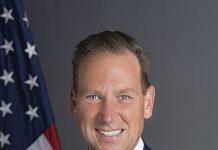
International voices echoed concern. On March 31, Christopher Landau, U.S. Under Secretary of State, condemned the Nicaraguan government’s curbs on public worship, expressing hope for “the day when our Nicaraguan friends regain their religious freedom.” Managua quickly responded with a statement titled “Completely False,” denying any wrongdoing. The government insisted that “thousands of religious activities take place” nationwide, but avoided acknowledging that most were restricted indoors and under police oversight.
Researcher Martha Patricia Molina, author of Nicaragua: A Persecuted Church, reported that since 2019, the regime has banned over 28,900 processions and acts of popular piety from taking place in public streets—a staggering figure that reflects the systematic repression of the Church.
Other priests in exile, speaking anonymously for fear of reprisals, confirmed that 2026 saw “unusual” media coverage of Holy Week events. “This may reflect the government’s anxiety about international sanctions against allies like Venezuela, Cuba, and Iran,” one priest speculated. Others noted that even without bishops present—several exiled under pressure—faith communities displayed “the creativity of the people of God” in finding alternative ways to express devotion.
Bishop Rolando Álvarez of Matagalpa and Estelí, now exiled in Rome, appeared on Good Friday at St. Peter’s Basilica, symbolizing both his displacement and steadfastness. Nicaragua’s dioceses of Siuna and Jinotega also lack their bishops, now living abroad after facing harassment from the regime. “Despite surveillance and infiltrators,” one exiled priest said, “the people of God are steadfast.”
Inside the Managua Cathedral, Cardinal Leopoldo Brenes struck a tone of restrained hope. Concluding the Chrism Mass on Holy Thursday, he observed: “I have seen pictures from parishes showing great participation. The people, with complete generosity and freedom, have come to their churches and are living their faith, which I believe is the most important thing.”
The largest single event was the Good Friday Way of the Cross in Managua, a four-hour ceremony gathering thousands within the cathedral grounds—the only space permitted by authorities. In León, similar observances took place entirely inside the cathedral, with no street processions allowed.
In Miami, Monsignor Silvio Báez, the exiled auxiliary bishop of Managua, presided over Easter Sunday Mass at St. Agatha Parish. His homily carried spiritual weight and political resonance. “By raising the Crucified One,” he said, “God reveals not only triumph over death, but the victory of justice over human injustice.” This, Báez concluded, demands a choice: “Before the Risen Lord, we must ask ourselves whose side we are on—the side of those who crucify, or the side of the crucified.”
From Managua to Miami, the question resonates. In a country where faith must hide under watchful eyes, Holy Week 2026 was not simply a religious observance—it was an act of defiance.
- Raju Hasmukh with files from ACI Prensa
Related Images: