









Nordic bishops declare no exceptions to Catholic ban on Freemasonry, citing doctrinal incompatibility and reaffirming universal Church law.
Newsroom (01/07/2026 Gaudium Press ) The Catholic bishops of Northern Europe have issued a sweeping clarification that membership in Masonic lodges is unequivocally forbidden for Catholics, rejecting long-standing regional speculation that Scandinavia might represent a special case.
In a pastoral letter dated June 29, the Nordic Bishops’ Conference—covering Denmark, Sweden, Iceland, Finland, and Norway—addressed what it described as “decades of speculation” and “diverging opinions” regarding whether Catholics in the region could join Freemasonry. The bishops concluded that no such exception exists.
“There exists no exception, no particular norm or rule, and in consequence no dispensation in the Church,” the letter states, affirming that universal Church law applies equally in the Nordic countries. Catholics who join Masonic associations, the bishops reiterated, are subject to canonical penalties and are barred from receiving the sacraments.
Clarifying Persistent Confusion
The bishops acknowledged that confusion in Scandinavia stemmed partly from perceptions thau8t Nordic Freemasonry differs from other forms, leading some to believe Catholic participation might be permissible. This view, they said, had caused “disquiet” and even “uproar” within local Churches.
The conference also pointed to historical ambiguity following the 1983 revision of the Code of Canon Law, which removed explicit reference to Freemasonry. That omission led some to mistakenly conclude that the prohibition had been relaxed. In reality, the change was intended to avoid narrowing the scope of banned societies, not to permit Masonic membership.
The Vatican repeatedly corrected such interpretations. A 1983 declaration signed by Cardinal Joseph Ratzinger stated that Catholics who enroll in Masonic associations are “in a state of grave sin and may not receive Holy Communion.”
Vatican Position Reaffirmed
The Nordic bishops confirmed that they raised the issue directly with the Dicastery for the Doctrine of the Faith during a 2023 assembly in Rome. The response, they said, was “crystal clear”: the prohibition on Freemasonry is universal and absolute.
That position aligns with a 2023 Vatican doctrinal note addressing widespread Masonic affiliation in the Philippines. The document rejected any case-by-case exceptions and reaffirmed that Catholics who knowingly join Masonic lodges fall under existing prohibitions.
Pastoral Measures and Sacramental Discipline
The June 29 letter includes four pastoral provisions aimed at Catholics currently affiliated with Freemasonry. Among them is the requirement that individuals must sever Masonic ties before receiving Communion or other sacraments.
The bishops also addressed Freemasons seeking to enter the Catholic Church, outlining steps for reconciliation in accordance with Church teaching.
Despite the firm stance, the bishops emphasized that the prohibition is not a judgment on individuals. “The Church’s firmness… is not a negative judgement on the good will or good works of individuals,” the letter states. Rather, it reflects the incompatibility between Masonic principles and Catholic doctrine.
Theological Incompatibility
According to the bishops, Freemasonry’s philosophical and theological foundations conflict with core elements of the Catholic faith. They cited concerns that Masonic thought promotes religious relativism and a deistic understanding of God that excludes divine revelation.
An attached reference to a 1980 declaration by the German bishops elaborates on these concerns. That report concluded that Masonic concepts of truth are “totally relativistic,” its rituals possess a quasi-sacramental character, and its teachings deny the necessity of Christ and the unique role of the sacraments.
The German bishops also rejected the idea of “Christian lodges,” calling them a fiction that adapts Christianity to Masonic frameworks rather than the reverse.
Historical Context of the Ban
The Catholic Church’s opposition to Freemasonry dates back to 1738, when Pope Clement XII first prohibited membership, citing the movement’s promotion of religious indifferentism. Over the following centuries, multiple popes reinforced the ban, often imposing automatic excommunication.
The Church’s concern has consistently centered on the belief that Freemasonry introduces an alternative worldview that undermines Catholic teaching. Early papal documents warned that Masonic ideology placed natural virtue above revealed truth and treated all religions as equally valid.
Pope Leo XIII later described Freemasonry as advancing a secularist agenda, including the idea of an atheistic state and the reduction of marriage to a civil contract.
A Call for Clarity
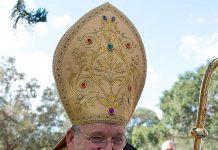
In his introduction to the letter, Bishop Erik Varden of Trondheim framed the issue as one of fundamental commitment. “To be a Christian is to make fundamental choices,” he wrote. “Our speech is to be ‘Yes, yes’ or ‘No, no’, not ‘A little bit of this and a little bit of that’.”
The bishops said their intention is to equip clergy to guide the faithful “with clarity and charity,” emphasizing that “the preaching of the truth in love is a high form of charity.”
The letter marks the latest in a series of global interventions aimed at dispelling ambiguity about Freemasonry and reaffirming a longstanding and unbroken line of Catholic teaching.
- Raju Hasmukh with files from The Pillar
Related Images: