







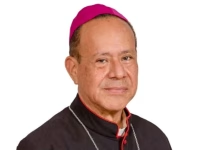

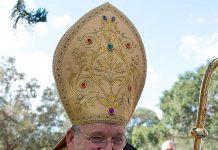

Msgr. Paolo Martinelli urges calm in the Gulf, calling the Abrahamic Family House a lasting symbol of peace amid new conflict in the Middle East.
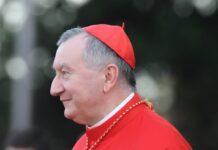
Newsroom (02/03/2026 Gaudium Press ) From Abu Dhabi, where uncertainty hangs over the Persian Gulf like a desert haze, Msgr. Paolo Martinelli, Apostolic Vicar of Southern Arabia, speaks softly but with conviction. In the face of a rapidly escalating war involving Israel, the United States, and Iran, the Italian prelate insists that dialogue and coexistence must not become the latest casualties of conflict. “The very existence of the Abrahamic Family House is a positive challenge and a reminder of the value of dialogue between people of different faiths,” he tells AsiaNews. “We must never tire of fostering it.”
The Abrahamic Family House—a landmark of interfaith unity inaugurated in 2023 on Abu Dhabi’s Saadiyat Island—has been temporarily closed due to civil security concerns. Martinelli stresses that this closure is “temporary, but necessary,” not symbolic of the violence that now ripples through the Middle East. “It remains a sign of peaceful coexistence,” he insists, “and we hope it can soon be reopened.”
Escalation Across the Region
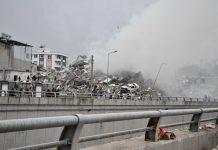
Now entering its third day, the new conflict has spread across the Gulf and into Lebanon, where Israeli strikes on Hezbollah targets have caused dozens of casualties. Explosions have been reported as far away as Bahrain and the Emirates, while a major oil refinery fire in Saudi Arabia appears to be under control. From Riyadh to Kuwait City, leaders accuse Tehran of orchestrating attacks on US military and energy installations, vowing firm retaliation.
In Kuwait, officials reported several American fighter jets crashing—potentially the result of friendly fire—as the US ramps up regional defenses. Across the region, tension mounts; the British Royal Air Force base in Cyprus remains on high alert amid reports of a possible drone incursion. The Iranian Red Crescent estimates over 550 deaths in more than 130 cities, making this the bloodiest regional flare-up since the “12-Day War” last June.
‘The Situation Appears Under Control’
Despite the surrounding turmoil, Martinelli emphasizes that the Emirates remain largely stable. “The situation appears under control,” he explains, though pockets of anxiety are felt in major cities such as Abu Dhabi and Dubai. “The attacks have essentially all been repelled, and the public perception is that the country has responded well and is capable of protecting its population. This does not eliminate a certain degree of apprehension.”
Religious life continues with caution. Masses are being celebrated as usual in all parishes of the Vicariate, though large public events have been postponed. “Our parish priests confirm that Sunday services were held regularly,” Martinelli says. “In Al Ain, near the Omani border, where I was conducting my pastoral visit, all activities proceeded as planned. We are following civil instructions closely.”
The Human Cost and the Migrant Majority
For the Gulf’s vast migrant community—making up roughly 90 percent of the population—the stakes are particularly high. Martinelli notes that three migrant workers have already lost their lives in the unrest, a tragedy that recalls their vulnerability in times of regional upheaval. “We pray for the victims,” he says, “and hope no others will be added. Above all, we must return to the path of dialogue and diplomacy to support the good of peoples who yearn for peaceful coexistence.”
The Enduring Message of the Abrahamic House
The Abrahamic Family House stands as one of the most powerful symbols of that aspiration. The tri-faith complex—comprising a mosque, a church, and a synagogue under one architectural canopy—was born from the 2019 Document on Human Fraternity signed by Pope Francis and the Grand Imam of Al-Azhar during the pontiff’s historic visit to Abu Dhabi.
Even in silence and closure, the site continues to carry moral weight. “We must fight against the exploitation of religion,” Martinelli says firmly. “Even if it cannot be used at this time, it remains a sign of dialogue and peaceful coexistence.”
Faith Under Fire, Hope Unbroken
In these dark hours, Martinelli draws strength from solidarity with other Catholic leaders in the region. He has been in “constant contact” with Msgr. Aldo Berardi, Apostolic Vicar of Northern Arabia, and with Cardinal Pierbattista Pizzaballa, the Latin Patriarch of Jerusalem. “It is very important for me not to feel alone,” he explains. “We share responsibility as pastors in this challenging region.”
His message to the faithful, sent just hours after the first strikes, urges calm and unity. “I asked everyone to remain at peace in the Lord, to follow civil instructions, and above all to remain united in prayer,” he says. “Prayer renews our hope, our trust in Providence, and prepares us to face difficulties with a positive spirit, open to charity and sharing.”
As the Gulf edges toward a widening war, the closed gates of the Abrahamic Family House still whisper a promise—that peace, even when forced into retreat, is not forgotten.
- Raju Hasmukh with files from Asianews.it
Related Images: