





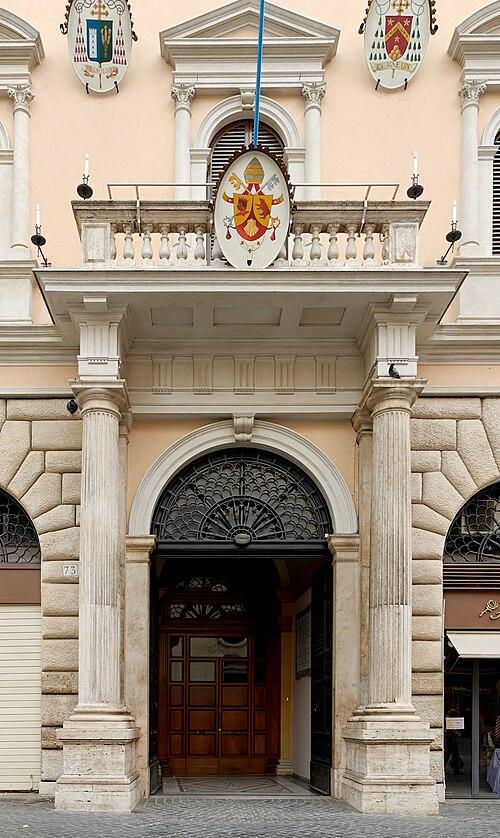
The Pontifical Ecclesiastical Academy celebrates 325 years training Vatican diplomats, shaping global peace efforts and church leadership.
Newsroom (01/06/2026 Gaudium Press ) Rome’s Pontifical Ecclesiastical Academy, the institution responsible for training the Holy See’s diplomatic corps, is commemorating the 325th anniversary of its founding — a milestone that highlights its enduring yet often overlooked influence on global affairs.
Situated in Piazza della Minerva, the academy has served as a cornerstone of Vatican diplomacy since its establishment in 1701 by Pope Clement XI. Although it took its present form in 1850, the institution remains one of the oldest diplomatic schools in the world. Over more than three centuries, it has quietly shaped the careers of more than 2,000 ecclesiastical diplomats, including apostolic nuncios who serve as ambassadors of the pope to nations across the globe.
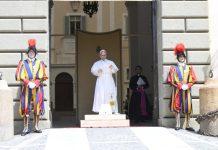
Marking the anniversary on April 27, Pope Leo XIV visited the academy and emphasized the core mission of its students: to act as “shepherds” and to bring the message of Christ into the arena of international relations. He underscored the dual responsibility of representing both spiritual truth and the Holy See’s diplomatic vision in a complex and often volatile world.
An “Invisible” but Global Mission
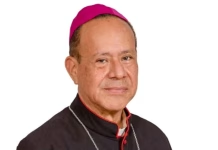
Despite its long history and influence, the academy remains little known outside ecclesiastical and diplomatic circles. Archbishop Salvatore Pennacchio, its current president, acknowledged this paradox, describing the institution as both “obscure” and profoundly connected to global realities.
Quoting Paul VI, he referred to the academy’s work as an “invisible, silent, misunderstood” service — one that nonetheless underpins the Holy See’s diplomatic engagement with 183 countries. This engagement spans delicate negotiations with hostile governments as well as humanitarian responses during crises.
Pennacchio’s own four-decade career as an apostolic nuncio offers a glimpse into the scope of this mission. His postings included Rwanda in the aftermath of genocide and Thailand, where he also oversaw relations with six Southeast Asian countries. During his tenure, he conducted more than 200 pastoral visits in seven years, blending diplomatic duties with direct pastoral outreach.
A core element of the nuncio’s role, Pennacchio explained, is acting as a tangible sign of papal presence. In regions where the pope cannot physically travel, diplomats serve as conduits of both spiritual solidarity and practical assistance, often mobilizing organizations such as Caritas in response to natural disasters and conflict.
Forming Diplomats for Church and State
The academy currently hosts 37 priests from 28 countries, reflecting the global nature of the Church it serves. Their formation is carefully structured around three pillars: academic, spiritual, and pastoral.
Academically, students pursue specialized studies tailored to diplomatic service. This includes training in canon law and extensive language acquisition, with proficiency in at least two foreign languages required, alongside Italian, the working language of the Roman Curia.
Spiritual formation is equally emphasized. Unlike typical academic institutions, the academy fosters a communal life rooted in priestly identity. All candidates arrive with prior pastoral experience, ensuring they are grounded in parish ministry before entering diplomatic service.
The pastoral dimension remains central throughout their training. Students continue active ministry on weekends, serving in parishes, hospitals, and prisons across Rome. This ensures that their diplomatic vocation remains connected to the everyday realities of the faithful.
A relatively recent addition to the program further deepens this connection. Introduced under Pope Francis, a mandatory missionary year requires candidates to live in the country where they will later serve diplomatically. Only after this immersive experience do they receive their first official assignment.
A Distinct Model of Diplomacy
The role of Vatican diplomats differs markedly from that of their secular counterparts. Pennacchio likens it to “two parallel rails”: one representing engagement with state authorities, the other with the local Church.
While nuncios formally function as ambassadors — presenting credentials and maintaining diplomatic ties — their mission extends beyond national interests. Unlike civil diplomats, who typically prioritize economic or military objectives, representatives of the Holy See focus on fostering peace, dialogue, and moral engagement.
In political contexts, the academy’s graduates are trained to advocate for negotiation rather than conflict, reflecting the Church’s broader commitment to peaceful resolution. This dual identity — both diplomatic and pastoral — defines the unique role of Vatican envoys on the global stage.
Enduring Relevance in a Changing World
As the Pontifical Ecclesiastical Academy marks its 325th anniversary, its continued relevance is underscored by an increasingly complex international landscape. From conflict zones to humanitarian crises, its graduates operate at the intersection of faith and diplomacy, often in environments where conventional channels have faltered.
Though its work remains largely out of the public eye, the academy’s influence is felt across continents — in embassies, dioceses, and negotiation rooms alike. Its alumni, which include five popes and eight Vatican secretaries of state, stand as testament to its enduring role in shaping not only Church leadership but also international dialogue.
In an era marked by geopolitical tension and rapid change, the quiet formation of “ambassadors of peace” continues — just as it has for more than three centuries.
- Raju Hasmukh with files from CNA
Related Images: