












Diocese of Albano honors Pope Leo XIV with a concert at Castel Gandolfo, celebrating beauty, music, peace, and hope amid global challenges.
Newsroom (20/07/2026 Gaudium Press ) A summer evening at Castel Gandolfo became a celebration of beauty, faith, and hope as the Diocese of Albano organized a special concert in honor of Pope Leo XIV during his stay in the historic town south of Rome.
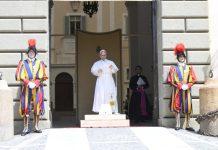
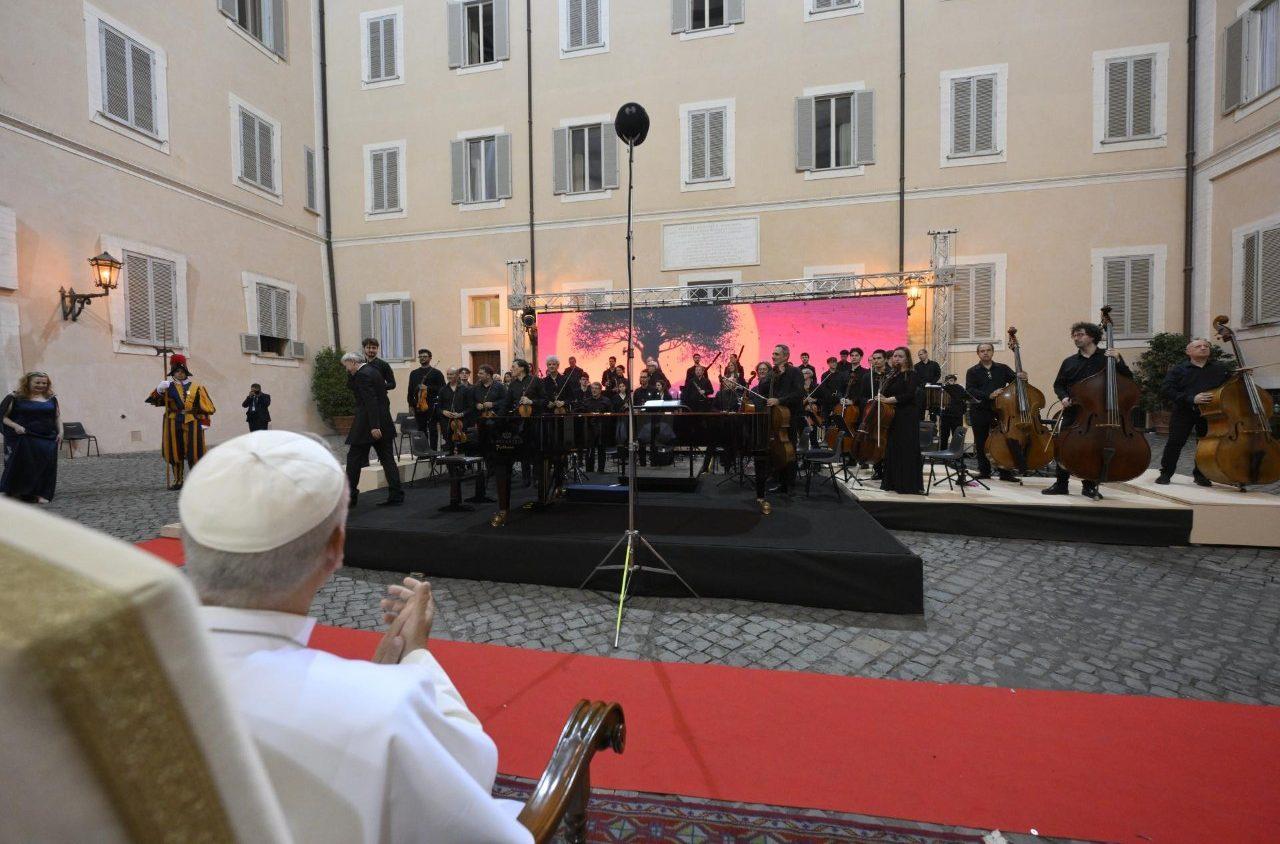
Held in the courtyard of the Apostolic Palace, the event brought together musicians, clergy, and attendees for an evening that reflected on the enduring power of art and music in a world often marked by conflict and uncertainty. At the conclusion of the concert, Pope Leo XIV delivered remarks that placed beauty at the center of the human experience, describing it as a force capable of lifting hearts beyond the difficulties of daily life.
“We live in a world where beauty is lacking,” the Pope said, pointing to the many challenges facing humanity, including wars, violence, hatred, unemployment, and social difficulties. Against that backdrop, he described the gathering as “a great gift,” noting that occasions dedicated to beauty remind people that they are capable of coming together to reveal something greater.
According to the Pope, beauty has the power to move from heart to heart, helping individuals see beyond immediate troubles and directing their gaze toward heaven.
Art as a Way of Looking Upward
Reflecting on the significance of music and artistic expression, Pope Leo XIV connected the evening’s performance with a broader spiritual message.
Recalling a recent trip to Spain undertaken with the purpose of encouraging people to “lift our eyes” toward heaven, he said that music, art, and beauty serve as pathways that help humanity look upward. Such experiences, he explained, guide people toward God and reveal some of the finest dimensions of the human person.
The Pope emphasized that artistic beauty can raise the human gaze beyond present hardships and restore hope. In his view, encounters with music and art are not merely cultural experiences but opportunities to rediscover a deeper meaning and a renewed sense of purpose.
He also expressed gratitude to the performers and organizers, thanking the artists whose work had moved him deeply and praising the Diocese of Albano for offering the concert as a gift to the community. Moments of beauty, he said, allow people to enter into the vision of creation as God intended it.
A Musical Tribute from the Diocese of Albano
The concert was presented by the Diocese of Albano as a gesture of affection and closeness to the Holy Father during his summer residence at Castel Gandolfo.
Opening the evening, Bishop Vincenzo Viva welcomed Pope Leo XIV and reflected on the local Church’s gratitude for his return to the town. He described the concert as both an expression of thanks and an opportunity to share the gift of symphonic music with the wider community.
Bishop Viva also used the occasion to connect the evening’s artistic themes with the pressing realities of the contemporary world. Referring to Bellini’s Norma, he spoke about women and mothers living amid the devastation of war, observing that they, together with their children and families, often bear the greatest burden of conflict.
In their suffering, he said, can also be seen the hope of a reconciled future. His remarks echoed Pope Leo XIV’s repeated appeals for peace, a message that has remained central since the beginning of his pontificate.
Between Paganini and Bellini
The musical program created a dialogue between two giants of nineteenth-century Italian music: Niccolò Paganini and Vincenzo Bellini.
Violinist Marco Rogliano performed the Polonaise with Variations from Paganini’s Third Violin Concerto, showcasing the composer’s renowned virtuosity and expressive style. The program continued with pianist Rossana Tomassi Golkar and the orchestra I Musici di Parma, conducted by Maestro Pier Carlo Orizio, performing Luis Bacalov’s Libera fantasia e variazioni sulla Norma, based on Bellini’s celebrated opera.
The selection brought together instrumental brilliance and operatic lyricism, highlighting the shared singing quality that characterizes the works of both composers. Through these performances, the audience was taken on a journey that united technical mastery with emotional depth.
Particularly significant was Bacalov’s reinterpretation of Norma. Through piano and orchestra alone, the composition retraced the opera protagonist’s path from suffering toward forgiveness and self-sacrifice. In doing so, it transformed a personal narrative into a broader reflection on love, reconciliation, and peace.
A Universal Message Beneath the Stars
The evening’s program emphasized beauty’s ability to endure even amid the turbulence of history. As noted in the concert presentation, its message expressed how beauty can continue to resonate “through air shaken by the winds of war.”
That aspiration toward hope and peace found a fitting visual conclusion. As the final notes faded, a star-filled sky was projected behind the orchestra, reinforcing the evening’s recurring theme of lifting one’s gaze upward.
The image echoed Pope Leo XIV’s reflections on beauty as a bridge between earthly challenges and transcendent hope. Beneath the skies of Castel Gandolfo, the concert became more than a cultural performance. It served as a reminder of humanity’s capacity to create, to unite, and to seek peace through art.
At the end of the event, the Holy Father personally greeted the musicians and attendees before departing the courtyard of the Apostolic Palace, bringing to a close an evening dedicated to beauty, gratitude, and hope.
- Raju Hasmukh with files from Vatican News
Related Images: