











A Vatican panel rules out women’s diaconate, reaffirming Church doctrine and stirring renewed debate over tradition and reform.
Newsroom (18/12/2025 Gaudium Press ) Catholics familiar with the Catechism might be forgiven for expressing confusion in recent weeks, as a Vatican commission’s declaration against the possibility of women entering the diaconate dominated Catholic news channels. For many, the question arises: why such a statement now, when the Church’s teaching on the matter is already unambiguous?
To understand this renewed discussion, one must consider what the commission actually said, what the Church has already taught, and why the issue persists in public debate.
A Commission Five Years in the Making
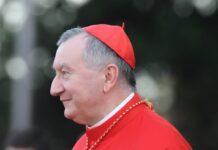
On December 4, Cardinal Giuseppe Petrocchi’s commission, established in April 2020, released a summary of its five-year study on women’s access to the diaconate. The key statement left little doubt about the commission’s conclusion: according to its findings, historical and theological research “rules out the possibility of moving in the direction of admitting women to the diaconate understood as a degree of the sacrament of Holy Orders.”
Though the commission stopped short of issuing a “definitive judgment,” citing the current limits of theological investigation, it reaffirmed with emphasis that the Church’s tradition, scripture, and magisterial teaching firmly prohibit such a change.
A Lineage of Consistent Teaching
Petrocchi’s statement hardly breaks new ground. Canon Law is explicit: “A baptized male alone receives sacred ordination validly” (Canon 1024). This principle—unchallenged for centuries—was only seldom reasserted in official Church documents because it was simply understood as part of the faith’s patrimony.
Pope John Paul II codified this understanding in his 1994 apostolic letter Ordinatio Sacerdotalis, declaring that the Church “has no authority whatsoever to confer priestly ordination on women,” a judgment to be “definitively held by all the Church’s faithful.”
Subsequent clarifications from the Congregation for the Doctrine of the Faith described this prohibition as infallible, confirming that “the Church does not have the power to change the substance” of the sacrament of Holy Orders. As Cardinal Luis Ladaria Ferrer explained in 2018, John Paul II’s pronouncement simply made explicit what the universal Magisterium had long held as part of the deposit of faith.
Pope Francis himself, while encouraging discussion of the topic in earlier synodal gatherings, has also maintained doctrinal consistency, stating in Evangelii Gaudium that the reservation of priestly ordination to men “is not a question open to discussion.”
Activism and the Push to Reopen the Question
The persistence of the debate stems less from ecclesial ambiguity than from renewed activism outside and within some circles of the Church. The commission’s creation followed years of advocacy from groups promoting the ordination of women, including organizations like the Women’s Ordination Conference, whose demands often resonated with certain synodal participants and Western commentators.
The Petrocchi commission itself was born out of a renewed request during the Synod on Synodality when delegates called for a deeper look at the theology and history of the diaconate. Yet, during both the 2023 and 2024 Synod sessions, Vatican officials repeatedly emphasized that no theological foundation exists for admitting women to Holy Orders.
Cardinal Víctor Manuel Fernández, who led one of the Synod’s study groups, reiterated in plenary session that “there is still no room for a positive decision by the Magisterium” on this question. Other bishops, such as Australia’s Anthony Randazzo, criticized the persistent “small but powerful Western voice obsessed with pushing this issue,” suggesting that advocacy for a female diaconate reflects more cultural lobbying than theological inquiry.
The Commission’s Findings and Their Implications
Perhaps most striking was Petrocchi’s acknowledgment that the supposed groundswell of support within the Synod was, in reality, limited in scope. Of the interventions received, only twenty-two papers came from individuals or groups across “a few countries.” The commission concluded that, though some were “skilfully argued,” their input did not reflect the voice of the Synod—much less that of “the People of God as a whole.”
Still, one phrase from Petrocchi’s statement drew special attention: the suggestion that “it is not at present possible for a definitive judgment to be formulated.” For some, this marks a curious hesitation, even a contradiction, given the clear and definitive pronouncements already made by the Church’s Magisterium over centuries.
Closing a Debate Long Decided
For many observers, the commission’s findings simply reaffirm what has always been understood—that the Church cannot alter the essence of sacraments instituted by Christ. Though Pope Francis—or his successor, Pope Leo XIV—has yet to formally respond, the theological trajectory seems fixed.
After decades of study commissions and procedural nuances, the conclusion remains unchanged: the sacrament of Holy Orders, whether in the diaconate, priesthood, or episcopacy, is reserved to men. The Petrocchi report, even in its cautious phrasing, effectively closes a debate that, doctrinally speaking, was settled long before it began.
- Raju Hasmukh with files from Catholic Herald
Related Images: