






Pope Leo XIV urges compassion and peace, calling for a ceasefire as Middle East violence escalates and civilians face mounting suffering.
Newsroom (16/03/2026 Gaudium Press ) Standing before thousands of pilgrims in St. Peter’s Square on Sunday, Pope Leo XIV reflected on faith as a lens that reveals, rather than conceals, the truth of human suffering. His Angelus address centered on the Gospel account of Jesus healing the man born blind—a gesture the Pope described as a profound sign of divine compassion and spiritual awakening.
“The mystery of salvation is revealed in this event,” Pope Leo said. “The Son of God came to open our eyes as humanity dwelt in darkness.”
Like the blind man of Scripture, he continued, “we too are born blind to the mystery of life,” unable to penetrate its depths without the light of grace. God’s incarnation in Jesus, he explained, allows “the clay of our humanity” to be remade through divine breath—enabling us to see ourselves, others, and God with clarity and truth.
Faith as Vision, Not Blindness
Rejecting the common saying that faith is a “leap in the dark,” Pope Leo clarified that genuine faith is not ignorance but insight. “Faith is not a blind act,” he said, “nor a retreat into some religious certainty that turns our gaze away from the world. On the contrary, it helps us to see as Jesus Himself sees—with His own eyes.”
He urged believers to open their eyes to the wounds of the world: the suffering of others, the afflictions that stain humanity, and the injustice and violence that continue to spread. This, he said, is the essence of “an alert, attentive, and prophetic” faith—one that transforms empathy into action.
“Our faith,” he concluded, “should open our eyes to the darkness of the world and bring to others the light of the Gospel through our commitment to peace, justice, and solidarity.”
He then invoked the Blessed Virgin Mary’s intercession, asking that Christ “open our hearts and help us bear witness to Him in simplicity and courage.”
A Plea for Peace Amid Escalating Conflict
Departing from his reflection on the Gospel, Pope Leo XIV issued an urgent appeal to world leaders as violence raged across the Middle East. Addressing “those responsible for the ongoing conflict between the U.S., Israel, and Iran,” he called for an immediate ceasefire.
“In the name of the Christians of the Middle East and of all women and men of goodwill,” he pleaded, “Cease the fire! Let paths of dialogue be reopened!” He reminded listeners that “violence can never lead to the justice, the stability, and the peace that peoples are awaiting.”
The Pope expressed deep sorrow over the toll on civilians. “Thousands of innocent people have been killed, and many others forced to abandon their homes,” he said, recalling with grief the attacks on schools, hospitals, and residential areas. He voiced special concern for Lebanon, urging “paths of dialogue” to help the country’s leaders pursue “lasting solutions to the serious crisis underway.”
Civilians Bear the Weight of War
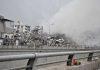
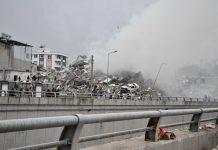
While the Pope’s words echoed through Vatican City, the scale of human suffering across the Middle East continued to grow. In southern Lebanon, twelve medical workers were killed on Friday after an Israeli strike hit a health centre—a loss condemned as “unacceptable” by the head of the World Health Organization. Lebanon’s health ministry reported that over 800 civilians have died in Israeli airstrikes since the escalation, displacing more than 800,000 from their homes.
Israel insists its operations target Hezbollah sites where weapons are stored and coordinated. The militant group began firing rockets into northern Israel shortly after the outbreak of fighting, declaring its support for Iran.
In Iran, at least fifteen people were killed on Saturday in airstrikes on an industrial zone in Isfahan province. Rights groups estimate that between 1,230 and 1,300 civilians have died since the start of the U.S.–Israel campaign, though figures remain unverified. One of the war’s darkest moments came on February 28, when a missile leveled a girls’ elementary school in Minab, killing as many as 180—mostly children.
Regional Tensions on Edge
The violence has now rippled across the wider region. Saudi Arabia’s defense forces reported intercepting seven drones over Riyadh and the Eastern Region, while nearby Gulf nations—including Dubai, Qatar, and Kuwait—confirmed similar air defense actions. Israel said it intercepted a wave of missiles launched from Iran early Sunday morning, aimed toward its central region.
The United States also raised its alert levels, with the U.S. Embassy in Baghdad urging citizens to leave Iraq following a missile strike that hit the embassy compound on Saturday. “Leave Iraq now,” read the embassy’s stark statement.
A Light in a Time of Shadow
As warfare spreads and diplomatic channels falter, Pope Leo XIV’s Angelus message carried a haunting resonance: faith, he reminded the world, must not turn away from suffering but confront it with clarity and compassion.
“Our eyes,” he said, “must not close before human pain. To believe is to see as God sees—to make peace where darkness reigns.”
- Raju Hasmukh with files from Vatican News
Related Images: