











Catholics across Mexico protect churches from vandalism during March 8 protests, as bishops denounce attacks on sacred sites.
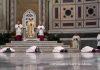
Newsroom (10/03/2026 Gaudium Press ) In multiple cities across Mexico, groups of Catholics gathered on March 8 in front of local churches to shield their places of worship from violence erupting during International Women’s Day demonstrations. The gatherings, held in cities including Monterrey, Guadalajara, Querétaro, León, San Luis Potosí, Cuernavaca, Aguascalientes, and Puebla, saw men and women standing side by side, praying and linking hands in peaceful defense of sacred spaces.
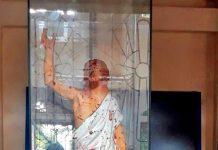
Despite their nonviolent stance, several groups of feminist demonstrators reportedly directed anger toward Catholic buildings—defacing walls with graffiti, throwing paint at parishioners, and, in some cases, attempting to burn church doors. One of the most severe incidents took place at San Luis Potosí’s Metropolitan Tabernacle, also known as La Compañía, where protesters set fire to the main entrance, an act parishioners later described as a “desecration.”
“A Profanation of the Sacred”
Following the attack, La Compañía’s parish priest, Fr. Jorge Aurelio Ramírez Torres, celebrated a Mass of reparation on March 9. “In this brutal scenario we are going to celebrate the Eucharist to ask Jesus for forgiveness for these events,” he said, calling the acts a profanation of a place where many women “find refuge, comfort, and inspiration.”
During the Mass, Fr. Ramírez urged the faithful to respond to the violence not with indignation but with deeper commitment to peace, faith, and justice. “Let this event awaken in us the faith to be true Christians,” he exhorted, emphasizing the role of believers as builders of peace.
Church Leaders Condemn Violence, Stand with Victims
The Mexican Episcopal Conference (CEM) issued a statement the same day, affirming solidarity with women across Mexico who experience violence and injustice. While recognizing the “cry for justice” expressed in the marches, the bishops lamented that some groups exploited the protests to attack religious institutions.
“The burning of the door of the Metropolitan Tabernacle in San Luis Potosí deserves special mention,” the CEM wrote. “Temples are places of prayer, encounter, and comfort for thousands of people. Violence toward these places of hope and peace is extremely serious.”
The bishops urged all Mexicans to ensure that “the pain suffered by women does not divide us but drives us to seek paths of justice, dialogue, and fraternity.”
Civil Voices Call for Recognition of “Christianophobia”
Uriel Esqueda, head of campaigns for the Mexican advocacy platform Actívate, condemned what she called the “systematic hatred against churches” evident in recent Women’s Day marches. “These attacks are no longer directed against authorities but against the Church itself,” Esqueda said.
She acknowledged the reality of violence against women in Mexico but warned that demonstrations must not infringe upon the human right to religious freedom. “When Catholics cannot attend Mass safely, that fundamental right has been violated,” she said.
Esqueda also called on Mexican legislators to recognize attacks on Christian sites as a form of Christianophobia under national law. “This is not merely vandalism—it is a direct assault on faith,” she argued, urging citizens to file official complaints and resist normalizing such actions.
Laity Urged to Respond with Faith and Courage
The timing of these attacks—amid this year’s centennial commemoration of the Cristero War—revived historical echoes of religious persecution. Esqueda called on lay Catholics to be “brave, consistent with our faith,” and ready to defend their churches peacefully yet firmly. “God does not ask for lukewarm lay people,” she said. “He asks for committed ones who defend their faith through prayer and action.”
Defending the Sacred and Listening with Compassion
Frida Espinosa, co-founder of Youth and Life (JUVI) and member of CitizenGO, noted that Catholic churches remain “vulnerable places” amid protests because they lack the protection and insurance that government buildings or private businesses often enjoy.
While affirming the legitimacy of feminist protests, Espinosa condemned vandalism committed under their banner. “It is valid to march and to speak out,” she said, “but you are not free to destroy what is not yours.”
Espinosa called defending churches a spiritual responsibility, asserting that what lies within those walls “is not material—it is Christ Himself, present in the Eucharist.” Yet she also emphasized empathy toward women’s pain and a commitment to listen: “Not all who march are extremists or anti-religious. We must discern what is legitimate protest and what is ideological manipulation, responding with truth and love.”
Seeking Peace After a Day of Division
Across Mexico, the wake of the March 8 demonstrations has left both physical scars on church walls and deep questions about freedom, faith, and social justice. Amid flares of anger and destruction, Catholic leaders and laypeople alike are calling for dialogue—and for a renewed witness of peace.
As one priest put it during the reparation service at La Compañía, “Violence will never lead us to peace. Only faith lived with courage and compassion can do that.”
- Raju Hasmukh with files from ACI Prensa
Related Images: