



















Exiled Bishop Silvio Báez condemns Nicaragua’s rulers as “thieves and bandits,” warning of repression, corruption, and attacks on the Church.
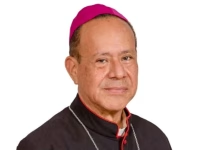
Newsroom (28/04/2026 Gaudium Press) From exile in Miami, Auxiliary Bishop of Managua Silvio Báez delivered a pointed denunciation of Nicaragua’s leadership, accusing those in power of stripping citizens of freedom while cloaking abuses in religious language.
Speaking on April 26 during Mass at Santa Agatha parish, Báez described modern “thieves and bandits” as political leaders who “seize the freedom and future of the people.” He said such figures present themselves as legitimate authorities while acting as “delinquents and criminals.”
“They are very dangerous,” Báez said, “because, in a blasphemous way, they interpret their abuses, acts of corruption and injustices as a blessing from God.” He added that these leaders speak of peace while sustaining systems that suppress initiative and liberty.
Báez’s remarks came during Good Shepherd Sunday, a Christian observance reflecting on Jesus as a protector and guide. Drawing on the Gospel of John, he contrasted Christ’s care for his followers with those who “come only to steal, kill and destroy.”
The bishop has lived in exile for seven years after leaving Nicaragua in April 2019. His departure followed sustained criticism of President Daniel Ortega and Vice President Rosario Murillo, whose government has faced international scrutiny over its treatment of dissenters and religious institutions.
According to Báez, the crackdown on the Catholic Church has intensified since nationwide protests erupted in 2018. The government has expelled four bishops along with numerous priests, nuns, seminarians, and lay members. Authorities have also confiscated Church properties, restricted ordinations in dioceses without bishops, blocked foreign financial support, and imposed strict oversight on clergy.
These measures, he suggested, form part of a broader pattern of repression targeting institutions perceived as independent or critical.
In his homily, Báez also outlined what he described as the contrasting mission of Jesus as the “Good Shepherd.” Rather than imposing control, he said, Christ liberates individuals from forces that oppress them.
“Jesus does not come to take away our freedom, but to free us from everything that conditions and oppresses us,” he said. “He does not darken our conscience, but illuminates it; he does not snatch away our authentic joys, but multiplies them.”
Báez emphasized the importance of personal dignity, arguing that true spiritual leadership resists treating people as a faceless collective. “For him we are not an anonymous mass,” he said, warning that depersonalization fosters “despotic domination.”
He concluded with a message centered on human flourishing, asserting that faith should lead not merely to survival, but to “abundant, exuberant life” that extends beyond earthly existence.
From abroad, Báez remains one of the most prominent voices criticizing Nicaragua’s government, framing the country’s political crisis as both a struggle for civil liberties and a moral challenge with deep spiritual implications.
- Raju Hasmukh with files from ACI Prensa