











An in-depth look at Chinese Catholics’ expectations of Pope Leo XIV, amid silence, control, and evolving Vatican-China relations.
Newsroom (21/04/2026 Gaudium Press ) The rumor surfaced quietly at the beginning of Lent, circulating among mainland Chinese Catholics with the familiar urgency of hopeful speculation: Pope Leo XIV, it was said, had adopted a “new position” on relations between China and the Vatican. The claim lacked any authoritative source, and its authenticity quickly dissolved under scrutiny. Yet the speed and intensity with which it spread revealed something more enduring than the rumor itself—a deep, unspoken longing among Chinese faithful for clarity, recognition, and renewed communion with the universal Church.
That longing forms the backdrop to the early months of Leo XIV’s pontificate. While no verified shift in Vatican policy has emerged, Chinese Catholics are already projecting expectations onto a pope whose character, pastoral instincts, and global experience suggest both continuity and potential change. Understanding those expectations requires first understanding the man himself.
An Augustinian at the Helm
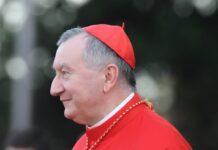
Those who know Pope Leo XIV, born Robert Prevost, consistently return to a single defining influence: his Augustinian formation. The order’s emphasis on introspection, humility, and communal friendship is not merely an abstract inheritance but a lived reality in his leadership style. He listens more than he speaks, avoids interruption, and approaches governance as an act of shared discernment rather than assertion.
A revealing anecdote from two decades ago illustrates this disposition. When a young seminarian named John chose to leave religious life, Prevost—then provincial superior—offered neither reprimand nor disappointment. Instead, he focused on the young man’s future, even lending him his car to help him begin again. Today, that former seminarian holds a senior position in a major Catholic publishing house. The episode, simple yet profound, captures a pastoral instinct grounded in accompaniment rather than authority.
Biographers Elisabetta Piqué and Gerard O’Connell describe Leo XIV as possessing an “inner strength” shaped by prayer and Augustinian spirituality. This strength manifests not in forceful gestures but in composure: a calm, deliberate manner, precise speech, and a reluctance to impose himself prematurely. Before the conclave, he reportedly never imagined he would be elected. Now, still at the beginning of his pontificate, he is quietly shaping a governance style rooted in communion and attentiveness to the human person.
From the Peripheries to the Center
If his spirituality grounds him, his experience broadens him. Unlike many of his predecessors, Leo XIV spent years far from Rome’s institutional center. His missionary work in Peru, particularly in impoverished regions, left a lasting imprint. Journalist Elise Ann Allen has described him as a “missionary to the world,” a pope formed not in corridors of power but in communities on the margins.
This background informs a leadership approach that is both pragmatic and person-centered. In moments of crisis, he is described as transparent, decisive, and calm, yet always attentive to the human realities beneath institutional challenges. His dual identity—American by birth, Peruvian by long service—has led some to call him “the least American of Americans,” a bridge between North and South, between global systems and local suffering.
Created cardinal by Pope Francis, Leo XIV inherits and continues key elements of his predecessor’s vision, particularly synodality and attention to social issues such as poverty and migration. Yet his temperament differs. Where Francis often favored spontaneity and bold gestures, Leo XIV appears more measured, more restrained, though no less committed to reform.
Continuity and a New Intellectual Horizon
In choosing his papal name, Leo XIV signaled continuity with Leo XIII, especially the landmark encyclical Rerum Novarum. But his focus turns to a new frontier: the digital age. Reports from Rome suggest that his first encyclical, tentatively titled Magnifica Humanitas, will address artificial intelligence, posthumanism, and the impact of technology on human dignity. The choice of topic reflects a pope attentive not only to inherited tradition but to emerging ethical challenges.
His intellectual formation supports this direction. Before entering religious life, he studied mathematics; later, he earned a doctorate in canon law. This combination of analytical precision and legal training contributes to a leadership style that is both structured and adaptable. While he shows continuity with Francis in rejecting rigid bureaucracy, his approach is notably more delicate and moderated.
Symbolically, he has also embraced certain traditional papal elements—residing in the Apostolic Palace, wearing the red mozzetta, and maintaining customary liturgical practices—suggesting a synthesis of continuity and renewal rather than rupture.
“The Scent of the Flock” and China
O’Connell characterizes Leo XIV as a shepherd with “the smell of the sheep,” echoing a phrase closely associated with Pope Francis. Yet in Leo XIV’s case, the phrase acquires a particular resonance in relation to China.
In his first public remarks on the country, he acknowledged both his prior experience engaging with Chinese society and the complexity of the current situation. He indicated that, for now, the Holy See would maintain its existing approach while seeking deeper understanding. Crucially, he emphasized the need to consider those faithful who live under pressure or without full religious freedom.
This sensitivity has not gone unnoticed. Chinese Catholics, who often navigate a delicate balance between faith and political constraints, recognize in his words an awareness of their lived reality.
Silence, Control, and a Fractured Communion
Yet if hope exists, it unfolds within an environment marked by silence and restriction. Following the death of Pope Francis in 2025 and the election of Leo XIV, official responses within China were notably subdued. A single 36-character report from Xinhua, later republished, acknowledged the new pope. Beyond that, public engagement has been minimal.
Two factors appear to explain this reticence. Authorities are still observing the new pope’s stance, and the aftermath of the early 2025 “Shi Yongxin incident” has led to tighter controls over foreign religious affairs. The result is a policy of caution—“in foreign affairs, nothing is insignificant”—that filters down to local communities as collective silence.
This silence extends beyond public statements. Digital restrictions have intensified; platforms once used to broadcast papal liturgies have ceased doing so, while major Catholic websites now require real-name registration and have removed substantial content. Even pastoral life has been affected. In Shanghai, minors are barred from entering churches, catechism programs have been halted, and enforcement has grown increasingly strict.
Meanwhile, administrative and political campaigns—ranging from the “Four Introductions” to more recent movements emphasizing discipline and ideological alignment—have placed heavy burdens on clergy. Meetings, reports, and exhibitions consume time and resources, often at the expense of pastoral work. One priest’s observation captures the frustration: efforts to promote frugality are undermined by the very structures that demand costly and repetitive activities.
Structural Tensions and Internal Struggles
The provisional agreement between China and the Vatican has achieved some progress, particularly in the appointment of bishops. Yet deeper alignment remains elusive. The principles of synodality—dialogue, shared responsibility, and unity—have not taken root in practice. In some cases, participation in international Church events has even been interpreted domestically as a consolidation of personal authority rather than communal leadership.
At the same time, internal challenges persist. Cases of corruption, such as the 2026 sentencing of Church figures in Hunan for embezzlement, reflect broader societal pressures. As one Catholic researcher noted, the Church mirrors society; as anti-corruption efforts intensify, so too does scrutiny of religious institutions.
Historical memory adds another layer of complexity. A century ago, the establishment of a Chinese episcopate marked full integration into the universal Church. Today, by contrast, many clergy report limited communication with the Holy See and a sense of isolation from global Catholic developments, including key documents and reforms.
Between Isolation and Expectation
In this context, the figure of Pope Leo XIV assumes a symbolic weight that extends beyond policy. For many Chinese Catholics, he represents not a dramatic shift but a possibility: a leader who listens, understands complexity, and carries “the scent of the flock.”
Yet expectations remain tempered by reality. The Church in China continues to operate within constraints that shape not only its external relations but its internal life. The model of “notifications, meetings, and summaries” persists, even as the Gospel’s call—“You are the light of the world”—echoes as both challenge and promise.
Whether Leo XIV can bridge the gap between silence and communion remains an open question. For now, Chinese faithful watch, wait, and hope that beneath the осторожность of diplomacy, a more tangible sign of unity may yet emerge.
- Raju Hasmukh with files from Asianews.it
Related Images: