





Theologian Massimo Faggioli says Trump’s attack on Pope Leo XIV marks a turning point, exposing cracks between religion and the techno-right.
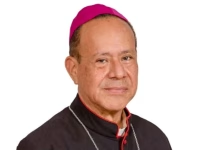
Newsroom (14/04/2026 Gaudium Press ) Italian theologian and religious historian Massimo Faggioli believes the explosive confrontation between US President Donald Trump and Pope Leo XIV could mark a decisive turning point in Trump’s career. Speaking to the Catholic daily Avvenire on Tuesday, Faggioli described the president’s verbal attack on the Pope as “probably the beginning of the political end” for a leader who has long framed faith as a pillar of his populist appeal.
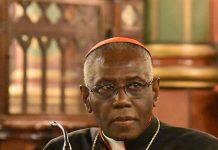
For Faggioli—a professor at the Loyola Institute of Trinity College Dublin and one of the foremost scholars of the intersection between Christianity and Trumpism—the moment is not merely political but deeply symbolic. “With the invective against Leo XIV,” he explains, “the unimaginable has become part of everyday life. The triggers were the Pope’s calls for peace and multilateralism. Now the religious right will realize it has been exploited by the president.”
The “Historical Paradox” Between Washington and Rome
Faggioli describes the current standoff as a “historical paradox.” The first American Pope, Leo XIV, embodies a worldview fundamentally opposed to the stance promoted by the United States today. His vision, grounded in the Vatican’s global moral DNA, speaks not for institutional preservation but for humanity as a whole—especially those marginalized by war and power politics.
“Leo XIV does not defend the Vatican’s interests,” Faggioli explains. “He speaks on behalf of all human beings sacrificed in wars and deprived of dignity. This universality has made him a target of the White House.”
From Multilateralism to Confrontation
The latest escalation, scholars argue, originated in a televised segment on 60 Minutes, where Cardinals Blase Cupich, Robert McElroy, and Joseph Tobin criticized the administration’s immigration policies and military expansion. Their remarks, and the Pope’s sustained appeals for multilateralism, struck a nerve with Trump, whose policy agenda has turned sharply neo-colonial in recent months—from Venezuela to Cuba, Gaza to Iran.
While Pope Francis once worried little about Trump’s disinterest in Latin America, Pope Leo XIV, a native of Chicago, cannot be dismissed as an outsider. His American roots, combined with his moral insistence, lend his message a resonance impossible for the president to ignore. Faggioli suggests that Trump’s fury may stem from Leo’s ability to challenge him from within his own cultural sphere—America itself.
The Techno-Right and the End of Religious Conservatism
Beyond theology, Faggioli sees Trump’s confrontation with Leo XIV as exposing a deeper fracture within the ideological foundation of Trumpism. The coalition that once united religious conservatism with the techno-right—an alliance between traditionalist believers and Silicon Valley powerhouses like Elon Musk and Peter Thiel—is now unraveling.
“The techno-right, now ascendant, has a distinctly anti-Christian and anti-Catholic ethos,” Faggioli observes. “It sees the planet as expendable, worships immortality and power, and rejects the humility at the core of the Gospel.” Trump’s latest attack, in this view, symbolizes not strength but isolation—an act that alienates him from both moral and technological elites.
A Taboo Broken—and a Political Reckoning Ahead
Despite surviving impeachment, an assassination attempt, and multiple scandals, Trump’s decision to target a Pope may prove to be the ultimate political misstep. “He has violated the last taboo in the eyes of the religious right,” Faggioli warns. “They are beginning to see how Trumpism has used faith as a prop rather than a principle.”
Within Trump’s own administration, Catholic figures such as J.D. Vance and Marco Rubio face an uncomfortable crossroads. Both aspire to succeed Trump, but their faith may now complicate the path forward. Vance’s conversion to Catholicism coincided with his entrance into politics; his alignment with Leo’s values puts him in direct tension with the president. Rubio, more secular in tone, might attempt silence—but silence, Faggioli suggests, is no longer sustainable.
A Crisis of Faith in American Politics
For Faggioli, who recently authored From God to Trump: Catholic Crisis and American Politics, this moment crystallizes years of study on the uneasy fusion of religion and populism. Theologians and believers alike must now reckon with what Trump’s rhetoric reveals: that the struggle is no longer between secularism and faith, but between faith and its exploitation.
As the spectacle unfolds, the historian’s words ring prophetic. “The unimaginable,” he says, “has become part of everyday life.” Whether this marks the twilight of Trumpism—or the dawn of a new religious conscience in politics—remains to be seen. But in the Vatican and across the American heartland, the reverberations of this clash will be felt long after the echo of Trump’s tirade fades.
- Raju Hasmukh with files from Avvenire
Related Images: