

















In a message to DePaul University, Pope Leo XIV reiterates the Catholic Church’s stance that the death penalty is “inadmissible,” reinforcing reforms introduced by Pope Francis and reigniting theological debate.
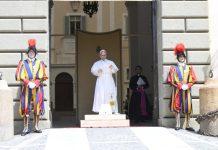
Newsroom (27/04/2026 Gaudium Press ) Pope Leo XIV has reaffirmed the Catholic Church’s opposition to the death penalty, aligning himself closely with the controversial position advanced by his predecessor, Pope Francis. In a video message marking the fifteenth anniversary of the abolition of capital punishment in Illinois, the Pope endorsed the revised teaching that declares the death penalty “inadmissible.”
The message, addressed to DePaul University in Chicago—the largest Catholic university in the United States—offered new insight into Leo XIV’s theological outlook and continuity with the previous pontificate. The university, known for its progressive positions on social issues, hosted the commemorative event, which the Chicago-born Pope chose to personally acknowledge.
At the center of Leo XIV’s remarks was a direct reaffirmation of the Catechism of the Catholic Church as amended under Pope Francis. Traditionally, Catholic doctrine had held that the death penalty could be morally permissible under certain circumstances. However, Francis revised the Catechism to state that, “in the light of the Gospel,” the death penalty is now “inadmissible because it violates the inviolability and dignity of the person.”
That revision sparked significant debate within theological circles. Critics argued that the change appeared to introduce a doctrinal shift, raising questions about the limits of papal authority as defined by the First Vatican Council. Others pointed to the ambiguity of the term “inadmissible,” noting that it lacks a precise definition within moral theology.
Leo XIV’s message suggests a clear endorsement of Francis’s formulation. By explicitly quoting the revised Catechism and introducing it with the phrase “the Church teaches,” he signaled that the position is not merely prudential or personal, but authoritative in nature.
In his address, the Pope emphasized the Church’s long-standing commitment to the sanctity of life, stating that all human life—from conception to natural death—is sacred and must be protected. He argued that even those who commit serious crimes do not lose their inherent dignity, and he pointed to modern detention systems as evidence that societies can ensure public safety without resorting to capital punishment.
“Effective detention systems can be developed… that protect citizens without completely depriving the guilty of the possibility of redemption,” the Pope said, echoing the reasoning behind the Catechism’s revision.
Leo XIV also expressed support for abolitionist efforts beyond Illinois, extending his encouragement to advocates across the United States and globally. He praised the 2011 decision by Illinois authorities to abolish the death penalty and voiced hope that similar measures would continue to spread.
The Pope concluded by invoking “wisdom, joy, and peace” upon those gathered, framing the issue as both a moral and social imperative rooted in the recognition of human dignity.
While the message reinforces continuity between the current and previous pontificates, it also ensures that debate over the theological and doctrinal implications of the Catechism’s revision is likely to persist.
- Raju Hasmukh with files from Infocatholica