



















Pope Leo XIV warns Europe of cultural sterility without Christian roots and calls for a renewed commitment to family and demographic revival.
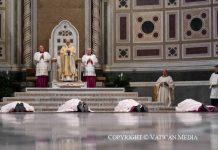
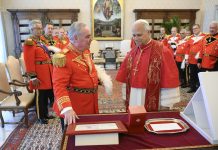
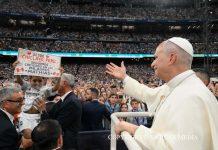
Newsroom (26/05/2026 Gaudium Press ) In a pointed and wide-ranging address at the Vatican, Pope Leo XIV delivered a stark warning to European leaders: a continent that abandons its Christian foundations risks not only demographic collapse but also cultural and spiritual decay. Speaking before members of the European Parliament’s Intergroup on Demography in the Clementine Hall, the Pope called for a “new springtime for the family” as the cornerstone of Europe’s future.
The audience, held on Monday in conjunction with the conference “Demography and Europe: A Decisive Moment” in Rome, brought together key policymakers and international figures, including European Commissioner for the Mediterranean Dubravka Šuica, Italian Minister for Family and Equal Opportunities Eugenia Roccella, and OSCE Special Representative Gudrun Kugler.
An Urgent and Complex Crisis
Pope Leo XIV framed Europe’s demographic decline as an urgent challenge with far-reaching implications. He echoed earlier concerns that Europe is increasingly defined not by its historic achievements but by its aging population, noting that the continent risks becoming an “old continent” in both literal and symbolic terms.
The demographic downturn, he emphasized, extends beyond declining birth rates. It touches the very fabric of society, contributing to what he described as a “pandemic of loneliness” and undermining the sustainability of intergenerational solidarity. According to the Pope, demographic statistics must not be reduced to numbers alone; they represent lived realities—“fatherhood, motherhood, and children”—and ultimately define the trajectory of society.
“Children are the future,” Leo XIV affirmed, stressing that sustainable development is impossible without a balanced relationship between generations—a balance he believes Europe currently lacks.
A Crisis of Identity and Values
At the heart of the Pope’s critique lies what he described as a growing detachment from the Christian inspiration that guided the founding vision of the European Union. This shift, he argued, has contributed to what he termed a period of “drastic sterility,” both materially and culturally.
The consequences, in his view, are twofold. On one hand, many have been “deprived of the right to be born,” reflecting declining birth rates and societal attitudes toward life. On the other, younger generations are inheriting fewer of the cultural and ethical resources necessary to navigate the future.
He also highlighted inconsistencies in European policy frameworks, questioning measures that claim to support families while simultaneously, in his words, “promot[ing] discrimination against motherhood” or undermining the conditions that foster family formation. Such contradictions, he suggested, weaken the societal commitment needed to reverse demographic decline. Yet he tempered his critique with optimism, acknowledging “wonderful exceptions” among policymakers.
Re-centering the Family in Public Life
As a response, Pope Leo XIV called for innovative approaches rooted in enduring principles rather than nostalgic returns to past social models. He urged European institutions to engage not only with governments but also with civil society at large, emphasizing the role of Christian communities as active participants in the public sphere.
Central to his vision is the family, which he described—drawing on St. John Paul II’s Familiaris Consortio—as “the first and irreplaceable school of social life.” In this framework, the family is founded on marriage between a man and a woman and serves as the bridge between personal fulfillment and the common good.
The Pope advocated for policies that empower families as active contributors to social, political, and cultural life. He stressed the principle of subsidiarity, warning against the dual risks of excessive state control and unchecked individualism. Instead, he argued for a balanced approach that recognizes the family as a foundational institution.
Toward a “New Spring”
Importantly, Leo XIV clarified that his appeal is not a call to replicate outdated societal structures but rather to reaffirm “immutable principles” that can guide contemporary decision-making. He framed these principles around enduring human questions: the meaning of life, the nature of a just society, and the legacy left to future generations.
He pointed to ongoing collaborations—such as those between the Intergroup on Demography, the Federation of Catholic Family Associations in Europe (FAFCE), and the Commission of the Bishops’ Conferences of the European Union (COMECE)—as promising examples of how diverse actors can work together to enact meaningful change.
The Pope concluded with a vivid metaphor capturing the urgency and hope embedded in his message. Europe’s demographic challenges, he suggested, resemble a “cold winter” of aging populations. Only a renewed commitment to family life—what he termed a “new spring”—can reverse this trajectory and restore vitality to the continent.
A Defining Moment for Europe
Leo XIV’s address underscores a pivotal moment for Europe as it grapples with demographic decline, shifting values, and questions about its identity. By linking these issues to the strength and stability of the family, the Pope positioned family policy not as a marginal concern but as central to the continent’s future.
His call for a synthesis of innovation and tradition, rooted in human dignity and intergenerational solidarity, presents both a challenge and an opportunity for European leaders seeking to navigate one of the most pressing issues of the 21st century.
- Raju Hasmukh with files from Infocatholica
Related Images: