











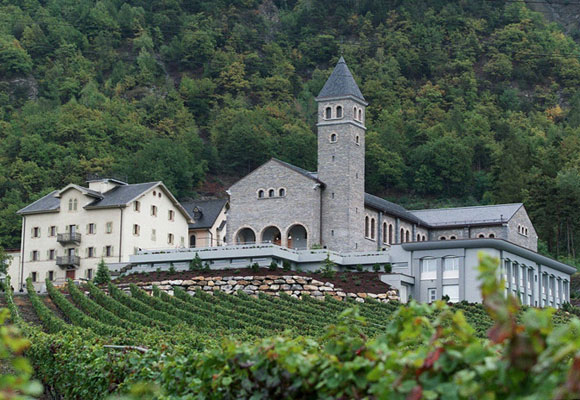
SSPX Superior General Davide Pagliarani answered Pope Leo XIV’s appeal but declined to suspend episcopal consecrations in Écône.
Newsroom (30/06/2026 Gaudium Press ) The Superior General of the Society of Saint Pius X (SSPX), Fr. Davide Pagliarani, has formally replied to Pope Leo XIV’s personal appeal urging him to suspend the episcopal consecrations scheduled for July 1 in Écône. While the letter adopts a respectful and filial tone toward the pontiff, it stops short of granting the Pope’s request, effectively confirming that the consecrations will proceed despite explicit opposition from Rome.
The response, dated June 30 and signed in Écône, expresses gratitude for what Pagliarani calls the Pope’s “paternal request” and repeatedly emphasizes the Society’s professed desire to remain within the Church. Yet the letter offers no indication of a postponement or cancellation of the planned episcopal consecrations, an act that would place the SSPX in direct conflict with the Holy See and carry significant canonical consequences.
A Respectful Reply That Changes Nothing
Pagliarani opens his letter by thanking Pope Leo XIV for writing personally and states that he was “deeply moved” by the pontiff’s appeal. He also reiterates a long-standing wish to meet the Pope face-to-face in order to express what he describes as the fraternity’s sincere desire to serve the Church.
“His paternal request has deeply moved me,” Pagliarani writes, adding that an opportunity for a personal meeting with the Holy Father “has not arisen.”
Despite the conciliatory language, the letter does not address the Pope’s central request: that the SSPX suspend the consecrations. Instead, Pagliarani argues that the Society believes it has a duty to act in what it sees as the Church’s best interests.
A notable feature of the letter is its reworking of the biblical image of Christ’s seamless garment. Pope Leo XIV reportedly used the image to warn that unauthorized episcopal consecrations would further damage ecclesial unity. Pagliarani turns the metaphor around, claiming that the Society’s actions are intended to “mend the garment of Christ,” which he says has already been torn by forces incompatible with authentic Catholic teaching.
The contrasting interpretations underscore the fundamental divide between Rome and the SSPX. While the Pope views the consecrations as a threat to unity, the Society presents them as a measure aimed at preserving the faith.
Claiming Unity While Defying Rome
One of the central themes of Pagliarani’s letter is the insistence that the SSPX does not seek separation from the Catholic Church.
“Far be it from us to separate ourselves from the Roman Church,” he writes, describing the Society’s mission as helping “a mother going through a serious difficulty who needs special assistance.”
At the same time, however, the SSPX appears determined to proceed with consecrating bishops against the expressed wishes of the Roman Pontiff. The Pope’s opposition was delivered directly in a personal letter sent on the same day the reply was written.
The resulting tension defines the entire exchange. The Society professes loyalty to Rome while preparing to undertake an act that the Holy See has explicitly requested be abandoned.
Revisiting the Legacy of 1988
The strongest argument advanced by Pagliarani centers on the SSPX’s historic conflict with the Vatican following Archbishop Marcel Lefebvre’s episcopal consecrations in Écône on June 30, 1988.
Pagliarani points to what he calls two “very simple facts.” First, he notes that the Society was declared schismatic in 1988 under circumstances he considers substantially similar to those of today. Yet decades later, a Pope is still addressing the fraternity “like a father to his son.”
According to Pagliarani, the Pope’s continued pastoral engagement with the SSPX demonstrates that the Society is neither schismatic nor hostile to the Church.
His second point concerns Bishop Vitus Huonder and Bishop Athanasius Schneider, both of whom engaged in dialogue with the SSPX. Pagliarani argues that their public recognition of the Society’s Catholic character serves as evidence against accusations that the fraternity stands outside ecclesial communion.
Rome’s Pastoral Approach and Canonical Reality
Critics of the SSPX position argue that continued dialogue with the Society does not amount to a reversal of previous canonical judgments.
Over the past several decades, the Holy See has maintained engagement with the SSPX through various pastoral initiatives. These have included the lifting of excommunications in 2009, the granting of faculties related to confessions, and provisions regarding marriages celebrated in SSPX chapels.
However, such measures have generally been understood as pastoral accommodations rather than a definitive resolution of the Society’s canonical status. From this perspective, ongoing dialogue reflects a desire for reconciliation, not an endorsement of actions carried out without papal approval.
The distinction between pastoral outreach and canonical regularization remains at the center of the current dispute.
Questions Over Dialogue
Another notable aspect of the letter concerns the issue of communication between the SSPX and Rome.
Pagliarani laments the absence of a direct meeting with Pope Leo XIV. Yet he also cites earlier dialogues involving Bishops Huonder and Schneider as evidence of the Society’s openness and good faith.
The chronology becomes particularly relevant in light of recent contacts with the Vatican. On February 12, 2026, Pagliarani was received by Cardinal Víctor Manuel Fernández at the Palace of the Holy Office with the approval of Pope Leo XIV. During that meeting, the Dicastery for the Doctrine of the Faith reportedly proposed a theological dialogue aimed at identifying conditions for full communion and establishing a canonical framework for the fraternity.
The proposal reportedly included one key condition: a suspension of the planned consecrations while discussions were underway.
According to the account presented here, the SSPX declined that proposal on February 18, maintaining its intention to proceed on July 1 and expressing reservations about engaging in what it described as a doctrinal dialogue lacking sufficient serenity.
Apostolic Fruits and Ecclesial Authority
Pagliarani also appeals to what he describes as the spiritual fruits of the SSPX apostolate, citing thousands of faithful who have returned to religious practice through the Society’s work.
This pastoral argument occupies a central place in the latter part of the letter. He presents those faithful as sincere Catholics seeking salvation through what they view as a providential instrument within the Church.
For opponents of the consecrations, however, the question at stake is not whether the Society produces spiritual benefits, but whether those benefits can justify episcopal consecrations carried out without papal authorization. The dispute therefore concerns not pastoral effectiveness but ecclesial authority and the role of the Roman Pontiff in the appointment and consecration of bishops.
“It Is Never Too Late”
The letter closes on a symbolic note. Pagliarani entrusts the current situation to Saint Rita of Cascia, patron saint of impossible causes and an Augustinian saint. He notes that he regarded the election of Pope Leo XIV, himself an Augustinian, as “a sign of hope.”
His concluding phrase — “It is never too late” — serves as both an appeal and an echo of the broader drama unfolding between Rome and the SSPX.
The words carry particular historical resonance. On June 30, 1988, Archbishop Marcel Lefebvre proceeded with episcopal consecrations in Écône despite a personal appeal from Pope John Paul II to refrain. Thirty-eight years later, the Society appears poised to repeat the same course of action from the same location.
As the Church awaits the events of July 1, attention now turns to whether the SSPX will carry out the consecrations and how Pope Leo XIV and the Holy See will respond to a decision that could mark another pivotal chapter in one of modern Catholicism’s longest-running disputes.
- Raju Hasmukh with files from Infocatholica
Related Images: