




Hundreds gathered in Sydney for a rare Croatian Glagolitic High Mass, reviving a millennium-old Catholic liturgical tradition.
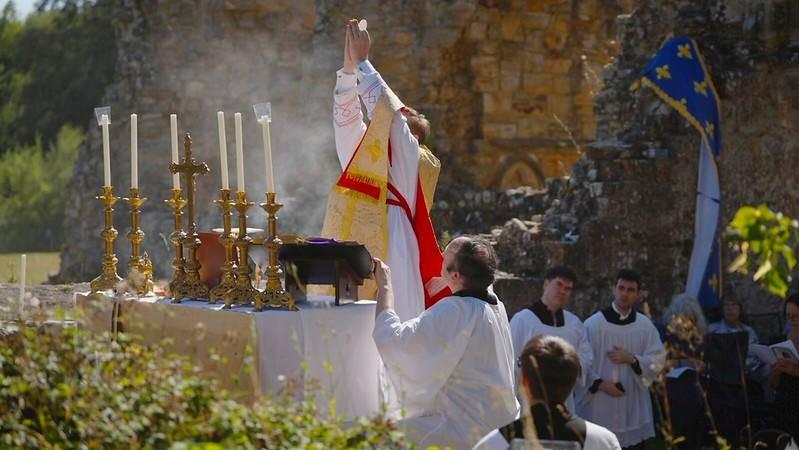
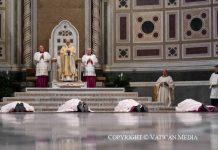
Newsroom (22/07/2026 Gaudium Press ) Sydney Catholics were given a rare glimpse into one of the oldest and most distinctive traditions of Croatian Catholicism on 1 July, as hundreds gathered at St Michael’s Parish in Belfield for a Solemn High Mass celebrated according to the traditional Croatian Glagolitic Rite.
The Mass, held on the Feast of the Most Precious Blood, brought together Croatian Australians from across the country in a celebration that highlighted a unique liturgical heritage preserved for centuries by Croatian Catholics. The liturgy was celebrated by Fr Mateusz Markiewicz IBP, assisted by Dominican Prior Fr Laurie Foote OP of Adelaide and Carmelite Brother Jerome Voštan of Perth.
For Australia’s Croatian community, long known for publicly expressing its religious and cultural identity, the event represented more than a historical re-enactment. It was a living expression of a tradition that traces its origins back over a thousand years and remains deeply connected to both Croatian identity and Catholic faith.
A Unique Legacy Within the Roman Catholic Church
The Croatian Glagolitic tradition originated in the ninth century through the missionary work of Saints Cyril and Methodius, who translated the Greek liturgy into Slavonic. Although Latin remained the standard liturgical language of the Western Church, Croatian Catholics received special permission to celebrate the liturgy in Old Church Slavonic.
This privilege made Croatian Catholics unique within the Roman Catholic world. Throughout the Middle Ages, the Roman Rite among Croats functioned as a bilingual tradition, employing both Latin and Croatian Church Slavonic, while liturgical texts were written in both the Latin and angular Glagolitic scripts.
For nearly a millennium, Croats remained the only Catholic people permitted to celebrate a non-Latin liturgy while maintaining full communion with Rome. The tradition developed its own rich liturgical culture, including Glagolitic liturgical singing, often compared to Gregorian chant in the Latin tradition.
Papal approval, beginning with the authorisation granted by Pope Innocent, encouraged the growth of Croatian Glagolitic liturgy and the development of a substantial body of liturgical literature. Translations of Roman breviaries and missals into Croatian Church Slavonic preserved the ritual structure of the Roman Rite while making use of a distinct language and script.
The Vajs Missal Returns to the Altar
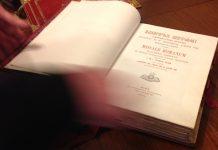
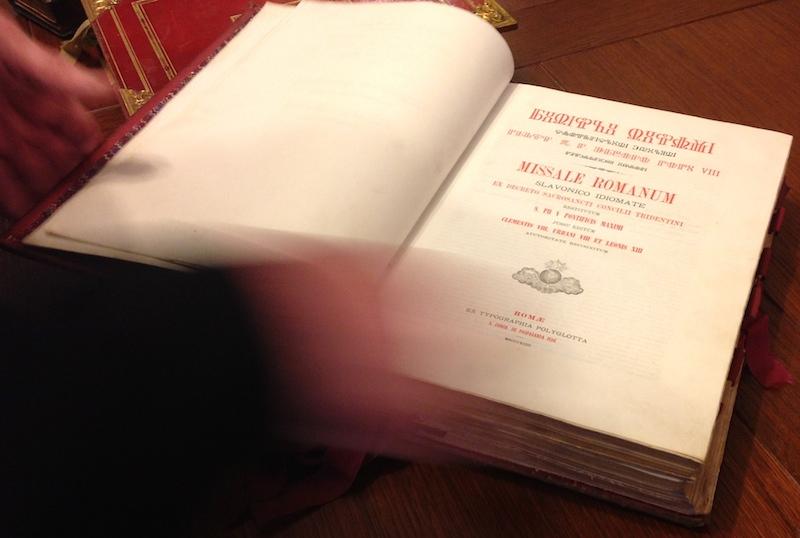
A highlight of the Sydney celebration was the use of the last printed Glagolitic Missal, the 1927 “Vajs Missal,” a significant historical text within Croatian Catholic heritage.
The missal was sourced through the efforts of organiser Ante Cutuk, who travelled to collect it, along with hand-drawn altar cards, from Fr Velimir Maglica of the Croatian Catholic Chaplaincy in Clifton Hill, Melbourne.
For Cutuk, the event represented the revival of a tradition that transcends cultural symbolism.
“The Glagolitic Mass is one of the most unique treasures of Croatian Catholic heritage,” he said.
“It reminds Croatian Catholics that their ancestors preserved the faith through their own sacred language, chant, and customs while remaining fully part of the Roman Catholic Church.”
He said the Sydney celebration demonstrated that the liturgy continues to possess spiritual relevance in the modern era.
“Bringing it to Sydney helped show that this ancient liturgy is not dead or an object of nostalgia, but something still capable of moving people and strengthening their faith today,” he said.
“It also showed that Croatian identity is not only about food, music, sport or nationality, but also about the Catholic faith that shaped Croatian people for centuries.”
A National Effort
The successful staging of the Solemn High Mass required extensive preparation and collaboration.
Numerous volunteers worked behind the scenes to organise the music, train altar servers and prepare the detailed liturgical rubrics necessary for the celebration. Two Croatian liturgical experts, Branko Lovrinov and Danijel Uremović from Zagreb, travelled to Australia to assist with coordination and lead weekly rehearsals.
Their efforts helped ensure the faithful execution of a rite that has become increasingly rare in contemporary Catholic life.
For attendees, the gathering offered a powerful sense of unity across generations and geographic boundaries.
“It was beautiful to see older Croatian Catholics, young people, priests, servers, choir members, and visitors all gathered for the same purpose,” Cutuk said.
“Seeing the church full, hearing the Old Church Slavonic and the traditional chant, and knowing that people had travelled from interstate and overseas made it feel truly historic.”
He described participating in the event as a personal privilege and expressed hope that the tradition would continue to find a place within Australia’s Croatian Catholic community.
“For me personally, it was a great honour to help bring this tradition to Sydney and to be part of something that will hopefully continue in the future.”
A Heritage Preserved Through the Centuries
The Glagolitic liturgy remained part of religious life in Croatian regions well into the twentieth century. Its survival was supported by a series of important missals published through the work of scholars and clergy including Dragutin Parčić and Josef Vajs.
The liturgical movement of the late nineteenth and early twentieth centuries eventually contributed to the reforms of the Second Vatican Council between 1962 and 1965. Croatian bishops participated in those discussions, including Monsignor Frane Franić and Monsignor Josip Arnerić, who played important roles in shaping the council’s language reforms. Notably, Arnerić celebrated Mass in Croatian Church Slavonic before the assembled council fathers.
Following the introduction of the Missal of Paul VI in 1969 and the widespread adoption of vernacular languages throughout the Catholic Church, the Glagolitic liturgy largely transitioned from common use into the realm of historical heritage.
Nevertheless, the tradition has never entirely disappeared. It continues to survive in certain dioceses along Croatia’s Adriatic coast and within Franciscan Third Order communities, where solemn celebrations are occasionally held in Croatian Church Slavonic using the missal prepared by Josip Leonard Tandarić in 1980.
The Sydney High Mass demonstrated that this remarkable tradition remains capable of inspiring contemporary believers. More than a historical curiosity, the Croatian Glagolitic Rite continues to serve as a living link between modern Catholics and a millennium of faith, language and worship.
- Raju Hasmukh with files from Catholic Weekly Australia
Related Images: