



Cardinal Louis Raphael Sako reflects on Iraq’s crises, Christian exodus, Church challenges, and hopes for peace, reform, and renewal.
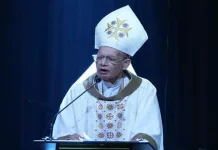
Newsroom (22/07/2026 Gaudium Press ) Four months after resigning as head of the Chaldean Catholic Church, Cardinal Louis Raphael Sako says he has found peace in a quieter life devoted to prayer, study, writing, and service. Yet his reflections reveal a man still deeply engaged with the fate of Iraq, its shrinking Christian community, and the broader challenges facing both the Middle East and the universal Church.
Speaking to AsiaNews, the Patriarch Emeritus identified several defining moments from his 13 years leading the Chaldean Patriarchate: the devastation caused by the rise of the Islamic State group, the continuing exodus of Christians from Iraq, the withdrawal of the presidential decree recognizing his patriarchal authority, and the historic 2021 visit of Pope Francis to Iraq.
Today, removed from the demands of ecclesiastical leadership, Sako describes a life marked by serenity. Living among seminarians, he spends his days praying, receiving visitors, assisting those in need, and writing. In just four months, he completed a new Arabic-language book, The Joy of Believing, while also launching a Facebook page to share short reflections.
A World Divided Between East and West
Central to Sako’s analysis is what he sees as a profound misunderstanding between East and West. According to the cardinal, contemporary global tensions cannot be understood solely through politics, economics, or military power.
He argues that Western societies often operate according to economic interests, secularism, and pragmatism, while much of the East remains deeply shaped by religion and ideology. In these societies, faith is not confined to private belief but influences identity, culture, and public life.
Drawing attention to regional conflicts and tensions involving Iran, Sako emphasized the difficulty of dialogue between different civilizational outlooks. Understanding countries such as Iran, he argues, requires acknowledging both their political realities and their powerful religious dimensions.
This divergence in worldview presents one of the greatest obstacles to peace. At the same time, Sako believes Christians can play a unique role in bridging these divides. Positioned historically and culturally between East and West, the Church can foster understanding between societies that often struggle to communicate with one another.
His message remains simple and consistent: lasting peace cannot be achieved through weapons.
A Life Dedicated to Church and Scholarship
Born in Zākhō in northern Iraq in 1949, Sako’s path combined pastoral ministry with academic achievement. After studying in Mosul and being ordained a priest in 1974, he pursued advanced education in Rome and Paris, earning doctorates in Oriental Patrology and History, as well as qualifications in Islamic Studies.
His ecclesiastical career included service as rector of the Patriarchal Seminary in Baghdad, parish leadership in Mosul, and appointment as Archbishop of Kirkuk in 2003. A decade later, following a synod convened in Rome, he was elected Chaldean Patriarch. Pope Francis elevated him to the College of Cardinals in 2018.
Throughout his ministry, Sako became one of the most internationally recognized voices of Middle Eastern Christianity, advocating dialogue, religious coexistence, and equal citizenship for all Iraqis.
The Trauma of ISIS and a Shrinking Christian Presence
Among all the challenges he faced, none left a deeper mark than the rise of ISIS.
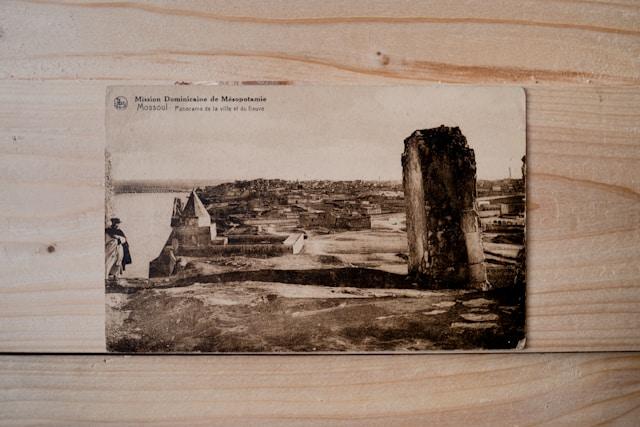
The jihadist organization’s advance across northern Iraq displaced hundreds of thousands of people from Mosul and the Nineveh Plain, devastating communities that had existed for centuries. For Sako, the emergence of ISIS represents the most significant event in the recent history of Iraq’s Christians.
Although reconstruction efforts have progressed slowly in recent years, he believes the fundamental causes behind the Christian exodus remain unresolved. Since 2003, Iraq’s Christian population has fallen dramatically, from approximately 1.3 million to fewer than 400,000.
While political leaders continue to encourage Christians abroad to return, Sako insists that appeals alone are insufficient. The reasons people left must first be addressed.
He points to insecurity, weak infrastructure, inadequate healthcare and education systems, corruption, lack of economic opportunities, and unresolved property disputes. Many Christian families displaced during the ISIS era have yet to receive compensation, while confiscated properties remain unreturned.
Even more fundamentally, Sako argues that Iraq must move beyond sectarian divisions and establish a citizenship-based state in which all individuals enjoy equal rights regardless of religious identity.
Without legal reforms and a stronger commitment to justice, he warns, emigration will continue.
Citizenship, Dialogue, and the Pain of a Revoked Decree
Throughout his patriarchate, Sako frequently advocated not only for Christians but for all Iraqis. He consistently promoted the separation of religion and state and called for a civic framework grounded in equal citizenship.
He also points to significant progress in Christian-Muslim relations. Through sustained engagement with Sunni, Shiite, and Kurdish leaders, including meetings with Grand Ayatollah Ali al-Sistani in Najaf, he says important advances have been made in reducing hostility toward Christians.
One achievement stands out particularly strongly in his memory: the decline of anti-Christian rhetoric. According to Sako, Christians are no longer the target of the hostile discourse that once appeared in religious settings.
Yet one wound remains unresolved. He speaks with visible disappointment about the withdrawal of the presidential decree that had recognized his patriarchal authority, attributing the move to the interests and maneuvering of a self-described Christian militia.
Despite the controversy, Sako maintains his longstanding opposition to sectarian armed groups, insisting that Christian identity should never be tied to militia politics.
Looking to the Future of the Church
The cardinal’s attention now extends beyond Iraq to the future direction of the global Catholic Church.
Reflecting on the recent synodal process, he expressed satisfaction with an approach that emphasizes participation, shared discernment, and collective decision-making. He sees synodality as a positive development, noting that Eastern Churches have long embraced similar traditions.
He also welcomed the early leadership style of Pope Leo XIV, praising his concise and accessible communication. Sako hopes the new pontiff’s message will address not only Western concerns but the needs of the entire world.
For the Patriarch Emeritus, the Church must continue finding new ways to engage with a rapidly changing society shaped by technology, the internet, and artificial intelligence. Authority alone is no longer sufficient, he argues. Pastors must embrace dialogue, listening, and personal accompaniment.
As for the leadership of his successor, Patriarch Mar Paul III Nona, Sako says he intends to remain discreet and respectful, acknowledging that a new chapter has begun for the Chaldean Church.
A Martyred Church With a Universal Mission
Despite decades of war, displacement, and uncertainty, Sako remains optimistic about the future.
Every day, he says, he prays for the patriarch, the bishops, and above all the Chaldean Church. He describes it as a “martyred Church” whose suffering has given it unique gifts to share with global Catholicism, especially in liturgy, spirituality, and biblical pastoral life.
His final thoughts return to Iraq itself. Though challenges remain immense, he believes change is possible. He envisions a future marked by genuine religious freedom, stronger citizenship, and a renewed Christian presence in the country.
“I am sure that the situation will change for the better,” he says. “The Chaldean community will continue to grow. I pray for this.”
- Raju Hasmukh with files from Asianews.it
Related Images: