
















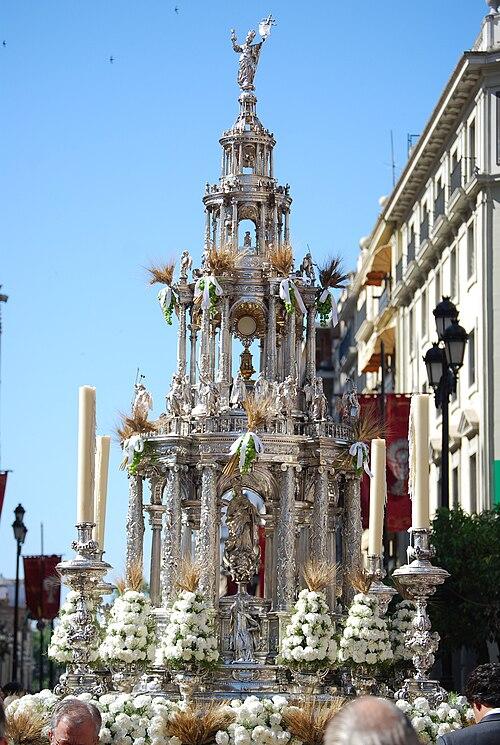
Sydney Archbishop Anthony Fisher urges parishes to restore kneelers and renew Eucharistic reverence ahead of 2028 Congress.
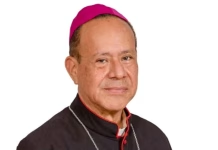
Newsroom (08/06/2026 Gaudium Press ) In a move that underscores a renewed emphasis on traditional expressions of worship, the Archbishop of Sydney, Anthony Fisher, has called on parishes across his archdiocese to restore kneelers and encourage a deeper reverence for the Eucharist. The initiative comes through a detailed pastoral letter issued for the Solemnity of Corpus Christi, positioning the archdiocese for spiritual renewal in anticipation of the 2028 International Eucharistic Congress in Sydney.
Addressed to clergy, religious, and lay faithful, the letter presents a comprehensive reflection on the spiritual and liturgical significance of bodily gestures—particularly kneeling—in Catholic worship. Fisher’s message highlights the enduring theological importance of such practices while responding to modern concerns about their relevance.
Rediscovering the Meaning of Kneeling
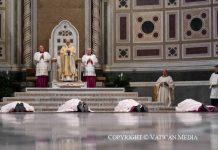
Central to the archbishop’s appeal is the assertion that physical postures in the liturgy are not merely symbolic but deeply expressive of faith. “Of all physical postures, kneeling most clearly reveals what we believe about God and our relationship with Him,” Fisher writes.
He situates kneeling within the broader framework of Catholic liturgical life, emphasizing that worship engages the whole person—body and spirit alike. In this context, kneeling emerges as a powerful act of humility, adoration, and devotion before the Blessed Sacrament.
The archbishop reiterates that the Church continues to uphold kneeling as a meaningful and legitimate practice. He notes that the faithful are invited to kneel during the Eucharistic Prayer and at moments of adoration, such as during Eucharistic Benediction or the exposition of the Blessed Sacrament. Importantly, he also clarifies that receiving Holy Communion while kneeling remains “a perfectly valid option contemplated by the current Missal.”
Tradition Meets Contemporary Debate
Fisher’s letter also engages with contemporary critiques of kneeling, particularly the perception that it may appear outdated or incompatible with modern sensibilities. Some critics argue that kneeling suggests subservience or diminishes human dignity.
The archbishop firmly rejects this interpretation. Drawing from Sacred Scripture, he frames kneeling not as a sign of degradation but as an act rich with spiritual meaning—one that conveys reverence, trust, gratitude, and supplication.
He cites numerous biblical examples, from Moses before the burning bush to the Magi worshipping the Christ Child, and the disciples encountering the risen Christ. He also invokes the words of Saint Paul: “At the name of Jesus every knee should bow, in heaven and on earth and under the earth,” reinforcing the gesture’s theological foundation.
A Concrete Call to Action
Beyond theological reflection, Fisher’s letter outlines a series of practical measures aimed at fostering Eucharistic devotion across the archdiocese. Among the most notable is his explicit request to parish priests to restore kneelers in churches where they have been removed.
This directive represents a tangible effort to reintroduce traditional liturgical elements that were once commonplace. For centuries, kneeling while receiving Communion was standard practice in the Latin Church, often facilitated by communion rails still present in many historic churches.
In addition, the archbishop calls for extended church opening hours, the establishment of at least one hour of Eucharistic adoration per week in every parish, and the promotion of perpetual adoration chapels at the deanery level. He also stresses the importance of catechesis, urging priests to instruct the faithful on proper liturgical postures so that bodily gestures align with and enhance spiritual devotion.
Worship as a Path to Mission
While the letter strongly emphasizes reverence and adoration, it does not present Eucharistic devotion as an inward-looking practice. Instead, Fisher articulates a clear link between worship and evangelization.
He reflects on biblical narratives in which encounters with God lead to mission. Figures such as the prophet Isaiah, Saint Peter, and the disciples on the road to Emmaus are cited as examples of how divine encounter inspires action.
“We kneel to acknowledge him and then we rise to make him known,” the archbishop concludes, encapsulating the dual movement of worship and outreach.
Preparing for 2028
The pastoral letter comes at a pivotal moment as Sydney prepares to host the International Eucharistic Congress in 2028. Fisher’s vision appears focused on fostering a local Church rooted in Eucharistic faith, marked by visible signs of reverence and a renewed sense of mission.
By encouraging the restoration of kneelers, promoting Eucharistic adoration, and reaffirming traditional practices, the archbishop seeks to reconnect contemporary worship with centuries-old expressions of devotion. His message suggests that such continuity is not a regression but a vital pathway toward spiritual renewal.
In doing so, the Archdiocese of Sydney positions itself at the intersection of tradition and modernity, inviting the faithful to rediscover the depth and meaning of gestures that have long defined Catholic worship.
- Raju Hasmukh with files from Infovaticana
Related Images: