














An interim report by three research institutes confirms twelve allegations of sexual abuse of minors against Essen’s founding bishop — and implicates the Church as a whole.
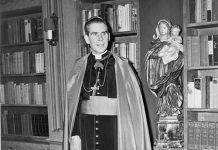
Newsroom (25/06/2026 Gaudium Press ) For decades, Franz Hengsbach was one of the most revered figures in Germany’s industrial heartland. As the founding bishop of the Diocese of Essen, he descended into the coal mines with workers, brokered labor disputes, and earned a tribute from former Chancellor Helmut Schmidt, who once called him “the most important person in the Ruhr region.” When he died in 1991, he left behind a diocese that bore the imprint of his personality at every level. A statue of him stood in the Cathedral courtyard until 2023.
That statue is gone now. And the man it honored stands at the center of one of the most consequential clerical abuse investigations in recent German Catholic history.
An interim report released Thursday by three independent research institutes has substantiated abuse allegations against Hengsbach, who became a cardinal in 1988 and served as Bishop of Essen from 1958 until his death. Researchers identified a total of twelve allegations of sexual violence against minors. Three of those — involving girls — were assessed by the full research team as “well-documented and plausible.” Five cases in total were found to exhibit what the researchers described as “high consistency in content, meticulous detail, and biographical coherence.”
The findings represent the most detailed accounting yet of allegations that first surfaced publicly in September 2023, and they arrive alongside a damning assessment of the institutional failures that allowed them to remain buried for so long.
A Pattern Spanning Three Decades
The earliest of the three substantiated allegations dates to the 1950s. According to the report, a 16-year-old girl undergoing domestic science training in the Sauerland region was visited repeatedly by Hengsbach in the mid-1950s, during which he allegedly forced her to perform sexual acts and used “euphemistic language” to describe what was happening. Researchers noted the allegation is “characterized by a high degree of consistency and biographical coherence.”
The second allegation places Hengsbach’s conduct in the 1960s, when a girl of approximately 13 years old was allegedly touched repeatedly under her clothing in the breast area on multiple occasions.
Perhaps most troubling in its specificity is a third allegation from the 1980s — decades into his episcopate. A 13-year-old girl preparing for her confirmation was allegedly summoned to the sacristy after the church service, where Hengsbach is said to have touched her in the chest area and spoken to her in a sexually suggestive manner. The researchers drew explicit attention to the repetition of method: “The patterns of instrumentalizing the confirmation service, creating isolated situations, and exploiting sacred authority were repeated over three decades.”
Four additional allegations involving boys were also examined. In one case, Hengsbach allegedly behaved in a sexually inappropriate manner toward a boy in a children’s home, pulling him onto his lap and, in another instance, pressing the boy’s head between his legs. A similar pattern was alleged for a male confirmand in the late 1960s. The research teams differed on whether these incidents constitute sexual violence in a formal sense, but all agreed they should be investigated further. At a minimum, researchers stated, sexual violence against boys “cannot be ruled out.”
Institutional Knowledge, Institutional Silence
The report does not confine its criticism to Hengsbach alone. A central thread running through the interim findings concerns what the Diocese of Essen knew, and when — and what it chose to do with that knowledge.
According to the report, individual employees of the diocese were aware of allegations against Hengsbach as early as the 1980s. In 2011, a woman contacted the Archdiocese of Paderborn — where Hengsbach had served as auxiliary bishop before moving to Essen — alleging that she had been repeatedly abused in 1954 at the age of 16, not only by Hengsbach but also by his brother, who was likewise a priest. The Archdiocese at the time deemed those allegations implausible, an assessment it now acknowledges was a mistake. That same year, the case was reported to the Vatican, which did not pursue it further.
Critically, Bishop Franz-Josef Overbeck of Essen — Hengsbach’s successor — was informed of those 2011 allegations and took no action. When a second victim came forward in 2022 alleging sexual assault by Hengsbach in 1967, the 2011 files resurfaced. Only at that point did Overbeck order a comprehensive investigation. The allegations were made public in September 2023.
At Thursday’s presentation of the interim report, Overbeck acknowledged his failure directly. “At the time, I didn’t recognize the significance of this matter adequately; I underestimated it — I simply couldn’t imagine that a bishop, whose successor I had just become, was capable of such terrible acts,” he said, adding that this was a misjudgment for which he bears responsibility.
The report further noted discrepancies between Overbeck’s public statements and the documentary record. He had previously stated that he had only received information about the Hengsbach brothers in a “very casual and cryptic” way, but the documents show he was formally informed by the Archdiocese of Paderborn in 2011. Overbeck acknowledged he could not resolve this contradiction by claiming faulty recollection. “The documents were not stored where they should have been accessible for prevention, intervention, or investigation.”
Complicity and Cover: A Bishop Who Was Told
Beyond his own alleged conduct, the report also begins to establish Hengsbach’s role as what the researchers call “a person aware of sexual abuse.” Several individuals told investigators that they had confided in the bishop about sexual violence they had suffered, whether in private or institutional contexts. Hengsbach’s response, in each case reported, followed the same pattern: he reacted “defensively and dismissively,” and no consequences were imposed on the accused clergy members.
This dimension of the investigation — Hengsbach’s possible complicity in enabling abuse by others — is described as “not yet well-substantiated” and has been designated the primary focus of the second phase of the project.
Notably, Hengsbach’s name was absent entirely from the Diocese of Essen’s broader abuse study published in 2023. Johannes Norpoth, a survivor of abuse who served on the study’s advisory group, said this absence was not accidental. “The research team was denied the relevant information,” he stated Thursday, framing the omission as part of a broader pattern of institutional self-protection. “What we are seeing here is not merely a ‘chain of failures,’ but rather the expression of an attitude.”
The Architecture of Impunity
The three institutes behind the report — the Munich Institute for Applied Research and Project Consulting (IPP), the Research Center for Contemporary History in Hamburg, and the Berlin Institute for Dissent — were commissioned in October 2024 following the public disclosure of abuse allegations the previous year. Their work was set back by the sudden death of Hamburg study director Thomas Großbölting in a tragic accident in February 2025. In total, the team analyzed approximately 3,000 pages across 12 case files and 34 personnel and classified records, and conducted 28 qualitative interviews, including six with victims.
The funding for the study was drawn from the Diocese of Essen, the Archdiocese of Paderborn, the Catholic aid organization Adveniat, the Catholic Military Chaplaincy, and the Central Committee of German Catholics — institutions that Hengsbach himself once led or was closely affiliated with.
The researchers are careful to situate Hengsbach within a structural argument, not merely a biographical one. “The accumulation of offices and honors, the lack of checks and balances on episcopal power, and the aura of invulnerability created conditions that enabled transgressions and prevented accountability,” the report states. “These structures were not solely linked to Hengsbach as an individual, but — according to one thesis — characterize the Catholic episcopate and clergy as a whole in the 20th century.”
Essen’s Vicar General, Klaus Pfeffer, echoed that framing on Thursday, calling the findings a “wake-up call” for the Catholic Church. He criticized what he termed an understanding of ordained ministry that grants officeholders “an untouchable, unquestionable, and uncontrollable power.” Pfeffer noted that he had personally known Hengsbach as an authoritarian figure who belittled subordinates and for whom criticism had been “virtually impossible for decades.” Even years after the cardinal’s death, Pfeffer said, some of his associates had “shown no willingness whatsoever to question their image of the exalted bishop.”
Not an Isolated Case
Hengsbach is not the only senior German Catholic figure now facing posthumous scrutiny of this kind. Former Bishop of Hildesheim Heinrich Maria Janssen (1907–1988) and Cardinal Johannes Joachim Degenhardt of Paderborn (1926–2002) have both faced allegations of abuse, as has Bishop Reinhard Lettmann of Münster (1933–2013). These were, the researchers observe, men of the same generation who apparently assumed, with some justification given the era’s structures, that they were beyond accountability.
“For a long time, their good reputation preceded them, and accusations disappeared into drawers that remained untouched for years,” the report notes. “Only in recent years has it become less certain that those drawers will remain closed.”
The statue of Franz Hengsbach has been removed. The street bearing his name has been renamed. In the Diocese of Essen, the work of reckoning is ongoing — and, according to the researchers, far from complete. A second investigative phase focused on complicity and institutional cover-up is now underway.
For the victims, who waited decades to be believed, the publication of Thursday’s report represents a beginning, not an end. As Norpoth put it: “There can be no legal reckoning today. This deficit is less a flaw in the study than a result of statute-barred offenses, incomplete files, a lack of documentation — and a system that for a very long time refused to document what it knew.”
The interim report was produced by the Munich Institute for Applied Research and Project Consulting (IPP), the Research Center for Contemporary History in Hamburg, and the Berlin Institute for Dissent, commissioned by the Diocese of Essen and Archdiocese of Paderborn in October 2024.
- Raju Hasmukh with files from KNA
Related Images: