












Cardinals at Vatican Consistory urge peace, reject war normalization, and call for a “civilization of love” amid global crisis.
Newsroom (28/06/2026 Gaudium Press ) The Extraordinary Consistory convened by Pope Leo XIV on June 26 unfolded as a sweeping reflection on the crises shaping the modern world and the Church’s responsibility within it, with cardinals forcefully warning against the normalization of war, polarization, and what they described as a pervasive “culture of power.”
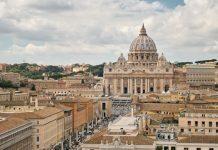
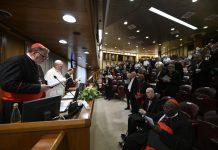
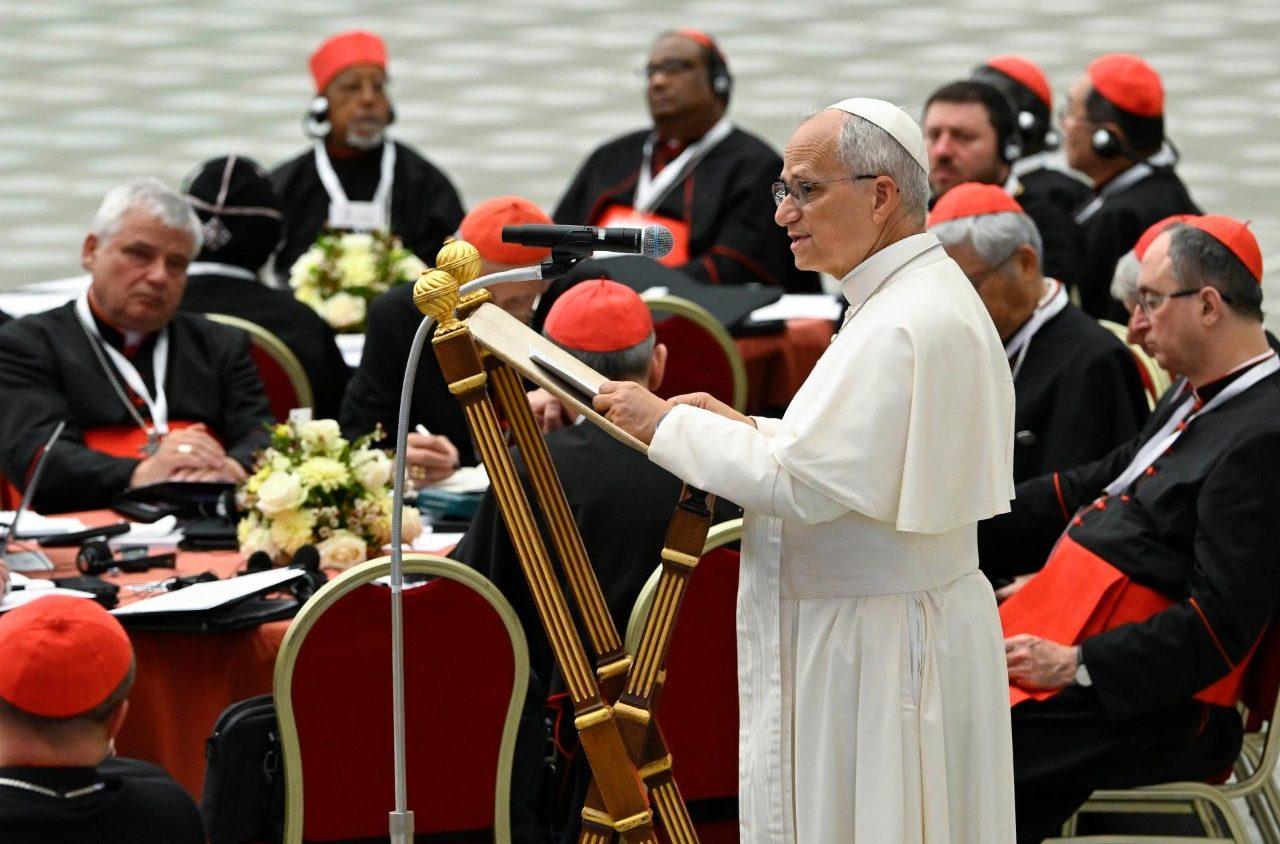
Meeting in the Paul VI Hall following morning Mass at St. Peter’s Basilica, 178 cardinals gathered for a day marked by prayer, debate, and discernment. The session opened with solemn intercessions for the “painful situation in Venezuela” and victims of a recent earthquake, setting a tone that intertwined global suffering with ecclesial responsibility.
Centered on Chapter Five of the encyclical Magnifica Humanitas, the afternoon session—titled “The Culture of Power and the Civilization of Love”—was moderated by Cardinal Pablo Virgilio Siongco David. Cardinal Víctor Manuel Fernández, Prefect of the Dicastery for the Doctrine of the Faith, delivered the introductory address, while Pope Leo XIV attended both the opening and closing moments of the gathering.
A World Marked by Division
Across eleven reporting groups, cardinals described a world increasingly shaped by division, mistrust, and violence. They pointed to the “dehumanizing force” of power structures that encourage conformity, deepen polarization, and normalize conflict as a means of resolution.
Participants warned that such dynamics are eroding society’s tolerance for violence and fostering simplistic approaches to complex geopolitical tensions. These concerns were echoed in broader discussions that identified misinformation, social fragmentation, and weakening institutions as drivers of instability.
The cardinals also highlighted widespread suffering linked to economic hardship, migration pressures, ecological crises, and the marginalization of religious and ethnic minorities. Particular concern was raised about growing antisemitism, declining respect for religious freedom, and hostility toward the Church in certain regions.
Underlying many interventions was a shared diagnosis: a deepening crisis of meaning. Excessive individualism, the breakdown of family life, loneliness among both youth and the elderly, and rising rates of suicide and substance abuse were cited as symptoms of a broader loss of spiritual and communal foundations.
Rejecting War, Reclaiming Peace
In response, the assembly issued a clear moral appeal: war must not become accepted as normal. While acknowledging the right to proportionate self-defense, many participants stressed the need to move beyond the traditional framework of “just war,” insisting that the Gospel cannot be imposed by force.
Instead, the cardinals called for the construction of a “civilization of love,” rooted in dialogue, reconciliation, and restorative justice. They emphasized that credible witness must begin within the Church itself, through a renewed language centered on listening, forgiveness, and concrete gestures of solidarity.
Unity within the Church emerged as a critical theme, seen as essential to its moral authority. This unity, participants noted, must extend outward through engagement with other Christian communities and with other religions—particularly Islam—in pursuit of peace.
The role of political authority also came under scrutiny, with calls to disentangle governance from what was described as a “toxic” relationship with economic power. Several groups underscored the importance of ethical leadership capable of prioritizing human dignity over financial or strategic interests.
Faith as Transformative Strength
At the heart of the discussions was a reaffirmation of faith in Christ and the transformative power of the Gospel when lived authentically. Cardinals stressed that the Church’s mission cannot be reduced to theory or abstraction but must take concrete form in acts of charity, solidarity, and presence among the suffering.
Examples cited included the Church’s ongoing efforts in conflict zones such as the Holy Land and Eastern Europe, as well as the diplomatic work of the Holy See and papal nuncios in maintaining a global voice for peace.
Participants also reflected on the Church’s identity as a “welcoming mother,” called to renew parish life, acknowledge its own shortcomings, and foster a sense of belonging. Migrants were described not as burdens but as blessings, while young people were seen as vital agents of renewal, demonstrating a growing thirst for the Gospel.
Education, too, was highlighted as a crucial arena for rebuilding the common good, alongside the witness of laypeople whose acts of charity embody the Church’s mission in everyday life.
A Call to Responsibility
The Consistory repeatedly returned to the theme of responsibility—personal, communal, and institutional. In an era described as marked by “globalization of indifference,” every individual was urged to take part in building peace.
Cardinals expressed particular gratitude to Pope Leo XIV for Magnifica Humanitas, praising its candid acknowledgment of the Church’s historical failures, including delays in condemning slavery. Such honesty, they said, has opened new paths for dialogue and reconciliation.
The Petrine ministry itself was highlighted as a safeguard of the Church’s independence from political power, reinforcing its ability to speak prophetically in defense of human dignity.
Symbolic initiatives were also encouraged, recalling moments such as the World Day of Prayer for Peace convened by St. John Paul II in Assisi in 1986, as models for visible and collective commitment to peace.
Closing in Prayer
As the session drew to a close, Pope Leo XIV returned to lead the final prayer at approximately 7:30 p.m., bringing an end to a day of intense reflection. Earlier, in brief concluding remarks, he underscored the urgency of recognizing human suffering, invoking the image of the wounded man left by the roadside.
“If we are not blind,” the Pope said, “it is true that there is so much suffering.”
The Consistory’s message was clear: in a fractured world, the Church must not only diagnose the crises of the age but actively embody an alternative—one grounded in compassion, unity, and a steadfast commitment to peace.
- Raju Hasmukh with files from Vatican News
Related Images: