














A reflection on Tiananmen Square at 37, exploring memory, repression, and ongoing calls for justice in China and Hong Kong.
Newsroom (04/06/2026 Gaudium Press ) As the world marks another anniversary of June 4, 1989, the memory of the Tiananmen Square massacre remains both a historical milestone and a living political fault line. On that day, the Chinese Communist Party (CCP) deployed military force against unarmed civilians—students and citizens who had gathered peacefully in Beijing and across China to call for democratic reform. The violence that followed continues to reverberate, not only in collective memory abroad but in the enforced silence within China itself.
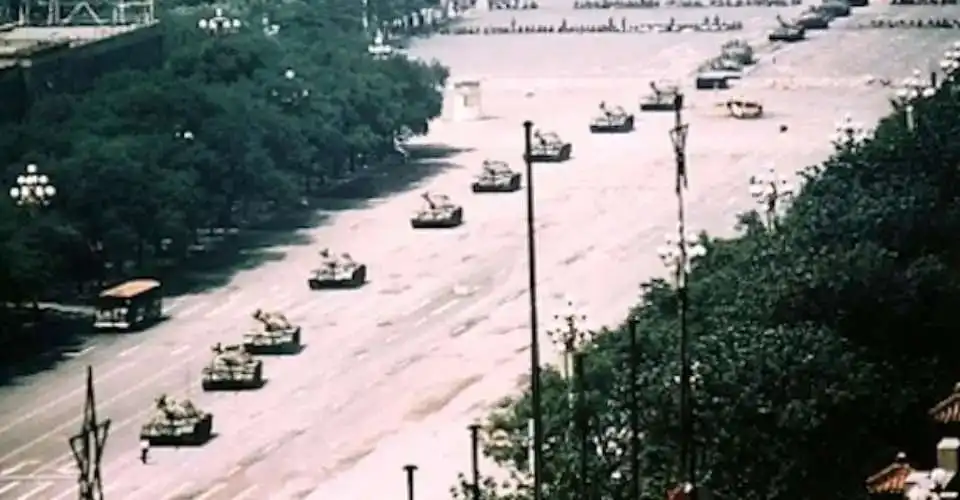
The iconic image of the unidentified “Tank Man,” standing alone before a column of armored vehicles on Chang’an Avenue, endures as a symbol of courage in the face of overwhelming state power. Yet while this image is globally recognized, the broader event it represents has been systematically erased from public consciousness within China.
The precise number of fatalities remains contested. Estimates range significantly, with the Red Cross reporting at least 2,600 deaths, while British diplomatic cables suggest the toll could have reached as high as 10,000. Regardless of the exact figure, the scale of violence underscores the severity of the crackdown and its enduring significance.
More than three decades later, the struggle over how—if at all—this history is remembered continues. The Tiananmen Mothers, a group representing families of those killed or injured, have persistently called for recognition and accountability. In a recent statement, they reiterated that the events of 1989 constituted “a tragedy caused entirely by the government,” one that violated constitutional principles, basic human rights, and the civil liberties of Chinese citizens.
Their statement also highlighted a stark reality: despite the digital age’s expansion of information access, truthful accounts of the massacre remain effectively inaccessible within China. Public discussion is prohibited, mourning is suppressed, and even private commemorations are subject to surveillance. As a result, many younger Chinese citizens are unaware that the events of June 1989 occurred at all.
This enforced amnesia is not confined to mainland China. For decades, Hong Kong stood as the sole place under Chinese sovereignty where Tiananmen could be openly commemorated. Each year, thousands gathered in Victoria Park for candlelight vigils, creating a powerful tradition of remembrance that bridged generations.
That tradition, however, has been dismantled. Following the imposition of the National Security Law in 2020, public vigils were banned, and even religious observances marking the anniversary have been curtailed. The Catholic Church in Hong Kong, which once held annual memorial Masses, has shifted away from explicit commemoration, reflecting a broader climate of constraint.
Despite these restrictions, acts of remembrance persist—often at great personal cost. Prominent pro-democracy figure Jimmy Lai, now imprisoned, was previously prosecuted for participating in Tiananmen commemorations. Activists such as barrister Chow Hang-tung and trade unionist Lee Cheuk-yan have also faced imprisonment for similar actions. In today’s Hong Kong, even lighting a candle on June 4 can be considered a criminal offense.
Individual stories underscore the continuing reach of state repression. One such case is that of dissident Dong Guangping, who has repeatedly attempted to flee China and has endured multiple imprisonments. His offenses include signing a letter about Tiananmen and participating in commemorative activities—acts treated by authorities as subversion. His recent escape attempt highlights the persistence of dissent, as well as the risks faced by those who refuse to conform.
Beyond Tiananmen itself, critics argue that the patterns of governance displayed in 1989 continue in other forms. Allegations of systemic human rights abuses—including repression in Tibet, persecution of religious groups, and the dismantling of Hong Kong’s freedoms—are frequently cited as evidence of continuity rather than change. The issue of forced organ harvesting, described by an independent tribunal as a “crime against humanity,” further intensifies scrutiny of the Chinese state’s human rights record.
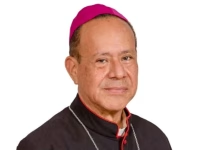
Yet perspectives on how to address this legacy are not uniform. Within Hong Kong’s religious community, for example, there are differing emphases. Cardinal Joseph Zen has long described those who died in Tiananmen as martyrs, advocating sustained remembrance. By contrast, Cardinal Stephen Chow has recently encouraged a model rooted in forgiveness, urging believers to seek reconciliation and healing rather than remain in a cycle of grievance.
This divergence reflects a broader tension: between remembrance and reconciliation, justice and pragmatism. Even at the international level, responses are shaped by competing priorities. The Vatican, for instance, has largely refrained from public commentary on Tiananmen, a stance often interpreted as an effort to preserve delicate diplomatic relations with Beijing and safeguard Catholic communities in China.
Ultimately, the legacy of June 4, 1989, is not confined to history books. It persists in the demands of victims’ families, in the silencing of public discourse, and in the risks borne by those who continue to speak out. For societies that value openness and accountability, the responsibility to remember carries particular weight.
As the anniversary passes once more, the enduring question remains not only what happened in Tiananmen Square, but how—and whether—it will ever be fully acknowledged.
- Raju Hasmukh with files from UCA News
Related Images: