






Castel Gandolfo Palace will close to visitors as Leo XIV restores its role as papal summer residence, ending its museum era begun in 2016.
Newsroom (17/04/2026 Gaudium Press ) The Apostolic Palace of Castel Gandolfo will close its doors to the public starting in July, marking a decisive return to its historic role as the summer residence of the Popes. The move ends nearly a decade in which the complex functioned as a museum, a phase inaugurated by Pope Francis in 2016.
According to sources consulted by the Rome Reports agency, the decision is driven by the desire to facilitate the permanent relocation of Pope Leo XIV during the summer months. Tickets to visit the complex, located in the Castelli Romani on the shores of Lake Albano, are currently available only until June 30 through the official website. Sales have been halted for July and August—the peak tourist season—as well as for the months that follow.
Security Drives the Transition
Until now, Leo XIV has stayed at Villa Barberini during his weekly visits to Castel Gandolfo. However, the villa presents significant security limitations for a head of state. Positioned along a public street, it features a narrow lane open to both pedestrian and vehicular traffic. Each arrival or departure of the Pope draws crowds to the gates, and beyond his personal escort, there are no additional safeguards in place.
The plan to convert the Apostolic Palace back into a residence was presented to Leo XIV, who approved the project. Renovation work is scheduled to begin in May. Officials indicate that the intervention will not involve major structural changes, as the building remains in excellent condition after years of functioning as an exhibition space. A general refurbishment will be sufficient to make the rooms habitable once again.
A Weekly Retreat
For Leo XIV, Castel Gandolfo is more than a formal residence—it serves as a weekly retreat. The Pope typically arrives on Monday afternoons and returns to the Vatican on Tuesdays. During this time, he focuses on both physical and spiritual renewal.
“A break during the week is very good for me; it helps a lot,” the Pontiff has said, noting that he uses the facilities to play tennis and swim. With the restoration of the palace’s residential function, Leo XIV will become the sixteenth Pope to spend the summer at Castel Gandolfo, continuing a deeply rooted tradition.
The End of a Public Era
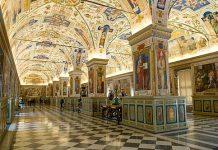
The reopening of the Apostolic Palace to private use marks the end of an unprecedented chapter. In 2016, Pope Francis chose to open areas of the residence that had never before been accessible to visitors. These included the papal bedroom, private chapel, study, library used for meetings with heads of state, the consistory hall, and the throne room.
Since 2021, visitors have also been able to explore the gardens via an eco-friendly train, discovering Roman ruins, papal vineyards, greenhouses, a working farm, and even the helipad.
For nearly a decade, these spaces offered a rare glimpse into the intimate life of the papacy. With the palace’s closure, they will once again become private, reserved for the personal life and prayer of the Successor of Peter.
A Site Steeped in History
Castel Gandolfo’s connection to papal authority stretches back centuries. Tradition holds that Pope Urban VIII was the first to spend summers there, adopting a custom from his time as a cardinal. The Lateran Treaties of 1929 formally recognized papal ownership of the complex, and in 1934 the Vatican Observatory was established on the grounds.
The palace has played a significant role in modern papal history. John Paul II, who referred to it as “Vatican II,” frequently retreated there and commissioned the construction of a swimming pool. Benedict XVI also resided at Castel Gandolfo and moved there on February 28, 2013, following his resignation.
The site has also witnessed moments of profound historical significance. Two Popes—Pius XII in October 1958 and Paul VI in August 1978—died within its walls. During World War II, Pius XII transformed the palace and its gardens into a refuge for the wounded and displaced. The papal bedroom itself was repurposed as a maternity ward, where around forty children were born. Locally, they are still remembered as the “Pope’s children.”
With its impending closure to the public, Castel Gandolfo enters a new chapter—one that restores its centuries-old identity as a place of retreat, continuity, and papal life.
- Raju Hasmukh with files from Infocatholica
Related Images: