













Cardinal Koovakad urges interreligious dialogue and unity in Europe to promote peace, fraternity, and respect in a divided world.
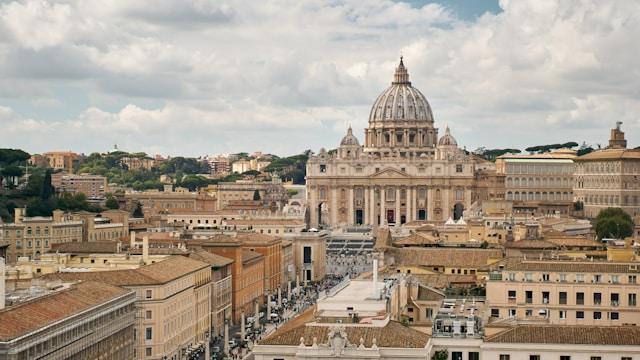
Newsroom (23/06/2026 Gaudium Press ) At a time marked by deep global divisions, religious leaders are emphasizing the need for unity through dialogue and collaboration. This message resonated strongly at the international conference hosted at the Pontifical University of St. Thomas Aquinas, known as the Angelicum, in Rome on June 23–24.
The gathering, titled “Buddhists, Christians, Hindus, Jains, and Sikhs in Europe: Building fraternity through dialogue and collaboration,” brings together representatives of diverse religious traditions to exchange perspectives and reinforce a shared commitment to peace and mutual understanding.
Opening the conference, Cardinal George Jacob Koovakad, Prefect of the Dicastery for Interreligious Dialogue, framed the event as a response to an increasingly fragmented and polarized global landscape. He underscored that dialogue and shared experiences are essential steps toward “being brothers and sisters committed to building and strengthening bonds of fraternity.”
Fraternity in a Divided World
Cardinal Koovakad acknowledged that the concept of fraternity is often dismissed as idealistic or unattainable. Yet, he argued, it is precisely in today’s climate—marked by war, violence, discrimination, and widespread social division—that such ideals must be reclaimed and actively pursued.
He pointed to the historical “Spirit of Assisi,” recalling the World Day of Prayer for Peace convened by Saint John Paul II in 1986. With the upcoming 40th anniversary of that landmark event, alongside the 800th anniversary of the death of Saint Francis of Assisi, Koovakad highlighted the enduring relevance of Francis’ vision of universal fraternity. This same vision inspired Pope Francis’ encyclical Fratelli tutti, which calls for solidarity and social friendship across cultural and religious lines.
Building Bridges Through Dialogue
Central to the Cardinal’s address was the call to build bridges—both among believers and with all people of goodwill. Drawing on the words of Pope Leo XIV, he emphasized that genuine fraternity is not merely aspirational but a “lived reality” that can transcend conflicts, cultural differences, and social tensions.
According to Koovakad, diversity should not be seen as a source of division but rather as an opportunity for mutual enrichment. “Cultures, sensitivities, and traditions,” he noted, can become foundations for cooperation when approached with openness and respect.
Europe’s Diversity as Strength
Reflecting on the European context, Cardinal Koovakad described the continent as a unique convergence of cultures, religions, and histories. Europe’s identity, he explained, has been shaped by centuries of migration, globalization, and demographic change, transforming it into a “rich melting pot” of languages, ethnicities, and spiritual traditions.
This diversity, he argued, must be recognized as a valuable resource. By embracing its pluralistic heritage, Europe can foster a more inclusive, cohesive, and harmonious society. Respect for human dignity—including the fundamental right to practice one’s religion freely—remains essential to this vision.
A Shared Commitment to the Common Good
The Cardinal urged both long-term residents and newcomers to Europe to work collectively for the common good. He stressed that cultural and religious diversity is “a human richness and not a threat,” encouraging participants to move beyond suspicion and toward cooperation.
Regular engagement—meeting, exchanging ideas, and learning from one another—plays a critical role in building trust and deepening mutual respect. Such interactions, he said, not only strengthen fraternal bonds but also reinforce a shared commitment to contributing positively to society.
Promoting Peace in Polarized Times
In his concluding remarks, Cardinal Koovakad reiterated the urgent need for joint efforts to defend and promote peace, justice, and human fraternity. These values, he said, are best advanced through sustained dialogue, collaborative action, and a spirit of social friendship.
With the world facing unprecedented levels of polarization, he described these principles as “fundamental components” for addressing contemporary challenges. The conference itself serves as a platform to explore practical ways of applying these ideals in diverse communities across Europe.
Koovakad expressed hope that the discussions would yield meaningful outcomes, enabling participants to strengthen relationships grounded in respect, solidarity, trust, and shared humanity.
A Continuing Dialogue
As the conference unfolds, its message remains clear: while divisions may dominate the global narrative, the path to peace lies in persistent dialogue and genuine collaboration. By drawing on the wisdom and values of multiple religious traditions, participants are working to transform the ideal of fraternity into a lived reality—one capable of shaping a more unified and peaceful future.
- Raju Hasmukh with files from Vatican News
Related Images: