













Apostolic Nuncio in Canada highlights how the Ugandan Martyrs’ witness continues to inspire faith and fuel Catholic Church growth across Africa.
Newsroom (17/06/2026 Gaudium Press ) The Apostolic Nuncio to Canada, Archbishop Ivan Jurkovič, has attributed the remarkable growth of the Catholic Church in Africa to the enduring witness of the Ugandan Martyrs, describing their sacrifice as a powerful force that continues to inspire believers across generations and continents.
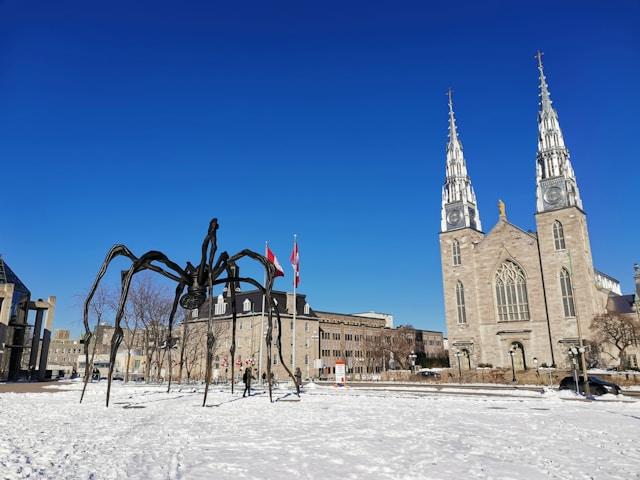
Delivering his homily during the 2026 Ugandan Martyrs’ celebrations in Ottawa on June 14, the Vatican diplomat reflected on the lives of the young Christians who were executed for their faith in the late nineteenth century. The commemorative Mass took place at St. Elizabeth Parish in the Archdiocese of Ottawa-Cornwall and was jointly organized by the Uganda Association of Ottawa and the Catholic Community of Ottawa.
“These martyrs are the first saints to be canonized in modern Africa and have thus been an encouragement and reason for the growth of the Church on the continent,” Archbishop Jurkovič said.
A “Living Testimony” of Faith and Courage
The Nuncio underscored that the story of the Ugandan Martyrs transcends historical narrative, presenting it as a continuing call to Christian witness.
Referring to St. Charles Lwanga, Mattia Mulumba, Kizito, and their companions, he noted: “Their story is not merely a chapter in African history; it is a living testimony of the power of the Gospel and a challenge to every Christian in every generation.”
The Archbishop recalled that the Missionaries of Africa, also known as the White Fathers, first arrived near Lake Victoria in 1879. Within just six years, Christianity had spread rapidly throughout the Buganda Kingdom, laying the foundation for a local community of believers deeply committed to their faith.
That commitment was soon tested. Between 1885 and 1887, 22 Catholic converts were executed under the orders of King Mwanga II after refusing to renounce Christianity and submit to demands they considered immoral.
“Having been fully equipped with their knowledge and love of Jesus Christ, the martyrs were given their first test, which they passed with flying colors,” Archbishop Jurkovič said.
“The Seed of the Church in Africa”
In his homily, the Nuncio emphasized the transformative paradox of martyrdom, noting that attempts to suppress Christianity ultimately accelerated its spread.
“When they were ordered to abandon their faith and submit to immoral demands, they chose fidelity to Christ even at the cost of torture and death,” he said. “Their persecutors thought they were extinguishing Christianity; instead, the blood of the martyrs became the seed of the Church in Africa.”
Archbishop Jurkovič highlighted that the martyrs were not members of the clergy or scholars, but ordinary believers driven by profound conviction.
“They were not Priests, Bishops, or scholars, but ordinary believers who discovered in Christ a treasure worth more than life itself,” he said.
Extending the Legacy: Modern Witnesses of Faith
The Nuncio also recalled the witness of Blessed Daudi Okelo and Blessed Jildo Irwa, young catechists killed in northern Uganda in 1918, presenting them as extensions of the same tradition of courage and faith.
“Their witness of faith, courage, and fidelity continues to inspire Christians in Uganda and across Africa,” he said.
This enduring legacy, he suggested, demonstrates the vitality of the African Church, which continues to grow both in numbers and missionary zeal.
From Namugongo to the World
Archbishop Jurkovič drew attention to the global dimension of African Catholicism, referencing the 1969 visit of Pope St. Paul VI to Uganda. During that historic pilgrimage to Namugongo, the Pope highlighted what he described as the maturity and missionary dynamism of the Church on the continent.
“He encouraged African Catholics to take an active role in evangelization both on the continent and beyond,” the Nuncio noted.
That missionary expansion is now visible worldwide, including in Canada, where clergy and members of religious institutes from Africa are increasingly serving diverse Catholic communities.
African Missionaries Strengthen Canadian Church
The Archbishop pointed to the presence of African priests and religious in Canada as a sign of the Church’s evolving global character and the fruits of evangelization in Africa.
“As you see also here in Ottawa, I am so happy to have the occasion to thank the Priests coming from different African countries to assist this Church with its new structures, new population, and new communities,” he said.
He described migration—often seen as a challenge—as an opportunity for renewal and collaboration within the Church.
“Thanks be to God, we are mature, we are able, and this way of collaborating will continue also in the future,” he added, calling the contribution of African missionaries a reflection of a “mature Church.”
The Nuncio also expressed gratitude to Canadian authorities for facilitating the presence of international clergy despite evolving migration policies.
A Call to Community in an Age of Individualism
Beyond historical reflection, Archbishop Jurkovič used the occasion to emphasize the importance of Christian community, warning against the rise of individualism in modern society.
“It is impossible to be a Christian alone. The community of Christians and believers is the true subject of religious life,” he said.
He stressed that faith is nurtured within relationships—family, parish, and the universal Church—where vocation and identity are formed.
“The best vocations, the greatest talents, and the biggest saints come out of the community,” he added.
Enduring Inspiration for Future Generations
Concluding his homily, the Apostolic Nuncio called on believers to draw strength from the martyrs’ example.
“May the example of the Holy Uganda Martyrs inspire us to remain steadfast in our faith, courageous in our witness, and faithful in our love for Christ,” he said. “May their prayers strengthen us to follow Jesus wholeheartedly, so that one day we may share with them the eternal joy of God’s Kingdom.”
The Ottawa celebration thus served not only as a memorial but as a reaffirmation of a legacy that continues to shape the identity and mission of the Catholic Church in Africa and beyond.
- Raju Hasmukh with files from ACI Africa
Related Images: