








Cardinal McElroy faces controversy over a reported ban on communion rails in Washington, sparking debate on kneeling and Eucharistic reverence.
Newsroom (15/06/2026 Gaudium Press ) A new liturgical controversy is unfolding in the United States following reports that Cardinal Robert McElroy, Archbishop of Washington, has ordered that communion rails not be installed or reinstalled in churches across the archdiocese. The move, which has not yet been confirmed by an official decree or public statement, has reignited debate over traditional forms of reverence during the reception of Holy Communion.
The directive was first reported by journalist Christine Niles of Stella Maris Media, who cited information from a recent meeting between the archbishop and clergy. According to the report, the instruction includes not only a prohibition on permanent communion rails but also discourages the use of temporary kneelers during the distribution of the Eucharist.
Liturgical Norms and Local Interpretation
At the heart of the controversy is the manner in which the faithful receive Holy Communion. In the United States, norms approved by the national episcopal conference and confirmed by the Holy See indicate that communicants typically receive the Eucharist standing, after making a gesture of reverence. However, universal Church law also clearly states that individuals may not be denied communion solely for choosing to kneel.
The reported directive in Washington appears to focus on maintaining the normative posture of standing reception. Arguments presented during the priests’ meeting, according to disclosed information, included concerns that the use of kneelers or rails might disrupt the orderly flow of the communion procession. Additionally, it was suggested that such accommodations could transform what is currently an individual choice into a more widespread, possibly dominant practice.
This distinction between individual rights and communal norms has become a central point of tension. While the Church allows for kneeling, diocesan authorities may seek to regulate the physical arrangements that facilitate it, raising questions about the limits of episcopal authority.
Echoes of a Similar Dispute in Charlotte
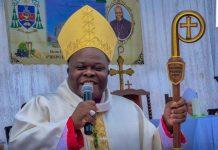
The reported development in Washington follows closely on the heels of a similar controversy in the Diocese of Charlotte, North Carolina. There, Bishop Michael Martin issued a directive prohibiting the use of communion rails, kneelers, and individual kneeling arrangements during public liturgies.
In a pastoral letter issued in December, Martin argued that the norms established by the United States Conference of Catholic Bishops do not envision the use of such elements. He maintained that their presence contradicts the standards set by the American episcopate.
The decision prompted a notable reaction from clergy within the diocese. More than thirty priests formally appealed to the Vatican, seeking clarification on whether a bishop has the authority to restrict practices that are not explicitly forbidden by universal Church law.
The Charlotte case has since become a reference point for broader discussions about liturgical uniformity and the balance of power between diocesan governance and universal norms.
McElroy Under Renewed Scrutiny
The situation in Washington has drawn heightened attention not only because of the archdiocese’s prominence but also due to Cardinal McElroy’s influential position within the American Catholic hierarchy. Installed as Archbishop of Washington in March 2025 after a decade leading the Diocese of San Diego, McElroy is widely regarded as a significant figure in shaping contemporary Church discourse in the United States.
The reported ban on communion rails emerges shortly after another controversial decision by the cardinal. Earlier in June, McElroy removed Monsignor Stephen Rossetti from his role as diocesan exorcist and ended the archdiocese’s affiliation with the St. Michael Center for Spiritual Renewal. The move followed public statements linking UFO phenomena to demonic activity.
In explaining that action, McElroy stated that such claims “seriously undermine the very precise teaching of the Church on the devil, demons, and exorcism.” The episode drew considerable media attention and contributed to ongoing scrutiny of his leadership decisions.
A Broader Debate on Tradition and Practice
The latest controversy underscores a broader tension within the Catholic Church: how to reconcile longstanding traditions with contemporary norms and pastoral priorities. Communion rails, once a common feature in Catholic churches, have in many places been removed or fallen out of use following liturgical reforms of the 20th century. However, their reintroduction in some parishes has been seen by supporters as a revival of traditional reverence.
Critics of restrictions argue that limiting physical accommodations for kneeling could effectively discourage a posture explicitly permitted by Church law. Supporters, on the other hand, contend that maintaining uniformity in liturgical practice helps preserve the communal nature of the Mass.
As of now, the Archdiocese of Washington has not formally confirmed the reported directive. Nonetheless, the issue has already sparked discussion among clergy and laity alike, raising fundamental questions about authority, tradition, and the lived expression of faith in the modern Church.
With parallels to the situation in Charlotte and the broader implications for liturgical governance, attention remains focused on whether Washington will clarify its position—and how this evolving debate will shape Catholic practice in the United States.
- Raju Hasmukh with files from INfovaticana
Related Images: