













Pope Leo XIV defends human dignity at all life stages, warning against utilitarian medicine and praising Jérôme Lejeune’s legacy.
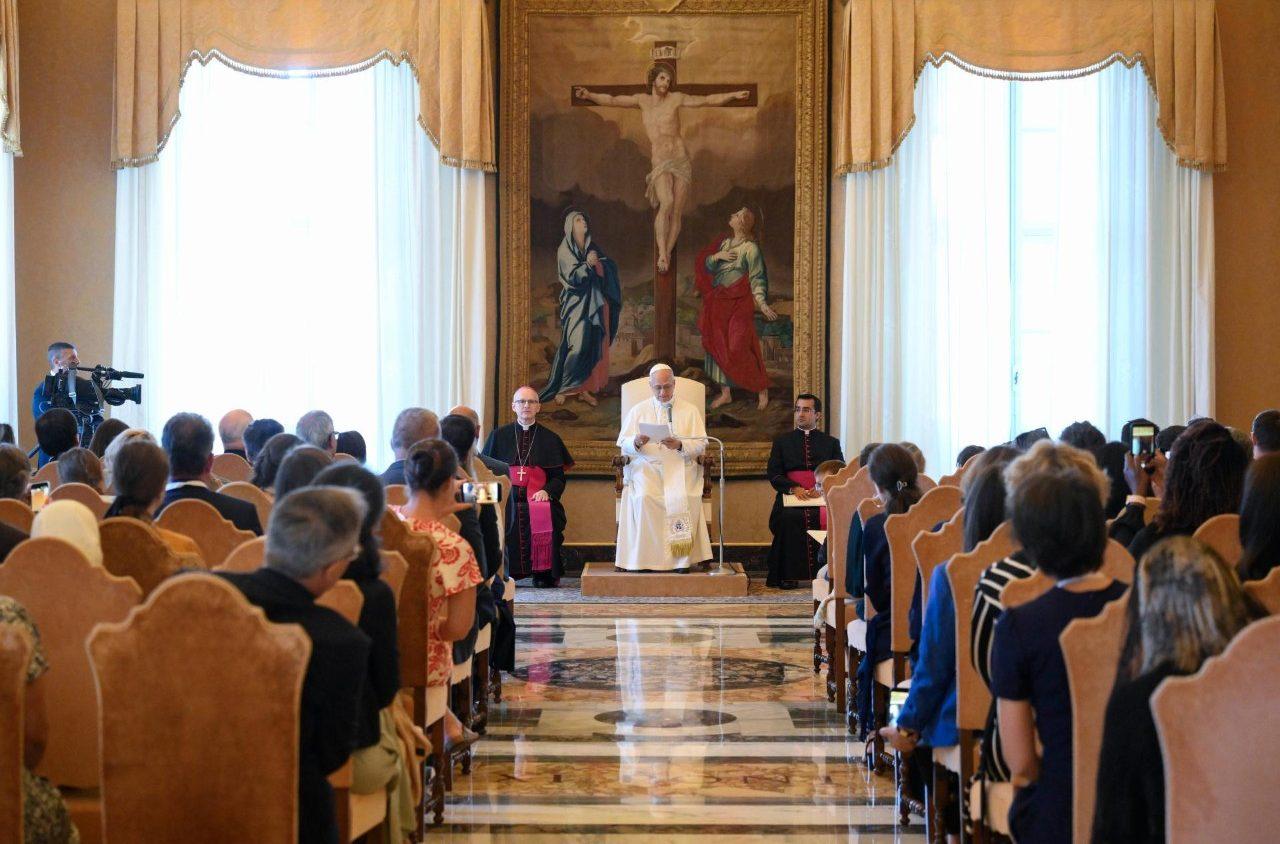
Newsroom (22/06/2026 Gaudium Press ) Pope Leo XIV delivered a forceful defense of human dignity at every stage of life on Monday at the Vatican, cautioning against the growing influence of utilitarian and technology-driven approaches in modern medicine. Addressing members of the Jérôme Lejeune Foundation, the Pontiff underscored the moral risks posed when scientific advancements operate without a clear ethical framework.
“No doctor should ever be allowed, based on laboratory algorithms, to decide on the life of an embryo or an elderly person,” the Pope declared. Emphasizing the irreplaceable value of human life, he added, “Medicine can never become a servant of programmed death.”
The audience gathered for the event included representatives of the Jérôme Lejeune Foundation, an organization established in France in 1995 following the death of the renowned geneticist. Lejeune is widely recognized for his 1958 discovery of the genetic cause of trisomy 21, also known as Down syndrome—a breakthrough that earned him international acclaim and positioned him as a pioneer of modern genetics.
According to its own data, the foundation invests between €4 million and €5 million annually in research and maintains a Paris-based biobank containing over 20,000 samples. It also operates four specialized medical centers located in Paris, Nantes, Córdoba, and Madrid, with more than 13,000 patients treated at its Paris facility alone. Through these initiatives, the organization continues its mission of advancing research, providing healthcare, and defending the dignity of individuals with genetic intellectual disabilities.
“I want to express my encouragement to you in your commitment to life and human dignity,” Leo XIV told the foundation’s members, commending their efforts across scientific and medical fields.
Remembering Jérôme Lejeune’s Legacy
The Pope’s address coincided with the centenary of Jérôme Lejeune’s birth, providing an opportunity to reflect on the scientist’s contributions and moral convictions. Leo XIV recalled that Lejeune dedicated his career to improving the lives of children with disabilities, describing him as a researcher “moved by the difficult situation of children with disabilities.”
Lejeune’s groundbreaking identification of the chromosomal abnormality responsible for Down syndrome was described by the Pope as placing him among the “precursors of modern genetics.” However, Leo XIV also noted the irony that the very discovery which brought Lejeune global recognition later became a tool used by the abortion industry to identify and eliminate unborn children with the condition—a development the geneticist strongly opposed.
Lejeune, who has been declared venerable following the recognition of his heroic virtues by Pope Francis in 2021, faced criticism from some scientific circles for his public defense of vulnerable lives. Nonetheless, he remained steadfast in his convictions, even referring to the use of genetic screening for selective abortion as “chromosomal racism.”
Ethics and the Future of Medicine
Throughout his speech, Pope Leo XIV issued a broader warning about the direction of modern medicine in an increasingly technological age. He stressed that scientific progress must not overshadow ethical responsibility or the intrinsic value of the human person.
“However, the value of the person does not depend on what he or she does or produces,” the Pope asserted, drawing a clear line between human dignity and utilitarian measures of worth.
He further reinforced the moral foundation of medical practice by invoking one of Lejeune’s most well-known principles: “Medicine is hatred of disease and love of the sick person.” The statement served as a reminder that healing professions must remain centered on compassion and care for individuals, rather than efficiency or outcomes dictated by algorithms.
Leo XIV also noted Lejeune’s close relationship with the Catholic Church, including his appointment to the Pontifical Academy of Sciences by St. Paul VI and his influence on St. John Paul II, which contributed to the eventual establishment of the Pontifical Academy for Life.
A Call to Action
In closing, the Pope urged members of the foundation to continue their work as advocates for the common good and witnesses to the dignity of human life. “Be, like him, committed witnesses in society, at the service of the constant search for the common good,” he said.
He concluded by expressing gratitude for the foundation’s ongoing efforts and its global role in research on genetic intellectual disabilities. Offering his apostolic blessing, Leo XIV encouraged its members, their families, and the patients they serve to persevere in promoting a culture that upholds life and ethical responsibility in medicine.
The address reaffirmed the Vatican’s position that technological progress must always be guided by moral principles—particularly when it concerns the most vulnerable members of society.
- Raju Hasmukh with files from ACI Prensa
Related Images: