









Cardinal Koovakad’s Baku visit highlights Holy See–Azerbaijan ties, promoting interfaith dialogue, tolerance, and cooperation for peace.
Newsroom (19/06/2026 Gaudium Press ) Cardinal George Jacob Koovakad, Prefect of the Dicastery for Interreligious Dialogue, concluded a significant visit to Azerbaijan from 15 to 19 June, underscoring renewed commitments to tolerance, multiculturalism, and cooperation between the Holy See and the Caucasian nation. His meetings with President Ilham Aliyev and prominent religious leaders in Baku highlighted a shared vision of peaceful coexistence among diverse faith communities.
The symbolism of “Fire” and “Wind”—elements deeply associated with Azerbaijan and its capital—served as a thematic backdrop to the visit. Fire, traditionally linked to the identity of the Azerbaijani people, and wind, emblematic of Baku itself, were invoked as representations of love and harmony. Together, these symbols illustrated the strengthening bond between the Holy See and Azerbaijan, rooted in mutual respect and collaboration.
Strengthening Longstanding Relations
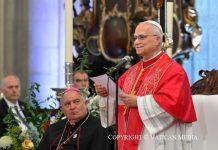
On 18 June, Cardinal Koovakad addressed an interreligious gathering at the residence of Sheikh ul-Islam of the Caucasus, Allahshukur Pashazade. In his remarks, he expressed gratitude for the warm reception and highlighted the enduring friendship between the Holy See and Azerbaijan’s religious communities.
The event brought together key figures, including Apostolic Prefect Vladimír Fekete, Azerbaijan’s Ambassador to the Holy See Ilgar Mukhtarov, and representatives from Christian and Jewish communities. The Cardinal recalled historic moments that have shaped bilateral relations, notably the visits of Pope John Paul II in 2002 and Pope Francis in 2016. These milestones, along with ongoing initiatives, have steadily strengthened ties and fostered dialogue across religious boundaries.
Christians and Muslims United in Dialogue
Drawing inspiration from Nostra aetate, the Second Vatican Council’s declaration on relations with non-Christian religions, Cardinal Koovakad emphasized the shared spiritual heritage of Christians and Muslims. He noted that both communities “have thus sought to walk together in the service of peace,” united in their belief in one God, the Creator.
This shared foundation, he explained, has translated into tangible cooperation. The 2011 bilateral agreement and the memorandum of understanding on religious cooperation signed in the previous year were cited as examples of the commitment to dialogue. According to the Cardinal, such agreements reflect an understanding that dialogue transcends mere discussion, becoming “a journey toward deeper understanding, trust, and collaboration.”
A Framework for Future Cooperation
Central to the visit was a forward-looking agenda anchored in the concept of a “civilization of love,” recently renewed by Pope Leo XIV in his encyclical Magnifica humanitas. Cardinal Koovakad outlined five key commitments necessary to advance this vision:
- Disarming language that fosters hostility and division
- Building peace based on justice and human dignity
- Listening to the voices of victims and those who suffer
- Renewing dialogue among religions, cultures, and peoples
- Strengthening diplomacy and multilateral cooperation
He stressed that these principles are not abstract ideals but “urgent responsibilities” that demand concrete action in today’s complex global context.
High-Level Engagement with President Aliyev
Earlier in the visit, on 16 June, Cardinal Koovakad met with Azerbaijani President Ilham Aliyev. According to official statements, the Cardinal conveyed greetings from Pope Leo XIV and Cardinal Secretary of State Pietro Parolin.
Discussions during the meeting focused on the role of the Catholic Church in Azerbaijan, including the ongoing construction of a second Catholic church in the country. Both sides emphasized the importance of fostering tolerance and multiculturalism as essential pillars for peace and interreligious harmony.
The talks also highlighted collaboration with the Heydar Aliyev Foundation, particularly in preserving cultural heritage and promoting interfaith understanding through various initiatives. This cooperation reflects a broader diplomatic effort to bridge cultural and religious divides while supporting shared human values.
A Renewed Commitment to Peace
Cardinal Koovakad’s visit to Baku reaffirmed the strategic and symbolic importance of interreligious dialogue in promoting global peace. By engaging with both political and religious leaders, the Prefect of the Dicastery for Interreligious Dialogue underscored the role of mutual respect and cooperation in addressing contemporary challenges.
As relations between the Holy See and Azerbaijan continue to evolve, the emphasis on dialogue, cultural exchange, and shared responsibility offers a model for fostering unity in diversity. The visit not only celebrated past achievements but also laid the groundwork for future collaboration aimed at building a more peaceful and inclusive world.
- Raju Hasmukh with files from Vatican news
Related Images: