![Cardinal in a black cassock with red trim and red skullcap, seated in a leather chair with a microphone nearby.”] ,](https://www.gaudiumpress.ca/wp-content/uploads/2026/05/Cardinal-Muller--218x150.jpg "Cardinal Müller Urges Firm Response to SSPX and Questions Synodal Consistory Format")


















Jordan advances religious tourism with 34 Christian heritage sites, new infrastructure, and a long-term vision centered on Al-Maghtas.
Newsroom (29/06/2026 Gaudium Press ) Jordan is embarking on an ambitious and carefully structured effort to position itself as a central hub for Christian pilgrimage in the Middle East. In a move that underscores both cultural preservation and economic ambition, the country has surveyed and catalogued 34 sites associated with Christian history and biblical tradition, integrating them into a comprehensive national development plan.
The initiative was outlined by Jordan’s Minister of Tourism and Antiquities, Imad Hijazin, who confirmed a long-term strategy aimed at strengthening the Hashemite Kingdom’s standing in the international religious tourism market. At its core, the plan seeks not only to preserve heritage but also to transform it into a catalyst for sustainable growth and global recognition.
This effort comes at a particularly significant moment. Ongoing conflict and instability in parts of the region—especially affecting traditional pilgrimage destinations such as Jerusalem and other Holy Land sites—have led to a sharp decline in visitor numbers. Jordan is positioning itself as a stable and accessible alternative, capable of offering a rich and authentic biblical experience.
The project extends beyond archaeological conservation. It includes the development of infrastructure, the enhancement of pilgrim services, and the creation of a broader hospitality ecosystem. Among the most notable components are the forthcoming launch of a digital platform dedicated to Al-Maghtas and the specialized training of guides in religious tourism—initiatives designed to modernize the visitor experience while deepening historical understanding.
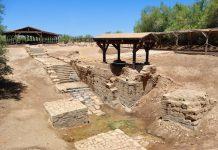
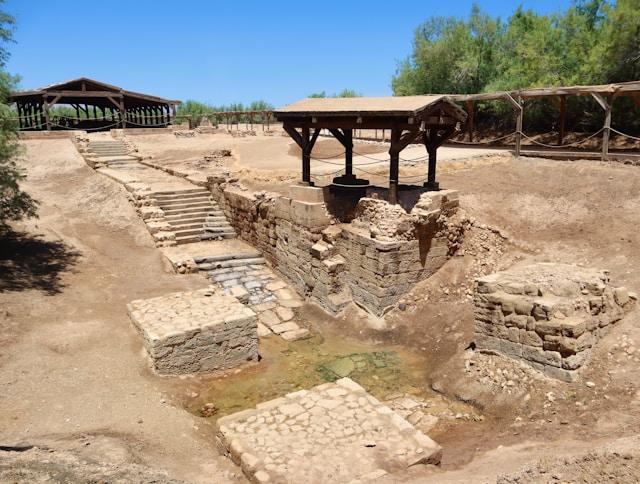
Central to the entire strategy is Al-Maghtas, located on the eastern bank of the Jordan River. Widely recognized by Christian tradition as “Bethany beyond the Jordan,” this is believed to be the site of Jesus’ baptism. Already designated as a UNESCO World Heritage Site, Al-Maghtas has become the focal point of Christian pilgrimage in Jordan, having welcomed popes and religious leaders from across the globe.
Looking ahead, the government is investing heavily in developing facilities around Al-Maghtas in preparation for 2030, when the two-thousandth anniversary of Christ’s baptism will be commemorated. This milestone, supported by Christian Churches in Jordan and endorsed by King Abdullah II, is expected to draw significant international attention and visitor numbers.
However, Jordan’s strategy is not limited to a single site. Instead, it presents the country as an interconnected “biblical landscape,” where narratives from both the Old and New Testaments unfold across diverse locations.
Among the New Testament sites, Machaerus (Mukawir) stands out as a place of profound historical resonance. Overlooking the Dead Sea, this Herodian fortress is traditionally believed to be where John the Baptist was imprisoned and executed by order of Herod Antipas. Its dramatic setting and strong Gospel associations make it a compelling destination for pilgrims.
Mount Nebo offers a different yet equally significant experience. According to biblical tradition, it is the place where Moses viewed the Promised Land before his death. Over centuries, it has become a key pilgrimage site, featuring the remains of a Byzantine basilica and intricate mosaics uncovered by Franciscan archaeologists. The panoramic view from its summit, stretching toward Jerusalem and the Jordan Valley, reinforces its spiritual and historical importance.
The city of Madaba is another cornerstone of Jordan’s Christian heritage. Known for the Greek Orthodox Church of St George, it houses the renowned Madaba Map—the oldest known mosaic map of the Holy Land, dating back to the sixth century. This artifact offers invaluable insight into early Christian perceptions of sacred geography.
Further enriching the country’s biblical narrative are sites such as Jerash (ancient Gerasa), home to an early and thriving Christian community, and Gadara, one of the cities of the Decapolis. At Umm ar-Rasas, identified with the biblical Meefat, archaeologists have uncovered the Basilica of St Stephen, notable for one of the finest mosaic floors in the region.
Even Petra, globally celebrated for its Nabataean heritage, contributes to this religious tapestry with remnants from its Byzantine Christian past. Nearby, local traditions preserve echoes of biblical stories in place names like Ain Musa (Moses’ Spring) and Jebel Harun (Mount Aaron), further enriching the narrative landscape.
Adding another dimension are the Crusader castles that line the ancient King’s Highway. Fortresses such as Kerak and Shobak stand as enduring monuments to the region’s medieval history, blending into the broader story of faith and pilgrimage.
Threading through all of these sites is the River Jordan itself—a powerful symbol in sacred history. It is associated with the Israelites’ entry into the Promised Land, the ministries of prophets Elijah and Elisha, and, most significantly, the baptism of Jesus. This continuous narrative link between the Old and New Testaments is a defining feature of Jordan’s religious identity.
Amman’s objective is clear: to redefine Jordan’s role in the global pilgrimage map. No longer positioned merely as an extension of traditional Holy Land itineraries, the country aims to establish itself as a pilgrimage destination—one with its own distinct spiritual significance and historical depth.
In doing so, Jordan presents itself not only as a guardian of biblical memory but also as a forward-looking nation leveraging its heritage to build a resilient and internationally appealing tourism sector.
- Raju Hasmukh with files from Asianews.it
Related Images:


![Cardinal in a black cassock with red trim and red skullcap, seated in a leather chair with a microphone nearby.”] ,](https://www.gaudiumpress.ca/wp-content/uploads/2026/05/Cardinal-Muller--100x70.jpg "Cardinal Müller Urges Firm Response to SSPX and Questions Synodal Consistory Format")