

















Catholic leaders in India express shock after the country’s first euthanasia case sparks ethical debate on life, dignity, and medical ethics.
Newsroom (27/03/2026 Gaudium Press ) Two weeks after India’s Supreme Court permitted, for the first time, the withdrawal of life support for a patient in a long-term vegetative state, the central figure in that historic case—Harish Rana—died on March 24. The decision, authorizing what the court called “passive euthanasia,” has ignited a fierce moral and spiritual debate across India, drawing sharp condemnation from the country’s Catholic leaders.
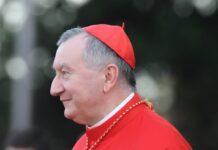
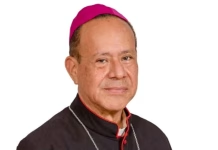
Archbishop Raphy Manjaly of Agra, chairman of the doctrinal commission of the Catholic Bishops’ Conference of India, voiced profound dismay at the court’s ruling and Rana’s subsequent death. “I am very sad to hear about the death of Harish Rana, first victim of euthanasia in the country,” he told EWTN News on March 26.
Manjaly underscored the Church’s consistent teaching on the sanctity of life: “Catholic Church considers life sacred from conception to natural death. No one has the right to take the life of another human being.” His comments reflect the Church’s deep unease that scientific progress and changing social attitudes are eroding fundamental moral boundaries once upheld across cultures.
A Contested Judgment
The Supreme Court’s March 11 order directed that “the medical treatment, including clinically assisted nutrition and hydration (CANH) being administered to the applicant, shall be withdrawn/withheld.” Rana, an engineering student who had been in a vegetative state since a 2013 accident, thus became the first person in India to die after the lawful withdrawal of sustenance and life support.
“It is strange and a contradiction that the medical science that is supposed to support life assisted to take away life,” lamented Manjaly. He called the Church “shocked and appalled by this verdict,” noting that an earlier bench led by the Chief Justice of India had rejected the same family’s plea for euthanasia.
Compassion and Palliative Care
While acknowledging the emotional toll on the family, the archbishop stopped short of condemning them. “It is difficult for the family and I do not condemn them,” he said. “What is required is more and more compassionate institutions to offer palliative care to terminally ill patients. The Church has several institutions, and many people of goodwill are doing it.”
His plea recalls an earlier landmark decision: the 2011 Supreme Court ruling in the case of Aruna Shanbaug, a nurse who remained in a comatose state for nearly four decades after a violent assault. At that time, India’s highest court affirmed that “the right to life guaranteed by Article 21 of the Constitution does not include the right to die.” Shanbaug remained under the dedicated care of staff at Mumbai’s King Edward Memorial Hospital until her death in 2015. The court had commended their “extraordinary dedication and sacrifice,” highlighting that Shanbaug had “not developed a single bed sore” despite 37 years of immobility.
Moral Ripples Across India
The Rana case has reopened longstanding questions about the ethical limits of medical intervention, personal autonomy, and the role of compassion in end-of-life decisions. Sunny Kattukaran, a prominent pro-life advocate and coordinator of the Christian Movement of India, warned that the ruling could “redefine the meaning of life and dignity in the country.”
“India has upheld life as sacred for ages—protected not only by law but also by deeply rooted cultural and spiritual values,” he noted. “Yet today, there are growing concerns that evolving legal interpretations and scientific advancements are moving faster than the ethical boundaries that once guided them.”
Organ Donation and Ethical Concerns
Media coverage celebrating the Rana family’s donation of his corneas and heart valves added another layer of controversy. Headlines such as ‘First euthanasia case sparks organ donation push’ went viral, drawing warnings from Church leaders and activists alike.
“The Church welcomes organ donation, which is a noble gesture,” Archbishop Manjaly said. “But nobody should be put to death for harvesting organs.” He urged vigilance among government bodies and the media “to prevent abuses and crimes in this field.”
As India grapples with the implications of its first euthanasia case, Catholic leaders and pro-life voices insist that the true measure of compassion lies not in hastening death, but in reaffirming the dignity of life—even in suffering. For them, Rana’s death is more than a legal milestone; it is a moral crossroads testing the conscience of a nation.
- Raju Hasmukh with files from CNA
Related Images: