
















Catholic groups in Lebanon deliver life-saving aid and call for peace as war displaces over 1 million and claims more than 1,000 lives.
Newsroom (27/03/2026 Gaudium Press )As the conflict in Lebanon intensifies, Catholic organizations are stepping up their relief efforts for the more than one million people displaced by ongoing violence. Their mission is as much about survival as it is about peace, echoing the calls of church leaders and humanitarian advocates who warn that only diplomacy—not more bloodshed—can end the suffering.
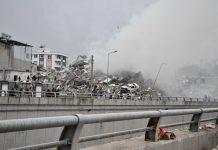
Lebanon found itself drawn deeper into the region’s turmoil after Hezbollah fighters launched missile attacks on northern Israel, prompting retaliatory airstrikes and incursions by the Israel Defense Forces (IDF). The skirmishes, centered mainly in southern Lebanon, have left more than 1,000 people dead and forced families to abandon their homes amid fears of a larger invasion.
Monalisa Freiha, associate editor and deputy editor-in-chief at An-Nahar Al Arabi, voiced the anguish of ordinary Lebanese in an interview on March 26. “We did not choose this war,” she said. “We are paying the price every single day, living under bombardment, fear, and uncertainty.”
Aid Amid Chaos
In the face of mounting humanitarian needs, Catholic Relief Services (CRS), Caritas Lebanon, and Jesuit Refugee Service (JRS) have become lifelines for thousands. Cedric Choukeir, CRS country representative for Lebanon, described the displacement as both chaotic and traumatic. Many evacuees, he explained, were trapped for hours in dense traffic under bombardment, with no clear routes or timelines for safe passage.
Despite these challenges, CRS and Caritas have already assisted at least 145,000 people. Working primarily out of Beirut, they are providing emergency food kits, medicine, bedding, and essential supplies. Efforts are also underway to improve the dignity of shelters by adding sanitation facilities, access to hot water, and cooking spaces.
For children forced from their classrooms, CRS teams offer psychosocial support to help them process trauma. Choukeir noted that while 130,000 people are living in shelters, many others have found refuge with relatives or are surviving in cars and makeshift tents on city streets. “There aren’t enough collective shelters to host everyone who is displaced,” he said, adding that the displacement is now clearly visible throughout Beirut.
Faith and Shelter in Beirut
Among those offering sanctuary is Jesuit Father Daniel Corrou, who heads Jesuit Refugee Service operations across the Middle East and North Africa. His parish, St. Joseph, now doubles as a refuge for nearly 200 migrant workers and ethnic minorities caught in the crossfire. “I can hear Israeli drones flying overhead,” he said, describing the sound as a constant reminder of the risks.
The parish’s volunteers—many of them low-paid migrant workers—have continued serving despite their own hardships. “That’s where I just stand back in awe,” Corrou said, highlighting their selflessness amid danger and deprivation.
Humanitarian and Security Concerns
Both Choukeir and Corrou have voiced fears that an expanded Israeli ground offensive could worsen an already desperate situation. Reports indicate that bridge destruction and restricted mobility are trapping civilians in southern regions like Tyre. Some families have chosen to stay, unwilling to abandon their land or unable to afford relocation. “If they want to evacuate,” Choukeir warned, “there needs to be a way for them to be able to do so.”
Corrou also described a sense of communal vulnerability, particularly among minority groups. Some shelters refuse to host Shia Muslims, fearing potential attacks, while Christians in the south worry about losing their ancestral lands. Even though IDF operations have not explicitly targeted Christian areas, Corrou cautioned that “it’s hard to say that they’re safe.”
A Cry for Peace
Like Pope Leo XIV, both men insist that the only viable path forward lies in dialogue. “This has to be about coming to some sort of conversation—a compromise,” said Corrou. “This has to have a diplomatic solution.” Choukeir echoed that sentiment, urging the protection of civilians and humanitarian workers. “We would like to see the violence end and things resolved through diplomatic channels,” he said.
In a country where faith and resilience have often intertwined, Lebanon’s Catholics are not only responding to a humanitarian disaster—they are bearing moral witness. Through their work, they remind the world that amid the fear and rubble, the call for peace remains the nation’s strongest lifeline.
- Raju Hasmukh with files from CNA news
Related Images: