
























India’s top court upheld limits on Christian pastors entering tribal villages in Chhattisgarh, reigniting debate over religious freedom and conversion laws.
Newsroom (18/02/2026 Gaudium Press ) India’s Supreme Court has dismissed a plea challenging restrictions imposed on Christian missionaries and pastors seeking to enter certain tribal villages in Chhattisgarh, sparking a public outcry from church leaders and renewing national debate over the boundaries of religious liberty.
The ruling, delivered on Monday, upheld an earlier decision by a lower court that endorsed resolutions passed by several tribal village councils. These councils had banned the entry of Christian pastors and converts into their villages, claiming the move was necessary to prevent religious conversions through “inducement” or “manipulation.”
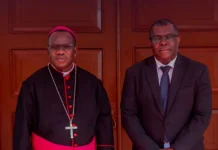
Archbishop Victor Henry Thakur of Raipur, president of the Catholic Bishops’ Council of Chhattisgarh, sharply criticized the Supreme Court’s stance. “It is unfortunate that the Supreme Court dismissed the plea,” Thakur told Crux, calling the initial lower court judgment “very discriminatory” and an infringement on citizens’ constitutional rights to free movement and to propagate their faith.
Procedural Path, Deep Implications
Legal observers note that the Supreme Court’s dismissal may have hinged more on procedural grounds than on the substance of the case itself. Archbishop Thakur acknowledged that “the plea was dismissed partly because petitioners did not first exhaust statutory remedies available.”
The bench, composed of Justices Vikram Nath and Sandeep Mehta, directed the petitioner, Digbal Tandi, to approach the local district administration for relief. Tandi had argued that the signs posted in various tribal villages banning Christian pastors amounted to segregation and religious discrimination.
Among the affected villages are Kudal, Parvi, Junwani, Ghota, Ghotiya, Havechur, Musurputta, and Sulangi — all located in tribal-dominated districts of Chhattisgarh. In these areas, billboards have been installed declaring that entry of pastors and priests is prohibited under local law.
Courts Emphasize Tribal Identity and Social Harmony
In its earlier decision, the Chhattisgarh High Court had found that the billboards could not be called unconstitutional. The judges reasoned that they served as “a precautionary measure to protect the interest of indigenous tribes and local cultural heritage,” particularly against “forcible conversion by way of allurement or fraudulent means.”
The petitioners, however, counter that the lower court made sweeping generalizations about missionary activities in Adivasi areas “without material on record,” and question the fairness of requiring them to appeal to the same local councils responsible for imposing the original restrictions.
Religious Liberty and India’s Legal Paradox
Even on paper, India’s legal framework for religious freedom remains a patchwork of overlapping constitutional guarantees and restrictive state laws. The country’s Constitution promises every citizen the right to “freely profess, practice and propagate” religion. Yet in practice, anti-conversion laws in 10 of India’s 28 states restrict conversion by force, coercion, fraud, or what is termed “inducement.”
Seven of those ten states are governed by the Hindu nationalist Bharatiya Janata Party (BJP), under whose rule enforcement of these laws has reportedly intensified. Government scrutiny over religious conversions has increased, with some state laws requiring prior notification and administrative review before any conversion can be legally recognized. Violations can carry fines or even imprisonment.
Critics argue that such laws, while framed as protecting vulnerable communities from exploitation, are often weaponized against religious minorities—particularly Christians and Muslims—under the pretext of preventing forced conversions. Human rights groups have documented hundreds of arrests under these provisions, many involving local pastors and laypersons accused of “inducement.”
Growing Polarization Over Faith
The Chhattisgarh ruling underscores the increasing tension between India’s constitutional ideals and the lived experience of minority faiths in regions where local cultural preservation and nationalist ideologies intersect. For many Christian leaders, the outcome of this case is not merely a procedural setback but a marker of the shrinking space for religious expression in India’s grassroots communities.
Archbishop Thakur’s words sum up a widespread sentiment among India’s Christian minority: that freedom of faith, guaranteed in law, appears to be narrowing in reality. Whether the Supreme Court’s limited intervention will embolden similar restrictions in other tribal regions remains an open question — one that cuts to the heart of India’s promise of pluralism.
- Raju Hasmukh with files from Crux Now
Related Images: