















Ronda’s Carmelite monastery may close due to declining vocations, leaving the future of St. Teresa of Ávila’s relic uncertain.
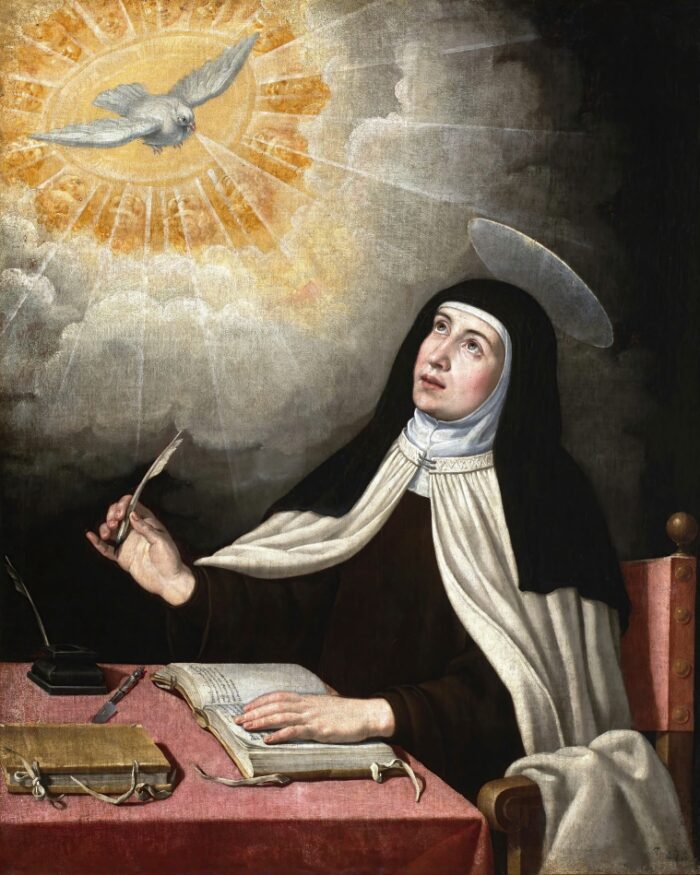
Newsroom (18/06/2026 Gaudium Press ) The Discalced Carmelite monastery in Ronda, southern Spain, is facing possible closure after more than a century of continuous presence, underscoring a broader crisis of declining religious vocations. At the heart of the uncertainty is the fate of one of Catholicism’s most significant relics — the incorrupt left hand of St. Teresa of Ávila.
The convent, established in its current location in 1924, has seen its community diminish dramatically in recent years. Once home to nine sisters, it now shelters just four, one of whom suffers from Alzheimer’s disease. The COVID-19 pandemic accelerated this decline, with five nuns dying from age-related and medical causes over the past few years.
According to Vultum Dei Quaerere, the 2016 apostolic constitution promulgated by Pope Francis, a minimum of six members is required to maintain an autonomous contemplative community. Without reaching that threshold, remaining members must be reassigned to larger, viable communities. Despite efforts to attract new vocations, the Ronda Carmel has been unable to recruit additional sisters.
As a result, the remaining nuns are expected to disperse to other monasteries affiliated with the Our Lady of Mount Carmel Federation. Their departure will mark the end of a religious presence that has endured for decades in a building originally founded as a Mercedarian convent in the 16th century, later expropriated in the 19th-century “desamortización” — a period during which the Spanish government confiscated and sold Church properties.
A Relic Steeped in History
Central to the monastery’s legacy is the relic of St. Teresa’s left hand, known for its incorrupt condition after more than 444 years. The hand was separated from the saint’s body upon her death in 1582 and has since traveled across borders and political upheavals.
Initially housed in Portugal, the relic was brought to Spain in 1910 after religious orders were expelled from the country. It was taken to Ávila before eventually being transferred to the Carmel in Ronda, where the Portuguese Carmelite community had reestablished itself.
The relic’s journey through history did not end there. During the Spanish Civil War in 1936, Republican militiamen seized it from the nuns. It was later recovered by forces aligned with General Francisco Franco and held in Burgos, his headquarters, until his death. Only in January 1976 did the relic return to Ronda, where it has remained ever since.
An Uncertain Future
The closure of the monastery would necessitate the relocation of the relic, though its final destination remains undecided. One possibility is its return to Alba de Tormes, widely recognized as the place associated with St. Teresa’s remains, which have also remained incorrupt for centuries. Such a move would reunite all parts of the saint’s body for the first time in over four and a half centuries.
However, no definitive decision has been reached. Sources from the Iberian Province of the Discalced Carmelites indicate that discussions are ongoing. The canonical process required to close the monastery has not yet been completed and ultimately depends on approval from the Vatican, with a conclusion expected by early 2027.
The four remaining nuns themselves will play a decisive role in determining the future of the relic. If they choose to remain together in a new location, the hand of St. Teresa could accompany them to another monastic community. Alternatively, it could be entrusted to a diocese or returned to a central Carmelite institution.
Beyond the relic, the sisters must also decide on the disposition of other property and sacred objects belonging to the community, adding further complexity to an already delicate transition.
A Broader Trend
The situation in Ronda reflects a wider trend affecting contemplative religious life across Europe, where aging communities and a lack of new vocations have forced many monasteries to close. While the fate of the Ronda Carmel remains officially unresolved, its likely closure marks the end of an era for both the local faithful and the Carmelite order in the region.
At stake is not only a historic religious house but a spiritual legacy tied to one of Catholicism’s most revered mystics. As deliberations continue, the future of St. Teresa’s left hand — a symbol of enduring faith and devotion — hangs in the balance alongside the final chapter of the monastery that has safeguarded it for decades.
- Raju Hasmukh with files from EWTN News
Related Images: